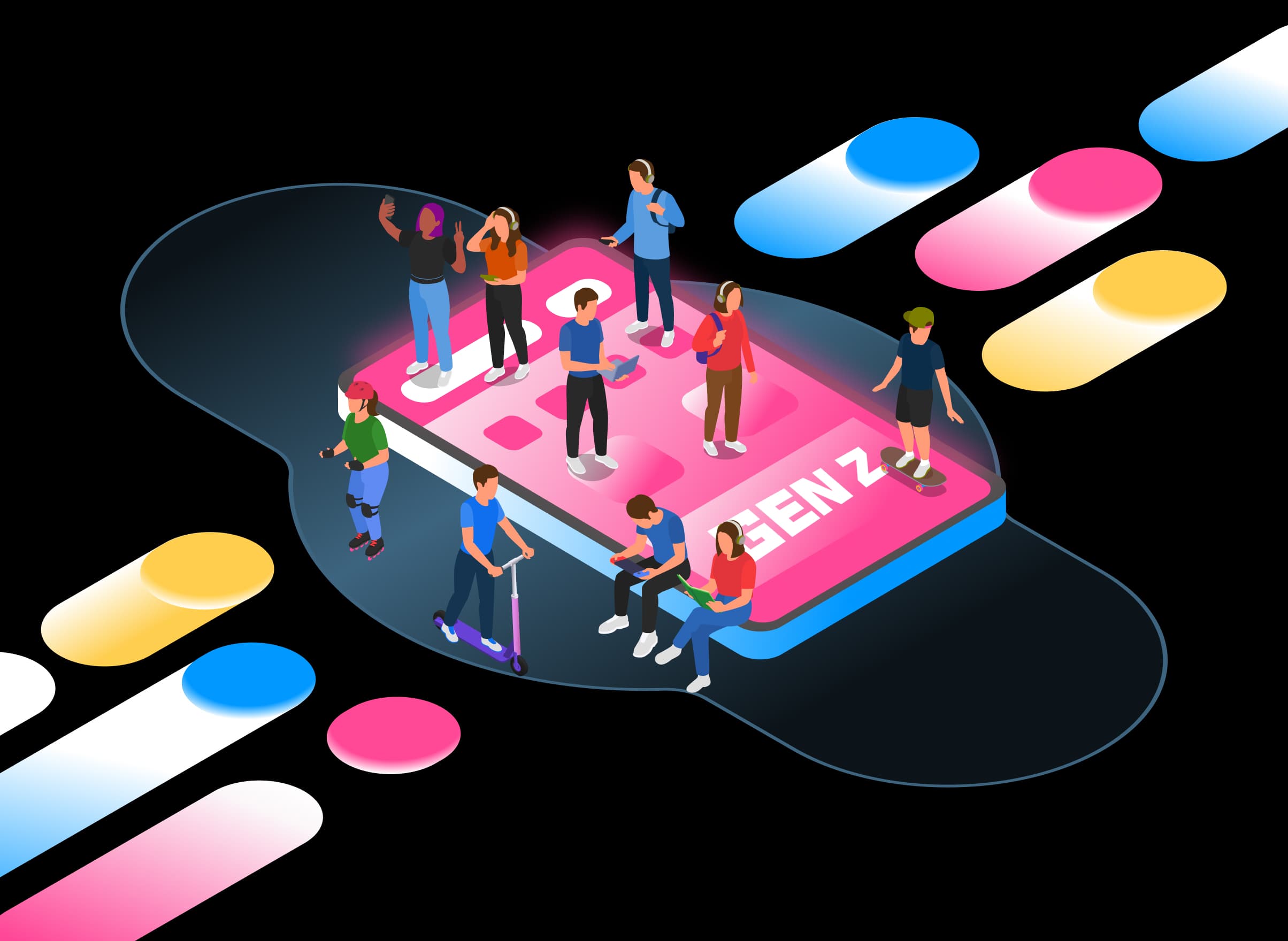
Maya, age 24, has just been diagnosed with a chronic condition. After her clinician appointment, she receives a treatment plan, a device, and instructions to use a companion app daily.
In the parking lot, Maya opens the app for the first time. She must create an account, confirm her email, re-enter information already provided to her clinic, and read a lengthy onboarding article. On the dashboard, she encounters charts and numbers she cannot interpret and finds no clear next step. She closes the app. Later, she searches for her symptoms on TikTok, reviews Reddit threads, and contacts a friend who has gone through a similar experience.
This scenario highlights the current challenge MedTech teams need to solve. As connected devices, companion apps, and patient-facing AI play a bigger role between visits, static patient experiences are no longer enough. Teams must now deliver device onboarding that adapts to users’ confidence and literacy, adherence support that responds to behavior and context, and symptom reporting or remote monitoring that reduces effort while capturing clinically relevant data. The shift is from static apps to more adaptive patient experience layers, increasingly supported by agentic AI.
Gen Z patients are the first to make this gap visible at scale, but the experience they expect will help define the standard for every patient who follows.
Gen Z isn't adapting to healthcare interfaces. Healthcare interfaces must adapt to Gen Z’s expectations because they are setting the standard for every generation that follows.
What Gen Z now expects from healthcare experiences
The U.S. Census Bureau’s cohort analysis shows that Gen Z (born 1997–2012 in this definition) accounted for 21% of the U.S. population by 2023, indicating their growing share of the population.
For MedTech companies, this is a conversation about product strategy, not youth segmentation:
- The medical device/companion app design becomes the product relationship between medical visits
- Patient-facing AI becomes the front desk
- Engagement becomes the pathway to Gen Z adherence drivers
- Ecosystem design becomes the differentiator because Gen Z expects healthcare devices to plug into the rest of their lives
For Gen Z, these are not preferences. They are closer to minimum requirements for continued use.
1. Radical personalization
Gen Z grew up inside recommendation engines. Their feeds, playlists, routes, and routines adapt automatically. In healthcare, generic dashboards and one-size-fits-all reminders feel out of place.
If Maya receives the same reminder at the same time every day, regardless of her schedule, symptoms, or previous behavior, it reads as noise. If she sees a chart with no explanation of what matters today, she disengages. Personalization is not a premium feature for this cohort. It is expected.
That does not mean intrusion. While this audience looks for tailored experiences, they are also highly critical of cold outreach and unannounced communications. What matters is practical personalization: context-aware onboarding, adaptive education, next-best actions that reflect where the patient is in the journey, and messaging based on real behavior rather than an ideal schedule.
75% of Gen Z consumers say they would quit a brand if the experience isn't personalized.
2. Mental health is part of their health identity
Gen Z is more likely than older cohorts to frame health in terms of stress, sleep, burnout, and identity. This matters even when the primary condition is physical.
A diabetes experience that ignores the linked anxiety, routine disruption, and decision fatigue will struggle. A rehab experience that treats motivation as “send more reminders” won’t land. Gen Z’s healthcare expectations are for health tools to acknowledge the emotional reality of behavior change, because other tools already do it elsewhere (fitness, habit, learning apps).
3. Phygital, not either/or
Gen Z is not “digital-only.” They expect clean handoffs between physical care and digital support.
In practice, many still start care in physical settings. One analysis notes that Gen Z often accesses care at pharmacies and urgent care before turning to purely digital solutions. Whether you treat that as directional or definitive, the design requirement stays the same: do not let the experience break when the patient moves across channels. If the app cannot support what happens between visits, it fails.
4. Trust must be earned, not assumed
Gen Z’s trust in the privacy of their digital health managed by large healthcare institutions is fragile. They are comfortable with digital tools, but skeptical of unclear systems and corporate intent.
You can see this in pharma perception data. YouGov BrandIndex tracking shows Gen Z’s satisfaction with drug manufacturers in the U.S. fell from a net score of 7 in September 2024 to 4 by September 2025.
For MedTech teams, “trust” and “privacy” becomes a product feature through visible data controls, plain-language explanations, clear boundaries on what AI can and cannot do, and a transparent path to human support.
Companion apps: From a reminder tool to a daily health partner
For many MedTech products, the medical device companion app design is the primary interface the patient lives with between encounters. For Gen Z, their healthcare expectation is for apps to not just be a support layer; it is their relationship with the brand, which changes what “good” looks like.
The Gen Z benchmark
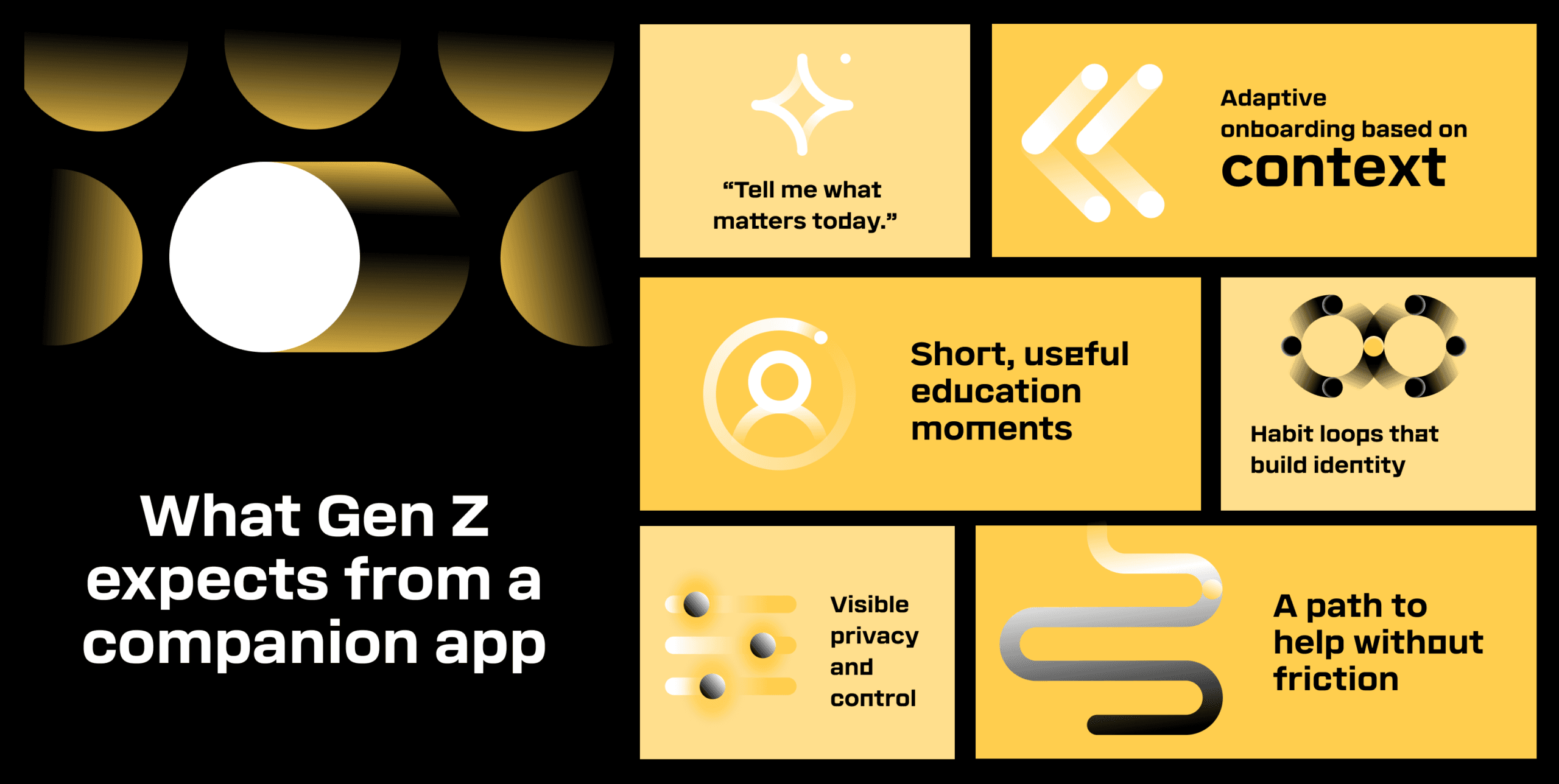
Gen Z won’t compare your device companion to other regulated tools. They’ll compare it to the best products on their phone. Gen Z expects digital health onboarding best practices, immediate payoff, short, clear loops that create momentum, and feedback that feels human. That doesn’t mean gamifying therapy; rather, it means intentionally designing motivation.
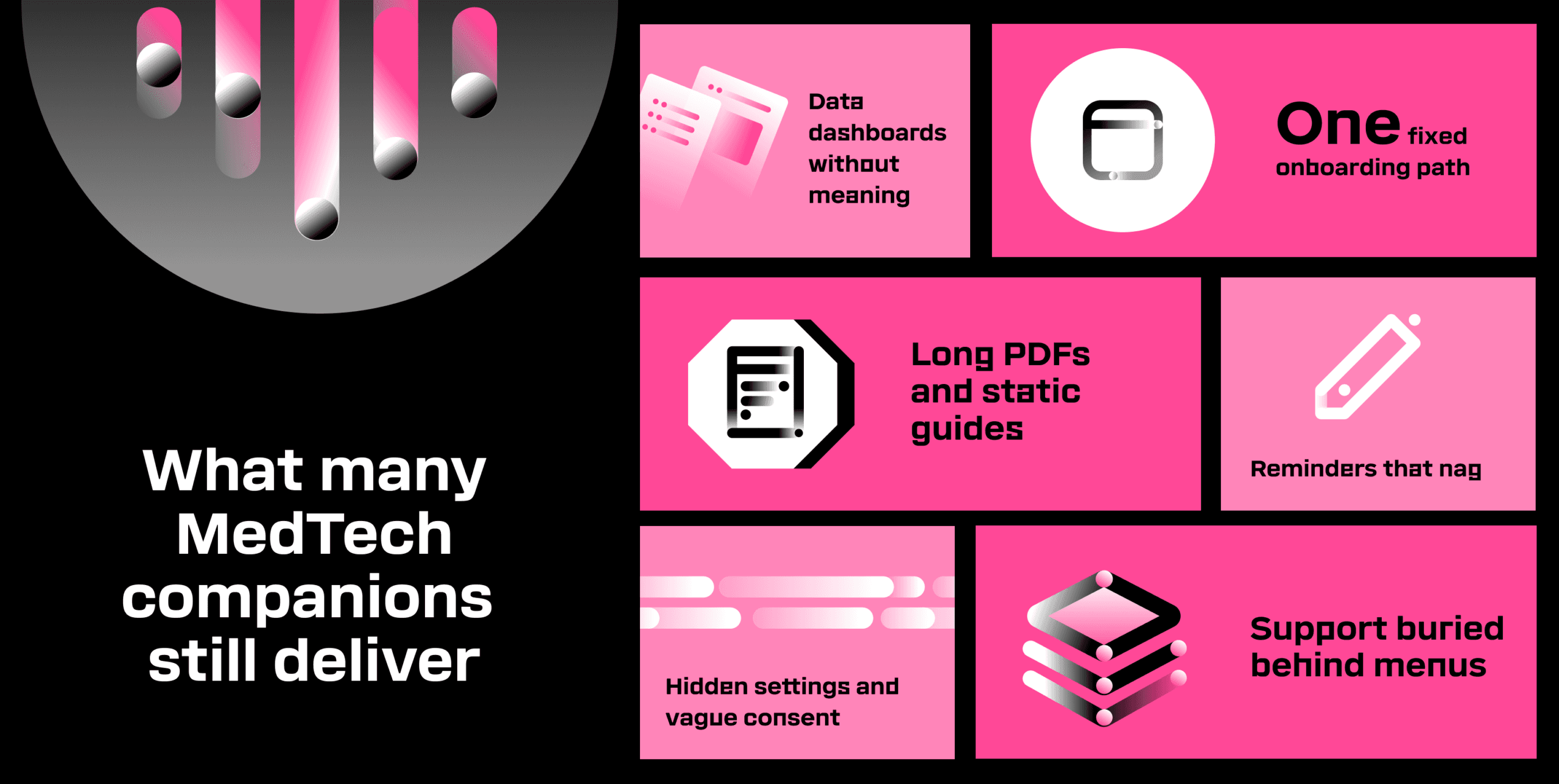
What Gen Z wants vs what most MedTech delivers today
The design tension MedTech has to solve
Companion apps fail Gen Z healthcare expectations in two ways:
- They feel too clinical. The app becomes a digital leaflet, not something patients want to return to regularly.
- They feel too “consumer-first.” The app prioritizes engagement cues over clinical credibility.
The winning pattern is not a compromise between clinical and consumer. It’s a deliberate design approach: consumer-grade usability, built with clinical-grade discipline.
Later in this guide, we break down what that looks like in practice and how teams can measure the impact through adherence drivers, persistence, and sustained patient engagement.
Patient-facing AI and agentic interaction: The new front desk
Gen Z grew up with conversational interfaces. They’re already used to seeing MedTech companies designing patient-facing AI for regulated healthcare products that interpret information, plan decisions, and reduce friction in daily life.
In healthcare, that creates an opportunity and a design constraint:
- They will use AI anyway (inside and outside your product)
- If you don’t provide a safe, governed patient-facing AI layer, they will bring their own
Industry leaders are already calling out that patients are running notes and lab results through general-purpose AI tools, while healthcare organizations hesitate because standards and guardrails are inconsistent.
From passive AI to agentic support
Gen Z doesn’t want AI that answers questions, they want AI that takes action safely and within clear clinical and operational guardrails.
In a patient-facing context, that can look like:
- guiding onboarding and setup
- scheduling follow-ups and check-ins
- triggering timely support when risk rises
- routing to a human when thresholds are met
- personalizing the interface itself, not just the content
Voice and chat as first-class interfaces
Gen Z often prefers conversational flows over form filling, especially for sensitive topics. Voice agents are also showing up in adherence programs, for example, Medisafe’s VIA (Voice Intelligent Agent) launched in April 2025 as an AI voice assistant aimed at reducing enrollment friction and supporting ongoing engagement.
The digital health trust and privacy boundary: explainability, control, escalation
Gen Z’s digital health behaviours demonstrate no fear of AI, but they do distrust unclear systems. Gen Z patient-facing AI needs:
- plain-language disclosure of capability and limits
- visible data controls
- “why am I seeing this?” explanations
- escalation paths to humans that are easy to use
Regulated product teams can win by building patient-facing AI experiences that are safe, clear, and easy to trust. For Gen Z, that doesn’t feel like “compliance.” It feels like a product that respects their time, protects their data, and gives them confidence in what happens next.
How to improve adherence with digital companions for Gen Z: Designing motivation and engagement, not just reminders
The American Heart Association notes poor medication adherence can cost the U.S. healthcare system as much as $300 billion per year and is associated with 125,000 deaths annually.
That scale matters, but at product level, adherence is built or lost in everyday moments: starting treatment, returning to the app, following routines, and staying engaged over time.
For Gen Z, adherence isn't driven by "more notifications." It's driven by motivation architecture.
These adherence drivers connect with Gen Z’s healthcare expectations:
1. Streaks and identity continuity
Gen Z has grown up with digital products that reward consistency, streaks, and repeat routines. When routines become “who I am,” missing a day feels like breaking identity, not just missing a task.
2. Social proof and community
Gen Z often uses social platforms for health information and support. YouGov’s data shows Gen Z is more likely than older generations to rely on social media for wellness tips and advice. This means designing with social reality in mind: peer reassurance, normalized experiences, and safe community patterns where appropriate.
3. Just-in-time support, not scheduled nagging
Fixed reminders assume a stable life. Gen Z lives with shifting routines, hybrid work, and constant context switching. The most effective systems respond to behavior patterns, not clock time.
4. Cognitive load reduction
If the user has to interpret charts, remember steps, and translate instructions into action, adherence drops. Make the next step clear.
A 2025 JMIR Human Factors study on Medisafe in a medically underserved population reports high usability and satisfaction indicators, reinforcing a broader point: simplicity is not cosmetic, it changes outcomes.
Bringing Maya back here: if her “daily task” feels like work, she stops. If it feels like support, she continues.
Device ecosystem design: The hardware–software contract Gen Z expects
For Gen Z, a medical device is not a standalone object. It’s a node in their personal health system. They expect it to connect cleanly to their phone, their wearable tech, their chosen health platforms, and to clinician workflows when relevant.
Interoperability of healthcare patient apps is becoming the baseline
When consumer-generated health data cannot be routed into clinical health systems and made clinically actionable, the experience remains fragmented for both patients and providers. Major consumer-health players are moving to close that gap. For example, Samsung announced its acquisition of Xealth in 2025, positioning it as a way to bridge consumer health, monitoring and tracking data and medical care and to connect wearables and digital health tools into provider workflows at scale.
Designed like consumer tech. Built like a medical device.
Gen Z expects medical-grade tools to look and behave like consumer tech: minimal, sometimes wearable, and easy to integrate into their lives.
Market projections reflect the scale of this shift. Fortune Business Insights values the global wearable medical devices market at $103.04 billion in 2025 and projects significant growth ahead. At CES 2026, the consumerization of medical monitoring accelerated again, including FDA-cleared over-the-counter monitoring devices and expanding metabolic health ecosystems.
Privacy by design is not optional
Gen Z will share data when they trust the system and control it. Unclear data practices trigger abandonment. The practical product requirement is to make privacy visible. Don’t hide it in legal language, rather build it into the interaction model.
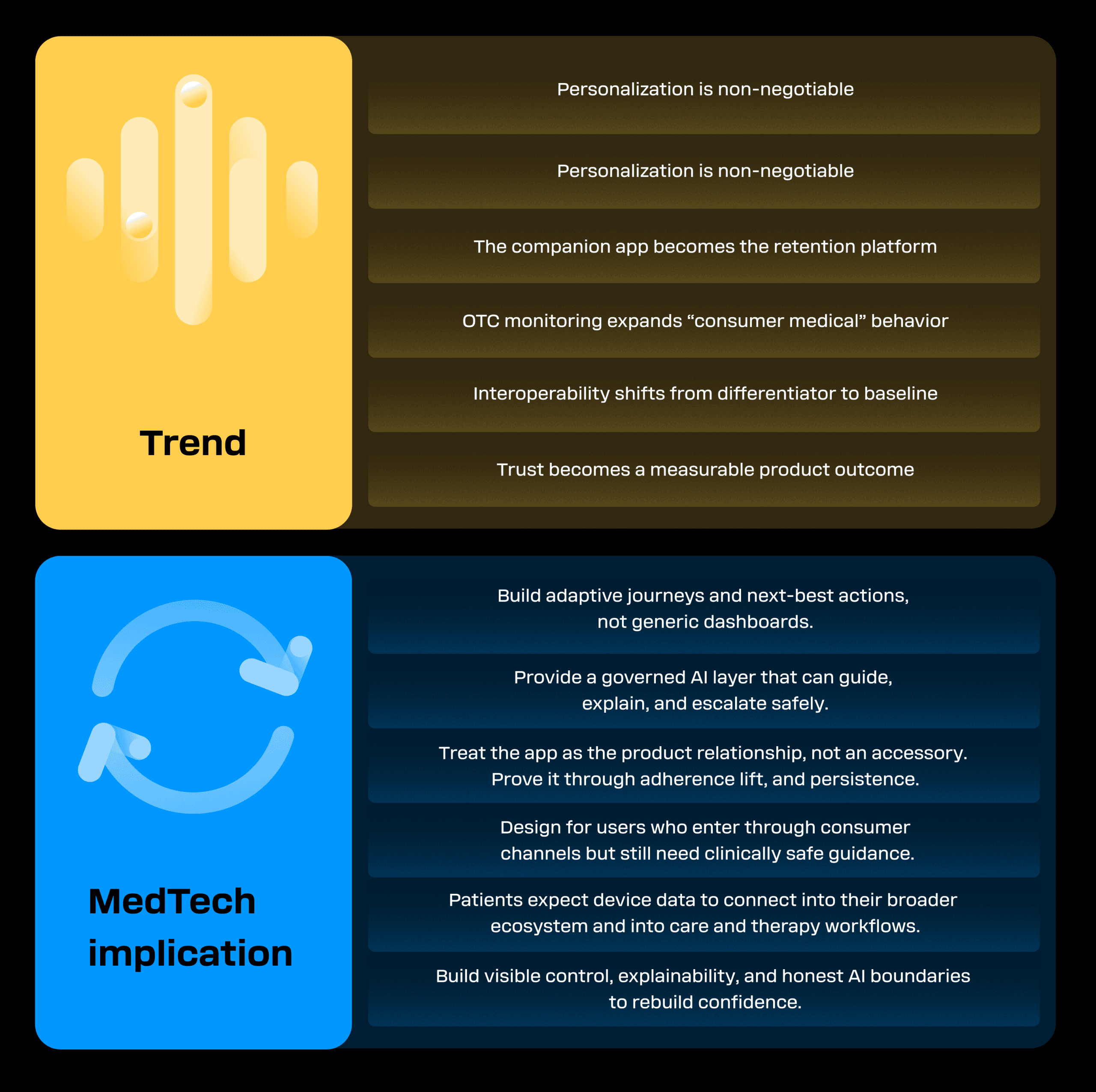
Key trends shaping the Gen Z health interface experience in 2026
This is the rapid briefing MedTech leaders can use to align product, UX, and marketing around what Gen Z will reward with sustained use.
Moving beyond static apps to adaptive care experiences
Gen Z will not lower their expectations to accommodate legacy health interfaces. They will route around friction, look elsewhere for answers, and judge healthcare products against the best digital experiences on their phones. But this challenge is not limited to Gen Z. It reflects a broader product reality: different patients need different kinds of support, and one static app cannot serve them all equally well.
At CES 2026, Star introduced its Human Agentic Interaction (HAI) Model as a new paradigm for digital health: moving from static apps to “living apps” that can understand user intent, adapt in real time, and generate the right interface for the person, situation, and task at hand. Rather than forcing every patient through the same screens and workflows, the HAI Model is designed to tailor interactions around cognitive ability, health literacy, emotional state, impairments, language, and context, while staying grounded in clinical safety, explainability, and human oversight.
For MedTech teams, this creates a more practical path forward. Instead of designing one static experience and hoping it works for everyone, teams can begin to design governed, patient-facing systems that adjust how care is delivered without changing the underlying clinical intent. That is how digital products can become more useful for Gen Z, more accessible for older adults, and more effective at supporting persistence, trust, and adherence across the full patient population.
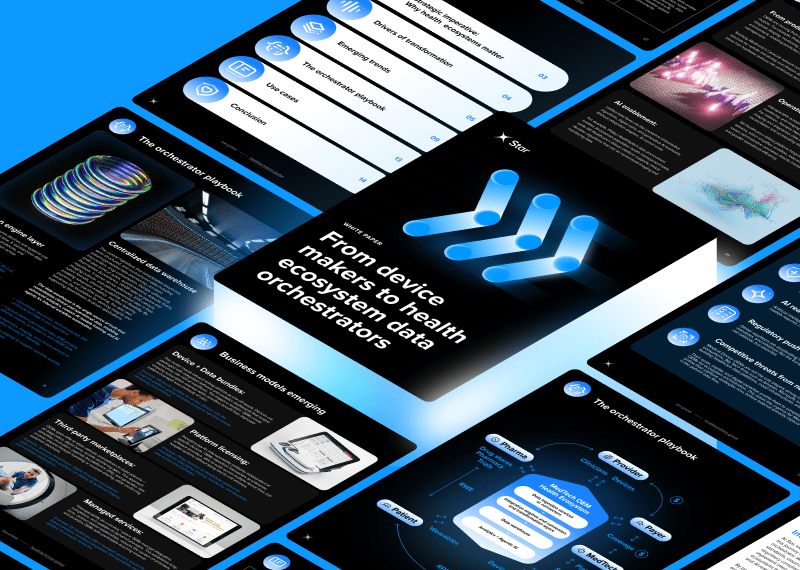
If you’re exploring how adaptive patient-facing AI, companion apps, or connected device ecosystems can support adherence across different user groups, download Star’s Living Care report on the Human Agentic Interaction Model.
Ready to explore more?
Download Star's Living Care report on the Human Agentic Interaction Model.
Gen Z expects fast onboarding, clear next steps (not raw charts), privacy-forward controls, and experiences that adapt to context, more like best-in-class consumer apps than legacy clinical portals.