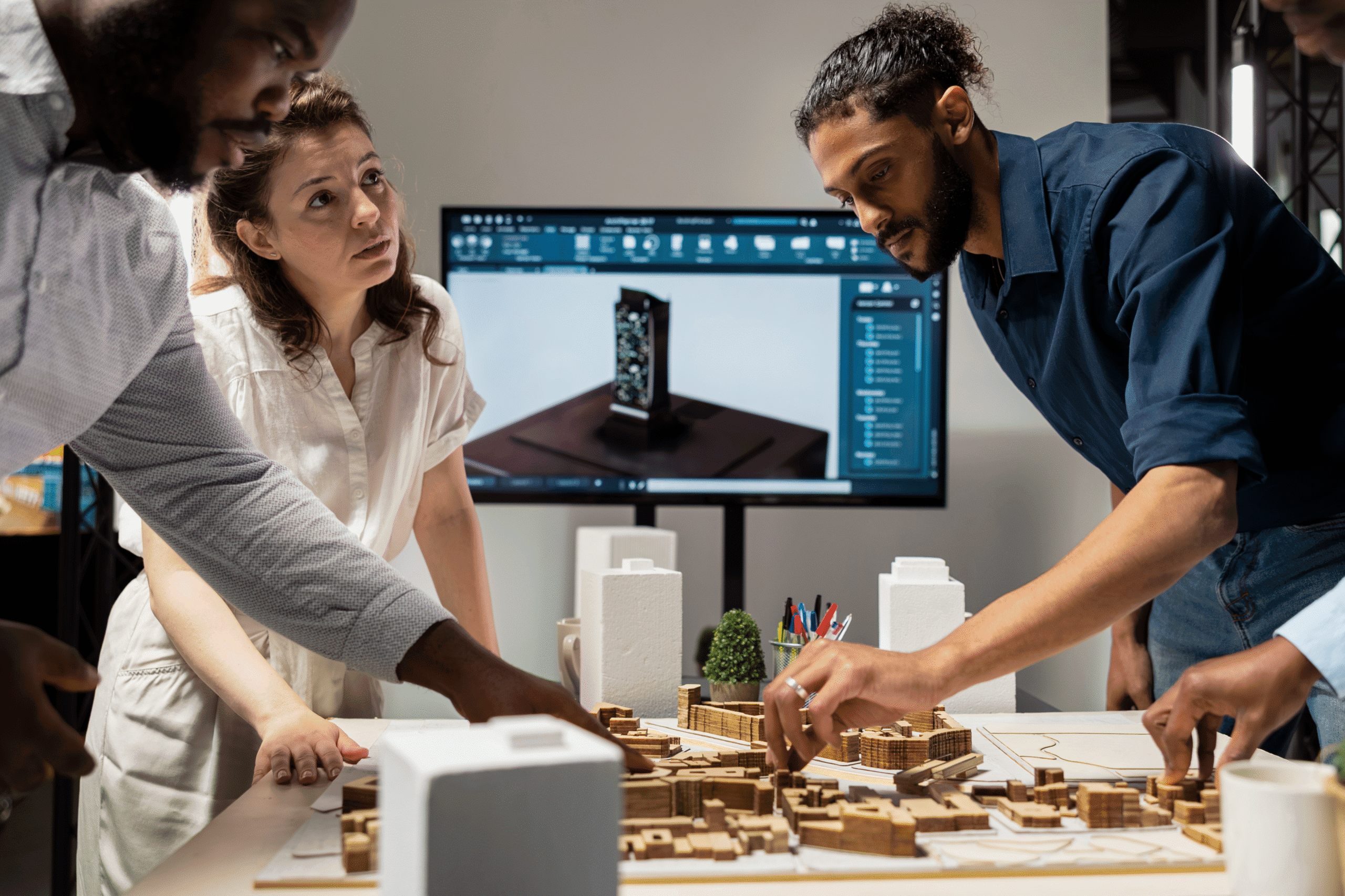
Industrial design has always been a discipline in motion. Every decade brings a new set of constraints and possibilities: new materials, new manufacturing methods, new ways to prototype, and new expectations from customers and businesses. Generative artificial intelligence (GenAI) is now accelerating that transformation for industrial design.
But it’s worth clarifying how generative AI is changing industrial design. More than a tool for fast visuals, GenAI supports idea generation, exploration of material and form, and evaluation of manufacturing constraints.
It’s not only changing how we design and collaborate when creating products – it is redefining what it means to practice industrial design with an AI-driven context.
Where is generative AI truly helpful in the industrial design process?
If you’ve used GenAI for industrial design projects, the experience can feel magical, unreliable, serendipitous, and unpredictable all at once. The outputs may be inspiring, but also inconsistent. That’s why many designers assume AI is only useful for early-stage ideation – when constraints are light and “happy accidents” are welcome. There’s truth in that. But the real value of AI becomes clearer once we apply a structured lens.
By mapping the workflow - skills, tools, and fidelity requirements - we can identify which parts demand high fidelity and predictability, and which parts tolerate lower accuracy.
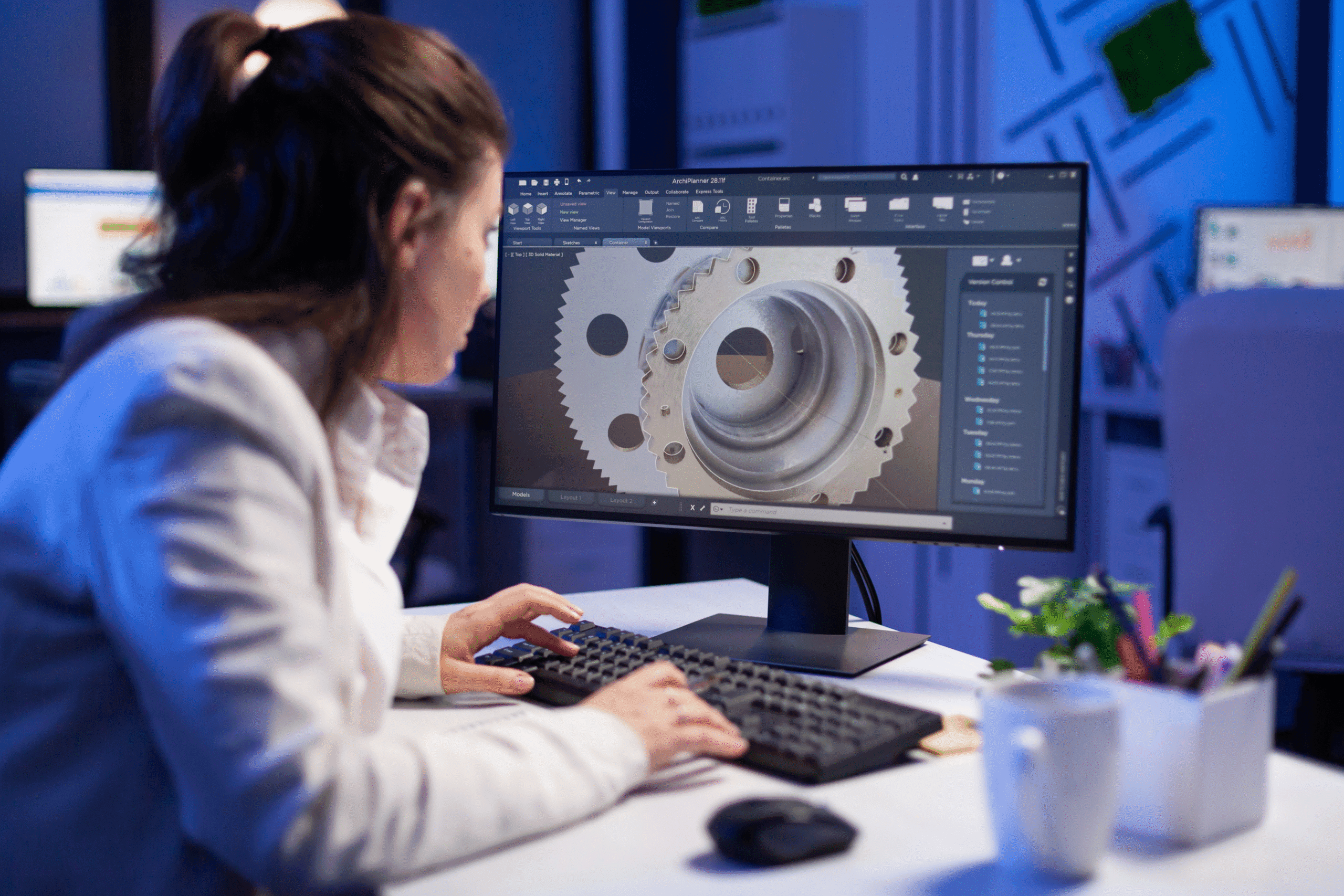
A final CAD rendering, for example, requires accurate intent-to-output. But early ideation, exploratory CMF variations, quick sketch directions, and concept mood exploration can tolerate lower accuracy. In these stages, AI can provide rapid alternatives, inspiration, and guidance.
In later stages, AI might also be used for very specific, narrowly defined tasks – such as automated tolerance checks, injection molding draft angle checks or volume checks, or assisting with documentation – that support accuracy. Such contributions may appear minor at first, but across the many tasks in an industrial designer’s day, they accumulate. And when adopted by entire organizations, they scale. In short, AI is most valuable when it’s matched to the right fidelity level.
AI value by fidelity level
Think of industrial design output as a spectrum:
Low fidelity: fast, broad exploration
This is where GenAI for industrial product design often feels “most magical,” and where it can create immediate leverage.
AI can help you:
- Generate multiple concept directions quickly
- Explore silhouette, proportion, surface language
- Produce rapid variation across a single theme
Best for: early discovery, internal alignment, divergent thinking.
Mid fidelity: narrowing, testing, communicating intent
As you move toward clearer constraints, AI becomes less about random inspiration and instead, built for guided exploration.
AI can support you:
- Concept refinement and controlled variations
- Early CMF exploration (materials, finishes, colorways)
- “Design language” consistency checks (visually, not technically)
- Early storytelling: use-case context, environments, lifestyle framing
Best for: design reviews, direction-setting, stakeholder communication.
High fidelity: precision, manufacturability, and production readiness
This is where many teams wrongly assume AI has to drop out.
In reality, GenAI can still add value, but the tasks are different. AI supports narrowly defined work that benefits from automation or rapid checking.
Examples include:
- Assisted documentation (spec summaries, requirements translation)
- Automated “sanity checks” (where supported by the tooling)
- Tolerance and fit considerations (in specialized, constrained contexts)
- Draft angle, wall thickness, or volume checks (again, where integrated into manufacturing-grade workflows)
These contributions can look minor in isolation, but they compound and scale across an organization.
Learning AI language as a designer, not just AI tools
A central challenge in design education has always been tools: learning how to create physical 3D objects, often through complex software. CAD tools (Rhino, Solidworks, Blender etc.) and the Adobe suite once felt like “permanent skills” you’d carry across a career. AI has changed that dynamic.
AI tools evolve at different paces – new features, platforms, and interaction patterns appear constantly. Trying to master every new GenAI tool is a losing game.
Instead, the durable advantage is learning the language of AI:
- How prompting structures intent
- How references and curation steer results
- How constraints, parameters, and iteration shape outcomes
- How to evaluate outputs critically (and know when they’re misleading)
Learning this language - or interaction paradigm - of AI will enable designers to adapt across tools. It will allow a fluency to emerge - not in any single tool, but in the grammar that underpins them all.
The growing complexity of AI tools
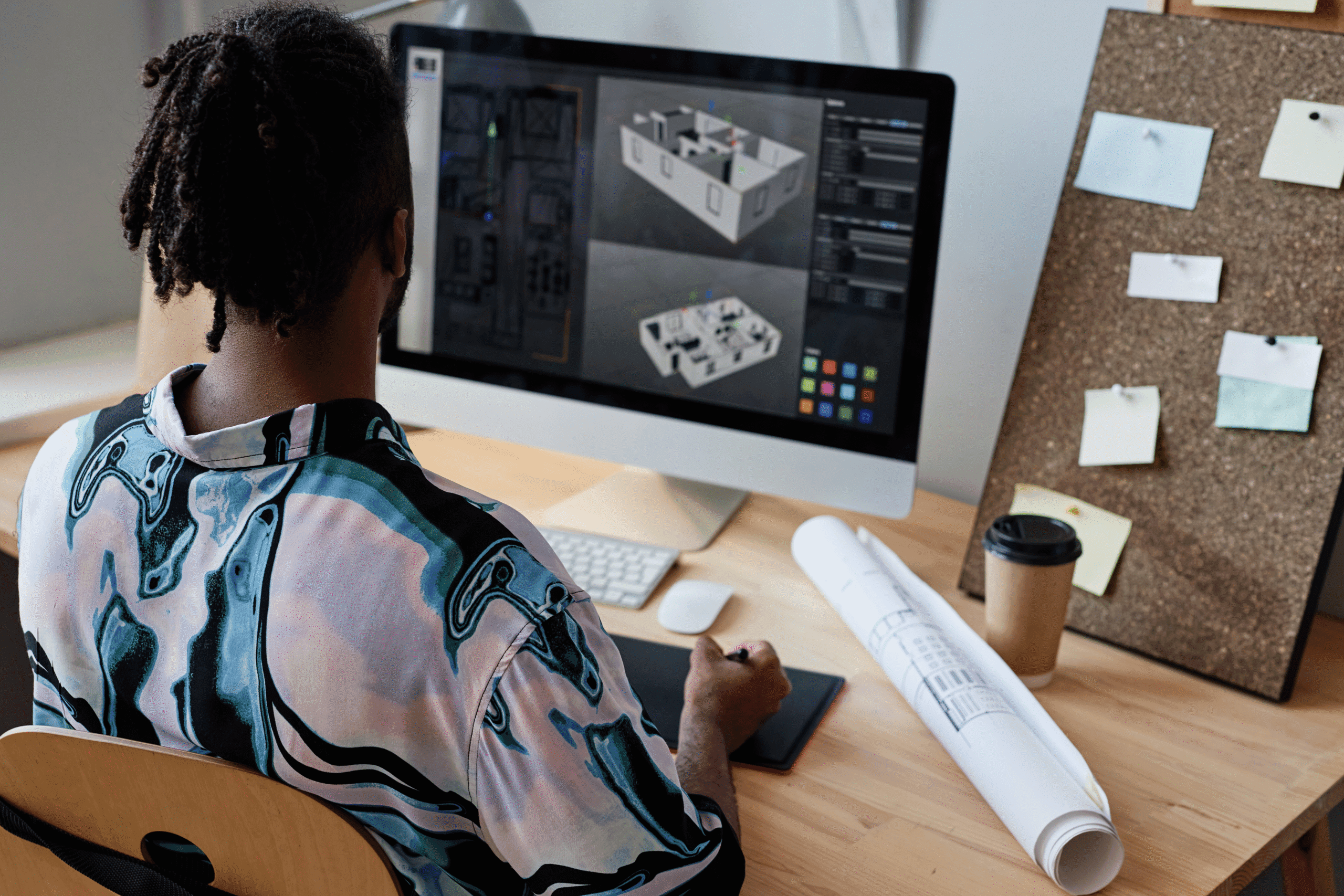
There’s a common assumption that tools become simpler over time. In practice, tools often become more powerful, and therefore more complex, once the market moves past novelty and into professional expectations.
Early versions of GenAI image tools were primarily prompt-in / image-out. Today, many AI tools for industrial designers offer:
- Multi-step control and iteration
- Reference-driven workflows
- Style and consistency management
- Layering, inpainting/outpainting, and editing
- Increasing integration with other design and production tools
In other words, the “magic” becomes craft. And just as mastering the Adobe Creative Suite or SolidWorks signals professional capability, mastering AI-driven workflows will increasingly do the same. Designers who can operate these systems with real control will become highly valuable. Just as digital fluency once defined the profession, AI fluency, particularly for industrial designers, will now do the same.
Why designers have a lead advantage in an AI-driven world
1. Fidelity judgment
Designers are trained to understand low-, mid-, and high-fidelity outputs, and when each level is appropriate.
They know:
- When a sketch is enough
- When a rendering persuades
- When photorealism is premature (and can mislead stakeholders)
AI can produce outputs at every fidelity level, but it takes design judgment to use the right fidelity at the right time in a process.
2. AI prototyping for industrial design needs discipline
GenAI can generate infinite images. But industrial design, even with AI, doesn’t end at images.
Prototypes – physical or digital – remain essential as part of the product development process.
As Frog Design’s founder, Hartmut Esslinger, once remarked, “When you prototype something and simulate, you get much better decisions for the next step.” In a world flooded with pixels, the ability to test, simulate, and iterate with prototypes separates meaningful design outcomes from lowest-common-denominator products.
Better decisions, faster
Industrial design is largely a discipline of decisions. You’re constantly making and moderating choices to reach the best solution within constraints – materials, tooling, production timelines, cost targets, and user needs.
Unlike many digital products, physical products can’t always be “patched later.” Industrial design creates products for the physical world, where constraints (of material, tooling, production, etc) make each decision more permanent. This is where AI’s biggest impact may emerge: decision acceleration.
When designers use AI with the two advantages above – fidelity judgment and prototyping discipline – GenAI can speed up the process. It accelerates how we compare options, test directions, and reflect on trade-offs, helping us reach relevant choices more quickly.
Trying, testing, prototyping, and reflecting are essential not only for design itself but also for learning how to design with AI. This mindset helps designers—industrial and beyond—stay adaptive, critical, and inventive, qualities that will be even more vital in an AI-driven future.
At Star, we invest in an AI Innovation Hub that continuously explores and integrates cutting-edge generative AI into enterprise workflows – so teams can move faster without sacrificing quality.
We’re a strategic partner for AI-native experience design and innovation, combining deep UX expertise, AI fluency, and engineering excellence to help brands across automotive and mobility. Healthcare and life sciences, financial services, and media/advertising evolve product and digital ecosystems by integrating GenAI with human-centered design principles.
Generative AI refers to AI systems that create new outputs – images, concepts, variations, and sometimes structured documentation – based on prompts, references, and constraints, helping designers explore options faster.