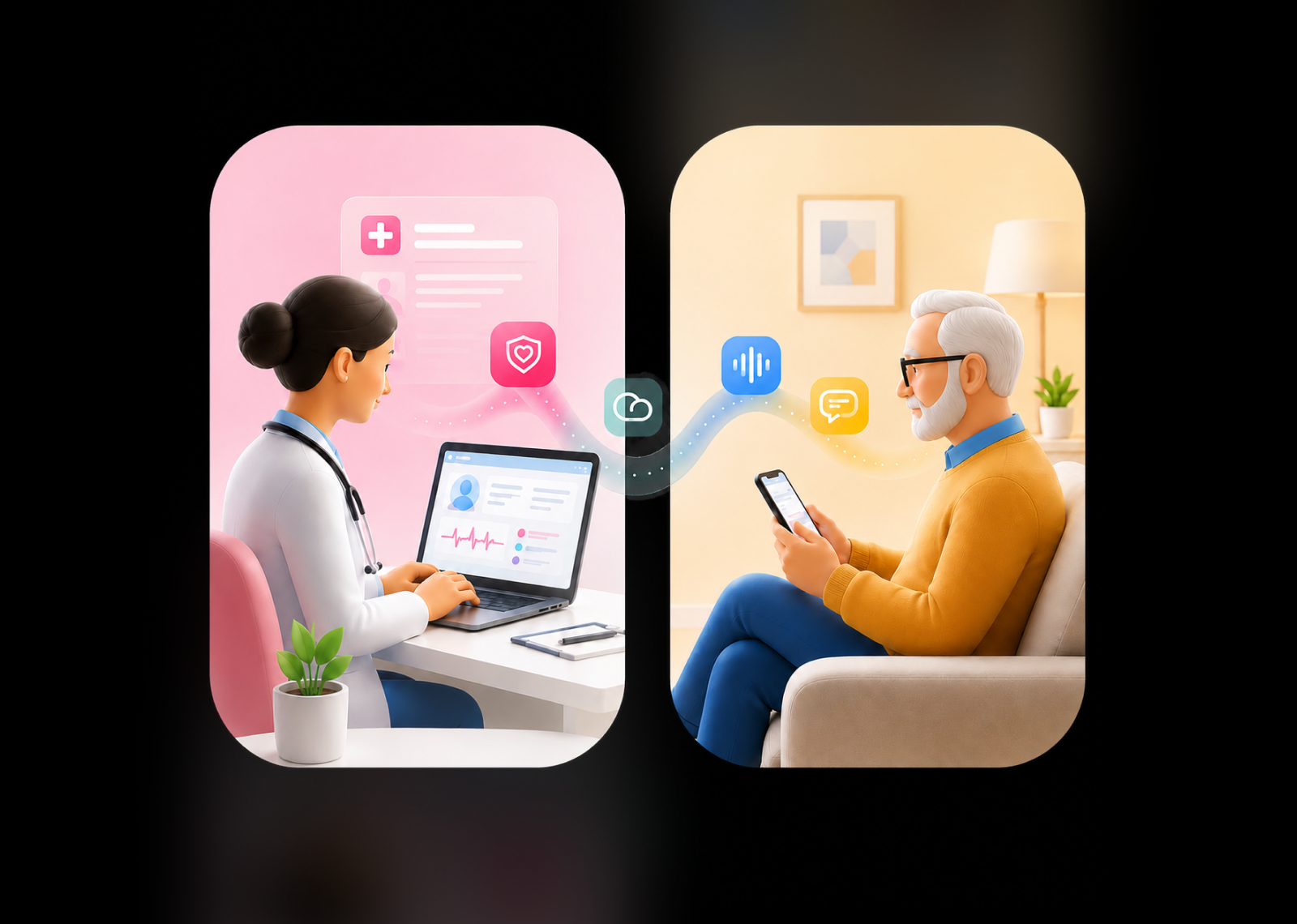



For years, medical device OEMs have focused on improving precision, equipment, and reliability at the point of care. In hospitals, clinics, and other medical settings, care now relies on connected medical devices, standardized workflows, skilled staff, and clear procedures. This environment brings greater visibility, evidence, and timely intervention when it matters most.
And then the patient goes home.
This is where a significant structural gap in medtech begins. Across diverse therapeutic areas such as wound care, glaucoma, dental and orthopedic implants, ostomy, urinary incontinence, breast implants, inhalers, and respiratory therapy, a large share of real outcomes is shaped not only by the clinical moment itself but by what happens afterward: whether a patient follows instructions, uses a device correctly, notices deterioration, manages discomfort, stays adherent, or seeks help before a problem escalates. Some categories have already shown what progress can look like with the strategic use of SaMD, such as remote patient monitoring, connected medical devices, and patient adherence technology. Diabetes care, continuous glucose monitoring, automated insulin delivery, smart inhalers, connected CPAP, and parts of remote cardiac monitoring have demonstrated that a digital layer can improve visibility and continuity beyond the clinic. Yet across many other therapeutic areas, those everyday moments remain only partially captured and largely invisible to the manufacturer.
This article explores this gap. It is not a matter of adding a software feature or a basic app, but rather of closing a broader Software as a Medical Device (SaMD) gap: the lack of a digital component that extends care beyond the clinical setting and creates a more timely and useful connection between patient behavior, therapy performance, and care decisions. For OEMs in long-term, high-value therapeutic areas, this gap is increasingly difficult to justify.
Point of care is covered. Daily life is not
The clinical environment is effective because it is controlled and structured. The necessary instruments are available, patients are monitored, and the setting supports high treatment adherence.
Outside the point of care, all of those conditions change. The patient returns to a setting shaped by a different routine, stress, work, family demands, sleep patterns, distractions, and must rely on their own judgment. Oversight decreases, and direct clinician support is no longer present. The therapy must still succeed, but now in a much less predictable environment.
This is why extending clinical efficiency into the home has always been difficult. Hospitals are designed around standardization and intervention, while daily life is not. Patients may interpret symptoms differently, overlook important details, forget steps, delay tasks, adapt instructions, skip routines, or abandon them altogether. In categories where outcomes depend on repeated behavior outside the clinic, the quality of the hardware alone is not sufficient.
This is not a failure on the part of patients. Instead, it reflects a gap between where therapy is designed to succeed and where it must succeed in practice. While point-of-care interventions may be advanced, once patients leave that environment, visibility, support, and evidence infrastructure often diminish.
The “at-home” gap is a structural problem
When outcomes depend on daily behavior, discovery cannot start with technology alone. It has to begin with the full care reality around the patient. That means understanding the clinical indication, treatment workflow, patient-clinician relationship, intervention cadence, care journey, patient persona, therapy routine, environment, care network, risks, potential complications, and adverse effects that influence behavior.
This work cannot be accomplished through desktop research alone. It requires direct observation, structured qualitative research, and conversations with those directly involved: clinicians, specialist teams, providers, and, when possible, patients. The goal is not to gather superficial feedback, but to identify where data is lost, support breaks down, where risk accumulates, and where timely intervention becomes unnecessarily difficult.
For some OEMs, the challenge is greater because they have not traditionally managed the patient relationship, which has typically been handled by hospitals, clinicians, providers, or distributors. The same applies to data. Real-world evidence often arrives indirectly, fragmented across providers, payers, pharmacies, research programs, and third-party platforms. By the time this data is consolidated and interpreted, the optimal intervention window may have closed.
This is why the “at-home” gap is not simply a missing feature, but a structural issue in how many device businesses were established. Hardware-first models routed through institutional channels are not designed to generate rapid feedback loops from real patient experiences. However, technology is expanding what is possible. Telehealth, automated prescribing, remote monitoring, connected medical devices, and flexible data-sharing now make first-party patient data more accessible, timely, and affordable. The opportunity is not only to communicate directly with patients, but also to build stronger data connections to therapy performance outside the clinic.
Why now? The pressure to extend care beyond the clinic
The case for a digital component is becoming increasingly urgent as two pressures converge.
The first pressure is economic. Value-based care and quality-linked reimbursement models now require more than proof of product performance at purchase. Providers, procurement teams, and payers must account for outcomes, continuity of care, readmissions, complications, and total cost, not just device functionality in clinical settings. In this context, a standalone device is often insufficient. A connected service layer is better equipped to demonstrate therapy performance over time, identify adherence gaps, and highlight opportunities for earlier intervention to improve outcomes and reduce costs.
The second pressure is competitive. The benefits of digital support for adherence, engagement, remote monitoring, and follow-up are well established. What has changed is the feasibility of implementation. Cloud infrastructure is more advanced, connected hardware is more accessible, development cycles are shorter, and digital health experiences are now familiar to healthcare systems and patients. While regulatory requirements remain rigorous, they are more clearly defined. These changes have lowered the barrier to developing effective digital extensions for therapy.
However, the biggest obstacle is often not belief. It is business inertia.
Large OEMs are not structured to operate like startups. Their processes, quality systems, and organizational structures are designed to develop and commercialize physical products in highly regulated environments. While effective for hardware, these systems are often ill-suited to software-driven, service-based models that require continuous iteration, cross-functional ownership, and ongoing patient engagement.
This tension is most evident when OEMs attempt to integrate digital capabilities into device businesses. Developing connected services demands different skills, development cycles, and operating rhythms than traditional hardware programs. It also requires organizations to address legacy systems, fragmented data, and infrastructure not designed for interoperability.
While funding and ownership are important, the greater challenge is adaptation. Without an operating model that supports connected care, even well-funded digital initiatives may struggle to progress from concept to execution.
Therapeutic areas: A deep dive
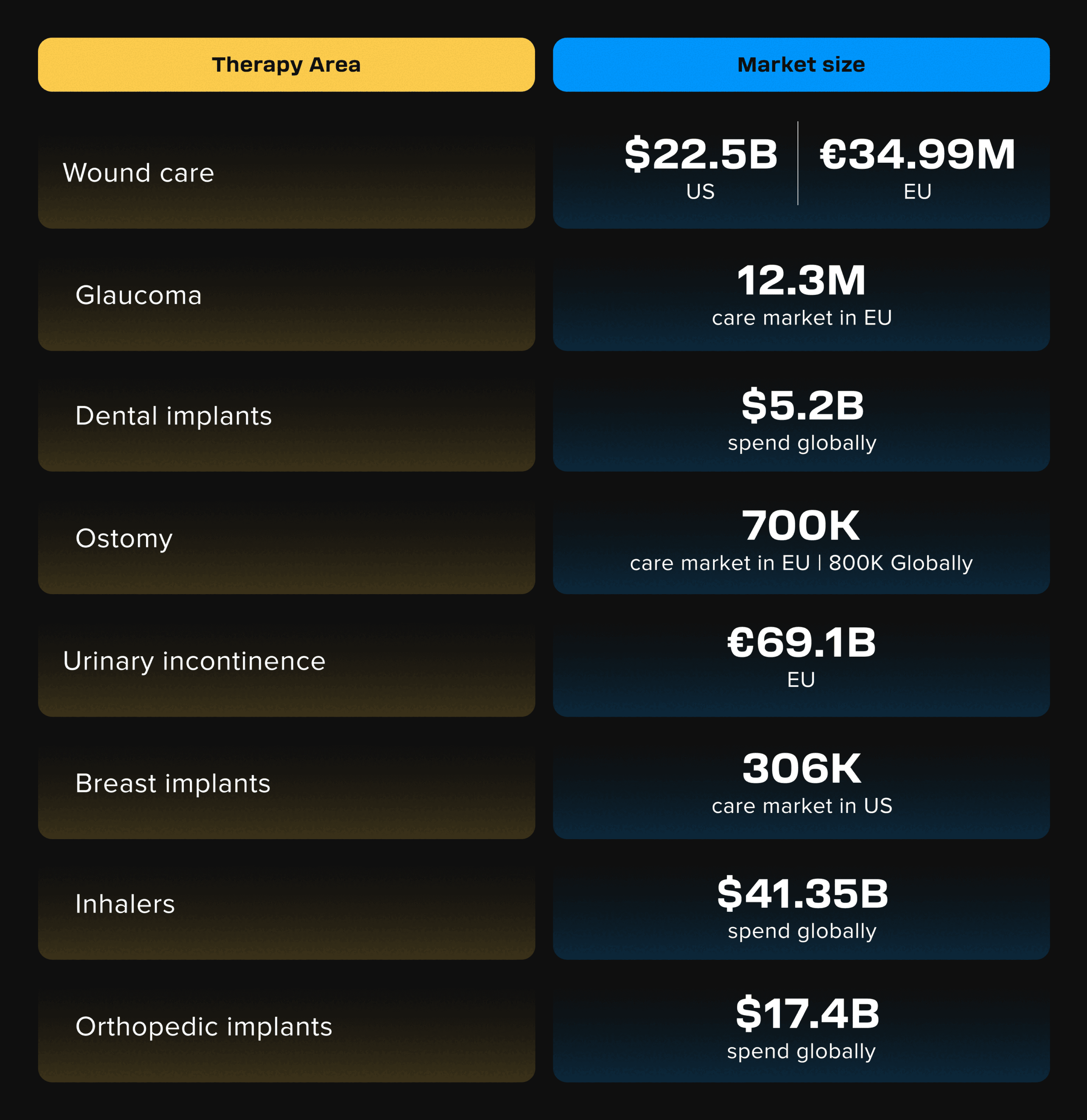
Across these therapeutic areas, the same structural pattern emerges. The addressable markets are large, clinical workflows at the point of care are increasingly optimized, and the underlying therapies are well established. Yet outcomes are still largely determined outside that environment, in patients’ daily lives, where adherence, technique and early intervention are inconsistent and often invisible. Looking across categories, the gap is not in clinical capability, but in the absence of a consistent digital aftercare layer owned by OEMs.
Wound care
Wound care is one of the clearest examples of the mismatch between point-of-care sophistication and at-home invisibility. In the United States, chronic wounds affect approximately 10.5 million Medicare beneficiaries in 2025 and cost an estimated $22.5 billion annually. In Europe, the burden is similarly significant. A real-world study from 54 primary care centers in Barcelona found that chronic wound management cost €34.99 million over three years in a population of just under one million.
Despite this scale, the patient-facing digital layer at the OEM level is almost entirely absent. Leading manufacturers such as 3M/Solventum, Smith+Nephew, Mölnlycke, and Hartmann provide advanced clinical products, but little infrastructure for monitoring wound progression at home or identifying early signs of deterioration. Instead, third parties are moving faster. Swift Medical processes more than 600,000 wound evaluations per month across 4,800+ facilities, while Healthy.io’s Minuteful for Wound, piloted with Johns Hopkins in 2024, demonstrated that remote monitoring enabled timely interventions in 36% of patients who would otherwise have gone undetected between visits. The capability exists, but it sits outside the OEM ecosystem.
Glaucoma
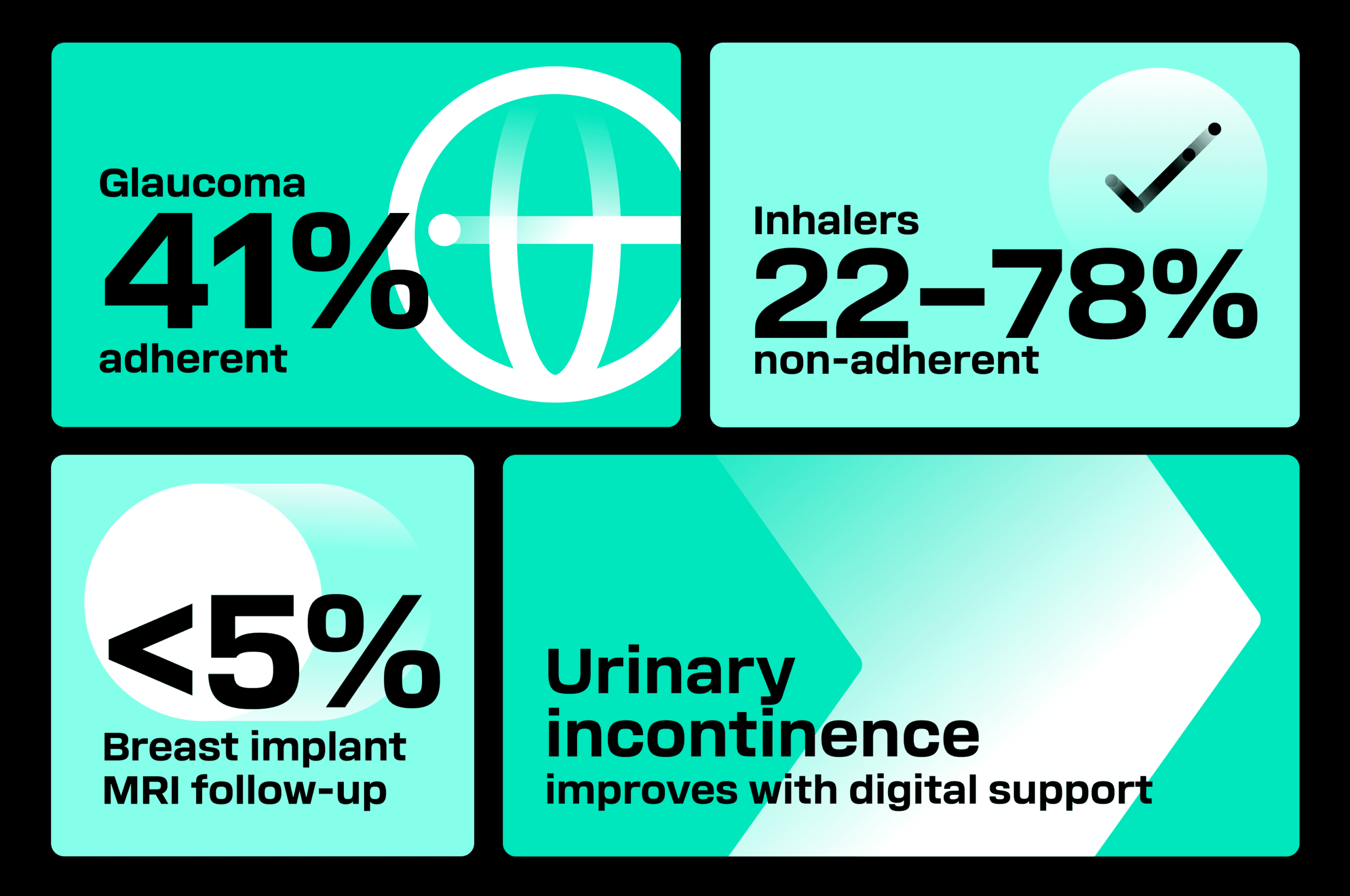
Glaucoma is a high-prevalence, long-term condition where outcomes depend heavily on consistent adherence. A 2025 meta-analysis estimated that 12.3 million people in Europe are living with glaucoma, including 6.9 million with undiagnosed disease, with prevalence expected to increase by more than one million by 2050. At the same time, adherence remains persistently low. A 2025 registry study from Lombardy, Italy, found that only 41% of patients were adherent to therapy, while global data suggests that around half of patients discontinue treatment within the first six months.
The challenge is structural. The primary treatment is often a daily eye drop for a condition that is largely asymptomatic until late stage, meaning patients receive little feedback and have limited motivation to remain consistent. Yet there is limited OEM-led digital aftercare infrastructure to support adherence. Leading OEMs such as Alcon, Johnson & Johnson Vision, and Bausch + Lomb have invested heavily in surgical innovation and clinical workflows, but offer no patient-facing systems for adherence monitoring, reminders, or feedback. Daily treatment behavior – the primary determinant of outcomes – remains largely invisible.
Dental implants
The global dental implant market was valued at approximately $5.2 billion in 2024 and is projected to reach $8.4 billion by 2033. However, long-term outcomes are significantly influenced by patient behavior after the procedure. A 2025 systematic review covering 102 studies and 13,030 patients found peri-implant mucositis in 46% of patients and peri-implantitis in 21%, with cumulative incidence rising further over time.
Digital innovation in this category has been concentrated almost entirely on the clinical side. Leading companies such as Dentsply Sirona, Straumann and Envista have built advanced ecosystems for imaging, treatment planning and surgical execution. These include platforms such as DS Core, AI-driven planning tools and CAD/CAM systems. However, the post-procedure phase remains largely unsupported. There is no meaningful infrastructure for monitoring hygiene, identifying early symptoms or supporting long-term maintenance. The digital layer ends at the clinic, even though the majority of risk emerges afterward.
Ostomy
Ostomy care involves a large and established patient population, with approximately 700,000 individuals in Europe and between 800,000 and one million in the United States living with a stoma. Daily management is complex, and complications such as leakage are common. A 2024 multicenter UK study found that approximately one-quarter of ostomy patients experience monthly leakage, which impacts both clinical outcomes and quality of life.
This is one of the few categories where OEM-led digital innovation is beginning to emerge. Coloplast’s Heylo system integrates sensor technology into the baseplate and pairs it with a mobile application to detect leakage early. Clinical results from 2024 showed reductions in leakage episodes alongside significant improvements in self-management and mental well-being. A longitudinal study is ongoing, with completion expected in July 2026. However, this remains the exception rather than the rule. Other major players, including Hollister and ConvaTec, have not introduced comparable patient-layer digital solutions at scale, leaving the broader category largely under-digitized.
Urinary incontinence
Urinary incontinence represents both a widespread clinical condition and a major economic burden. A 2025 study published in European Urology estimated the cost across the EU at €69.1 billion in 2023, projected to rise to €100.2 billion by 2030. The condition affects between 25% and 45% of women across most population studies, with prevalence increasing with age.
First-line treatment is typically pelvic floor muscle training, which is clinically effective but highly dependent on patient adherence and correct execution. Without guidance or feedback, adherence is consistently low. Digital interventions have demonstrated clear value in addressing this gap. A randomized controlled trial showed that device-guided pelvic floor training significantly outperformed standard home instruction, while a 2024 real-world study of 947 users found 74% showed measurable improvement with high adherence when supported by an app. Despite this, leading device manufacturers such as Medtronic and Axonics focus primarily on device control and stimulation management, rather than behavioral support. The digital aftercare layer that drives adherence is still largely missing.
Breast implants
Breast implants represent a long-term patient relationship with minimal structured follow-up. In 2024, U.S. plastic surgeons performed 306,196 breast augmentation procedures and 162,579 reconstruction procedures, with Europe contributing comparable volumes. Long-term monitoring is critical, particularly for detecting complications such as silicone rupture, which is often silent and requires imaging for diagnosis.
Regulatory guidance recommends MRI or ultrasound screening starting five to six years after implantation and continuing every two to three years. In practice, adherence is extremely low. A large post-approval study covering 99,993 patients found MRI surveillance rates below 5%, while additional studies report similarly low compliance. A 2025 retrospective study found that 58% of ruptures were detected only through routine imaging, with many patients asymptomatic at diagnosis. Despite this, most manufacturers provide little more than warranty registration tools. Motiva is a notable exception, offering RFID-enabled implants and a companion app to support traceability and device verification. However, broader clinical monitoring, symptom tracking, and long-term engagement remain largely unaddressed.
Inhalers
Respiratory inhalers represent one of the largest gaps at scale. The global inhaler devices market reached approximately $41.35 billion in 2024, yet correct usage and adherence remain major challenges. Evidence from 2024–2025 studies shows that over two-thirds of patients make at least one critical error when using their inhaler, and between 22% and 78% of patients are poorly adherent to treatment.
Connected inhaler solutions have demonstrated the ability to improve both adherence and technique. Platforms such as Adherium’s Hailie have shown significant improvements in medication adherence, while Propeller Health has demonstrated measurable gains across multiple studies and received FDA clearance for integration with specific therapies. However, adoption remains limited. The smart inhaler market was valued at approximately $303.6 million in 2024, a small fraction of the total inhaler market. Most inhalers are still distributed without sensors, feedback, or connectivity, leaving patients without guidance and clinicians without visibility between visits.
Orthopedic implants
The global orthopedic implant market, particularly for knee and hip replacements, generated approximately $17.4 billion in 2024 and continues to grow as demand increases. OEMs have made significant investments in surgical precision, including robotics, AI-assisted planning, and intraoperative technologies that improve outcomes at the point of care.
However, recovery and rehabilitation after surgery remain critical determinants of long-term success, and these phases are less consistently supported. Studies published between 2024 and 2025 show that telerehabilitation can achieve outcomes comparable to, or better than, traditional in-person physiotherapy, while improving accessibility and patient satisfaction. Despite this, many digital rehabilitation solutions are developed by third-party providers rather than OEMs. Zimmer Biomet’s Persona IQ, a sensor-enabled implant that provides passive recovery data, represents an important step toward a connected aftercare model, but remains an exception rather than standard practice.
Respiratory therapy
Respiratory therapy beyond CPAP illustrates a similar imbalance. While the sleep apnea segment has well-developed digital ecosystems, including connected medical devices and patient apps, other areas, such as home noninvasive ventilation, remain fragmented. These patient populations are often clinically complex, and outcomes depend heavily on consistent adherence over time.
The digital infrastructure in these areas is uneven. The recall of Philips Respironics devices, affecting millions of units globally, disrupted both hardware supply and associated digital platforms. As of 2024, regulatory restrictions remain in place, and the category has yet to fully recover. At the same time, evidence for telemedicine and remote monitoring in home ventilation is still developing. A 2025 European Respiratory Society guideline concluded that recommendations in this area remain conditional due to limited high-certainty evidence. Some connected solutions exist, but they are not yet widely standardized or embedded in routine care. As a result, one of the most clinically vulnerable patient groups remains under-supported in the home environment.
Why the SaMD gap persists across categories
The consistency across these therapeutic areas is not coincidental. It points to a structural gap in how many medical device businesses have been designed.
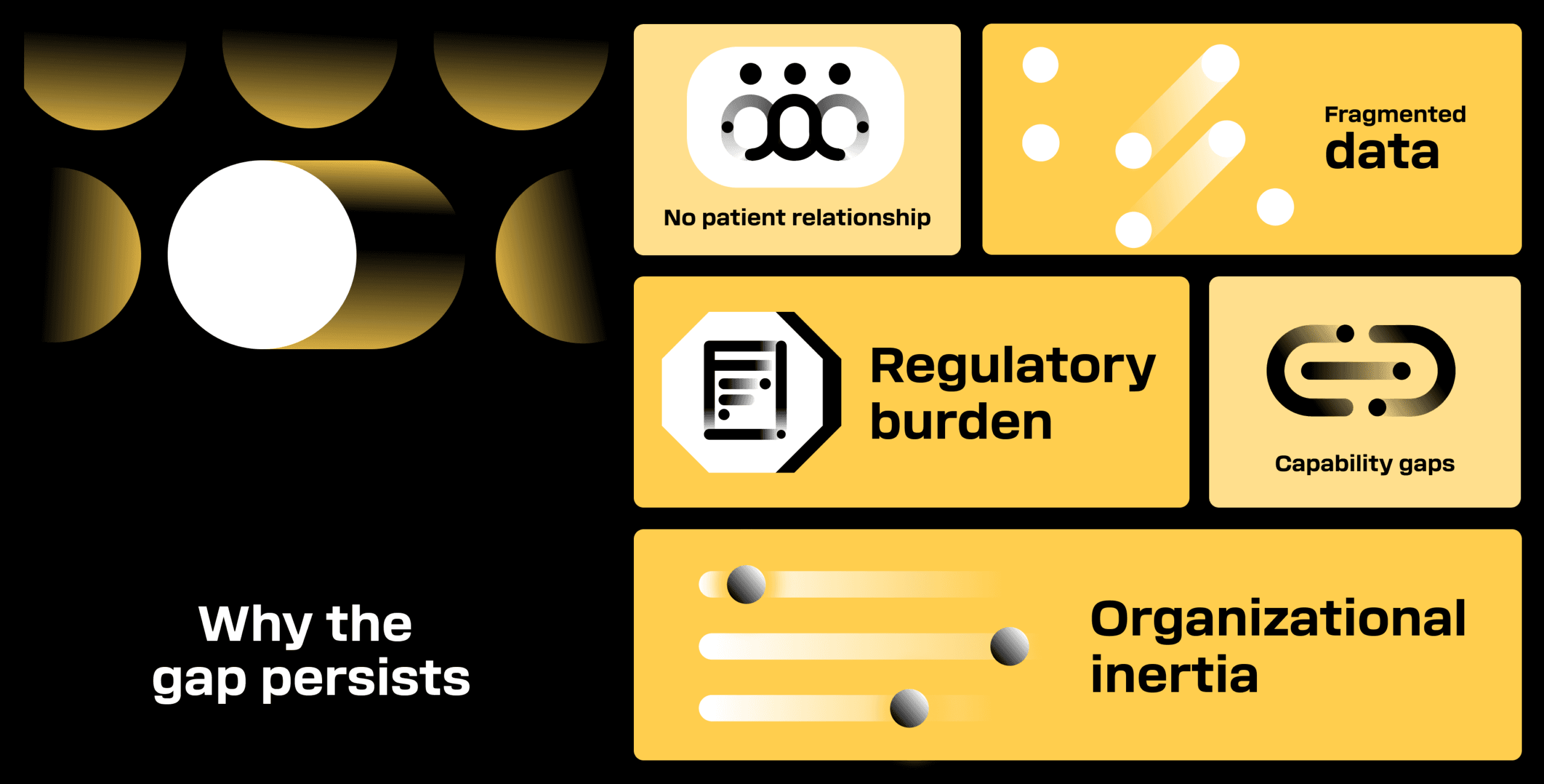
At the center of that gap is the absence of a direct patient relationship. Historically, OEMs have operated through providers, distributors and clinical institutions. The patient relationship, and therefore the primary source of real-world behavior and feedback, has largely sat outside the OEM’s control. As a result, most products have been designed for the point of care rather than for the realities of daily life, where outcomes are ultimately determined.
This model has been effective for decades, supporting efficient development, clear regulatory pathways, and established commercial channels. However, it does not support continuous engagement, real-time feedback, or long-term outcome tracking. As therapy success increasingly depends on what happens between clinical interactions, this limitation becomes more apparent.
The challenge extends beyond patient access to obtaining meaningful data. While OEMs have collected real-world evidence from providers, payers, pharmacies, and clinical studies for years, this data is often indirect, fragmented, and delayed. Significant effort is required to aggregate, standardize, and interpret it before it becomes actionable. Often, by the time insights are available, the window for timely intervention has closed.
Implementing a digital aftercare layer changes this dynamic by enabling a direct, continuous connection to patient behavior. It combines objective data from connected medical devices with subjective patient input. However, integrating this layer into existing business models introduces new challenges.
Commercially, value is often distributed among multiple stakeholders. Improved adherence, fewer complications, and better long-term outcomes benefit patients, providers, and payers as much as, or more than, the OEM. This distribution makes it harder to define and justify return on investment harder to define and justify within traditional product-focused models.
Regulatory complexity adds further challenges. Medical devices already operate under strict quality and approval frameworks. Adding software and digital services extends these requirements to include validating new functions, ensuring data privacy, strengthening cybersecurity, and maintaining ongoing compliance. The digital component is no longer separate; it becomes part of the regulated product.
A capability gap also exists. Developing effective digital health solutions requires expertise in product design, user experience, behavioral science, data engineering, and clinical integration. These skills must be integrated, often in ways that differ from traditional hardware development. Many organizations must build new teams, adopt new processes, and integrate with legacy systems not designed for interoperability.
Adoption is another challenge. Patient readiness for digital engagement varies by therapeutic area. Some users adopt simple tools quickly, while others need more structured support, education, and motivation. Often, OEMs must not only build the product but also help shape how the market engages with it over time.
Finally, organizational risk aversion is a factor. Transitioning to digital introduces new responsibilities for patient data, security, ongoing service delivery, and long-term support. These require sustained operational commitment, new governance models, and a willingness to manage additional complexity.
Together, these factors explain why the digital aftercare layer remains underdeveloped in many categories. The barrier is not a lack of evidence or opportunity. Instead, it is the combined effect of commercial structures, regulatory requirements, capability gaps, and organizational inertia, all of which make the shift to connected, patient-centered models more difficult, even when the path forward is clear.
The digital layer as part of modern care delivery
For OEMs, the strategic value of the digital layer is often overlooked when it is reduced to interface design. The goal is not simply to create an app, but to build a service layer that aligns more closely with the realities of modern healthcare: longer care journeys, greater pressure on clinicians, rising expectations for continuity, and growing demand for visibility into outcomes beyond the point of care.
A meaningful patient relationship provides OEMs with timely, high-quality first-party insights into real-world therapy use. This continuity across care episodes enables clinicians and support teams to identify nonadherence, confusion, early warning signs, or declining recovery before they escalate into costly issues. It also informs product development with contextual data, rather than just aggregate historical metrics, and can enhance retention, engagement, and long-term loyalty.
Equally important, the digital layer can differentiate the business model in markets where hardware alone is harder to distinguish over time. When two products are clinically credible, superior monitoring, support, adherence logic, and longitudinal insight provide a strategic, not just a feature-based, advantage.
The sequence is critical. The primary goal is not to generate datasets, but to deliver measurable clinical value. The digital layer must address real problems in the care workflow and demonstrate clear impact. Only then should it be developed as a service that is adoptable, supportable, scalable, and commercially viable. Longitudinal data, brand value, and strategic protection are outcomes of these foundations.
Star’s POV
The primary challenge in building a digital layer within a hardware-first organization is not the technology; it is the mindset shift in how the product and the surrounding business model work.
Traditionally, OEMs develop and sell standalone medical devices through established clinical channels. However, connected care demands a new approach: delivering continuous services that support patients and healthcare professionals over time. This involves integrating connected hardware, digital tools, data, automation, and system integrations to provide ongoing insights into therapy performance beyond the point of care.
Making that shift requires more than adding digital capabilities. It requires updating and aligning the business model, processes and operating structure around a different outcome. The focus shifts from delivering a product to delivering ongoing patient care and treatment insights, where value is created through continuity, visibility, and the ability to respond in real time.
Clarity on the desired end state matters. Organizations must determine how their therapies and services should function in a connected, automated, personalized, and value-based healthcare environment. Understanding the long-term goal makes it easier to identify where digital solutions add value, how components should integrate, and which steps to prioritize.
The shift does not happen all at once. But without a clear endgame, it is difficult to move beyond isolated features toward a system capable of delivering sustained impact.
The SaMD gap is not a niche issue. It is a structural shift in how care is delivered and how value is created. And it is one that medical device OEMs can no longer afford to ignore.
And it is one that medical device OEMs can no longer afford to ignore.
How OEMs should prepare to build Software as a Medical Device (SaMD)
There are practical steps OEMs can take to address this missing digital layer:
1. Establish the endgame vision on how the digital component will help or transform main business
Define what outcomes your care journey should drive when it is fully connected. Should it differentiate you from competitors? Or drive brand loyalty? Should it strengthen clinician preference and improve patient retention?
2. Identify where outcomes break down in real life
Map the end-to-end care journey, pinpointing where adherence drops, clinician work becomes complicated, or visibility is lost outside the clinic. You’ll find common failure points; missed routines, increasing clinician burden, delayed intervention, etc. It’s in these moments that the digital layer must create value.
3. Evaluate the digital fit
Before committing to a solution, pressure-test how the opportunity delivers clinical value. That means identifying the specific lever: does it close a workflow gap that clinicians currently work around? Remove a business breakpoint that blocks adoption? Enable a care transformation that the device alone can't sustain? The answer determines what to build — and what not to.
4. Build the capabilities fitting the digital role
Once a gap passes the fit test, define what the digital layer actually does. Not in abstract terms — in functional roles: monitoring, coaching, triage, communication, documentation, decision support, or coordination. Each serves a different purpose in the care journey and demands different capabilities. A remote monitoring solution is not the same build as a patient coaching tool.
Taken together, these steps shift the focus from adding a digital feature to building a connected care model. One that improves real-world outcomes and provides continuous visibility beyond the clinical moment.
Get in touch
For OEMs, the opportunity extends beyond adding digital components to existing devices. It is about creating a connected care model that improves visibility, supports better outcomes, and strengthens long-term differentiation. Star works with medical device companies by integrating strategy, design, and software development to define the optimal service model and build the supporting digital layer.
FAQs on the SaMD Gap for medical device OEMs
The SaMD gap refers to the absence of a digital software layer that supports patient care beyond the clinical setting. For many medical device OEMs (original equipment manufacturers), this means limited visibility into adherence, device use, therapy performance, and patient outcomes once a patient leaves the point of care.