The pharmaceutical industry is not short of data. Wearables stream biometric readings around the clock. Electronic health records accumulate decades of longitudinal patient histories. Clinical trial systems capture everything from adverse event reports to dosing deviations. Pharma companies have also spent decades building mature infrastructure across EDC, CTMS, eTMF, LIMS, ELN, safety systems, RWE datasets, data warehouses, MDM platforms, analytics tools and vendor-managed data flows.
Based on our work with some of the world’s largest pharma organizations, we see data integration debt as the biggest barrier for building an AI-ready modern pharma data ecosystem. These environments have evolved across functions, standards, vendors and time periods, creating brittle pipelines, bespoke mappings, fragmented ownership, inconsistent semantics and slow change control. As a result, teams can spend too much time reconciling data, tracing quality issues and proving that downstream outputs remain reliable, compliant and audit-ready.
As pharma investment in AI accelerates, the lack of data interoperability will continue to compound. AI-ready pharma data management depends on trusted, interoperable, observable and analysis-ready data foundations. Pharma organizations need a practical path to modernize existing data estates without disrupting validated, business-critical systems.
What is AI-ready pharma data management?
AI-ready pharma data management is the modernization of existing clinical, safety, regulatory, RWE, commercial and analytics data environments so data can be trusted, reused and governed across business-critical workflows.
It does not necessarily mean moving everything into one centralized platform. Depending on the organization, the target architecture may be a governed lakehouse, federated data ecosystem, clinical data hub, RWE environment, domain-specific data product layer or hybrid model. It must support:
- Interoperability across domains: connecting trial, RWE, safety, lab, EHR, claims, commercial and third-party data with consistent standards
- Semantic consistency: shared definitions, metadata and terminology governance across systems
- Pipeline observability: visibility into data quality, failures, bottlenecks and downstream impact
- Lineage and auditability: traceable data flows from source to insight, model output or regulatory evidence
- AI-ready analytics: trusted, well-documented data products that can support human-reviewed AI workflows, analytics copilots, cohort discovery and anomaly detection
The hidden cost of data fragmentation
Clinical research and trials today collect reliable, traceable, and timely data from wearable devices, mobile applications, electronic health records (EHRs), electronic data capture (EDC) platforms, lab information management systems (LIMS), and remote monitoring tools. The diversity enables richer, more representative datasets, but without a unified platform underneath, it becomes a liability.
The reality that persists in most organizations is that EDC systems do not automatically integrate with clinical trial management system (CTMS) workflows. Laboratory data in LIMS requires custom mappings to clinical databases. Safety and pharmacovigilance systems frequently operate in isolation from main clinical datasets. Real-world evidence platforms struggle to connect with structured trial data.
According to the Tufts Center for the Study of Drug Development (Tufts CSDD), protocol amendments now occur in 76% of clinical trials across Phases I to IV, up from 57% in 2015, with the average number of amendments per protocol rising 60% to 3.3. A single amendment carries a cost between $140,000 and $500,000 USD and the time from identifying the need to amend a protocol to final regulatory approval now averages 260 days. That is the administrative overhead fragmented data architecture imposes on organizations already operating under intense cost and timeline pressure.
Beyond inefficiency, fragmented data undermines the quality of analysis. A safety event labeled "nausea" in one trial system may appear as "gastrointestinal disorder" in another. Even when organizations rely on shared dictionaries such as MedDRA, different departments often use different versions, making cross-system comparison unreliable. Incomplete and inconsistent datasets compromise AI models and predictive analytics at precisely the moment pharma organizations are investing heavily in those tools to accelerate drug development.

Learn practical insights into how the right infrastructure can transform your data into better care, smoother operations and a more connected healthcare experience.
Patient generated health data: the opportunity buried in fragmentation
Alongside institutional data, a growing category of patient-generated health data (PGHD) is reshaping the boundaries of what clinical evidence can include. PGHD encompasses health history, treatment history, biometric data, symptoms, and lifestyle choices created, recorded, or gathered by or for patients outside the clinical setting.
The market for PGHD is projected to reach $9.21 billion by 2031 at a compound annual growth rate of 8.07%. The expansion is being driven by wearable technology proliferation, the strategic shift toward value-based care, government incentives for remote care delivery, and the widespread availability of connected medical devices.
For pharma and biopharma companies, PGHD offers something clinical trials have historically struggled to capture: longitudinal, real-world data on patient behaviour between clinical encounters. That includes medication adherence patterns, activity levels, sleep quality, and self-reported symptoms, precisely the signals that can identify digital biomarkers earlier in the disease course, optimize trial recruitment, and generate real-world evidence for regulatory submissions.
The problem is making it work in practice. Interoperability, security, and sheer data volume all create friction when you try to fold PGHD into existing clinical workflows. Without a centralized data infrastructure, PGHD remains a stream of signals too fragmented to act on.
A reference architecture for AI-ready healthcare data management platform
Over the years, we have worked alongside global pharma and life sciences organizations facing this exact challenge: vast amounts of patient, clinical and real-world data, but limited ability to turn it into trusted, actionable insight.
What we consistently see is that the gap between data abundance and data utility is an architecture, governance and workflow problem.
Our approach is built around a layered platform model that connects ingestion, transformation, storage, analytics, AI and compliance from the outset. Rather than stitching systems together through isolated integrations, we design the platform as a governed data foundation that can scale across clinical research, patient engagement, pharmacovigilance and commercial decision-making.
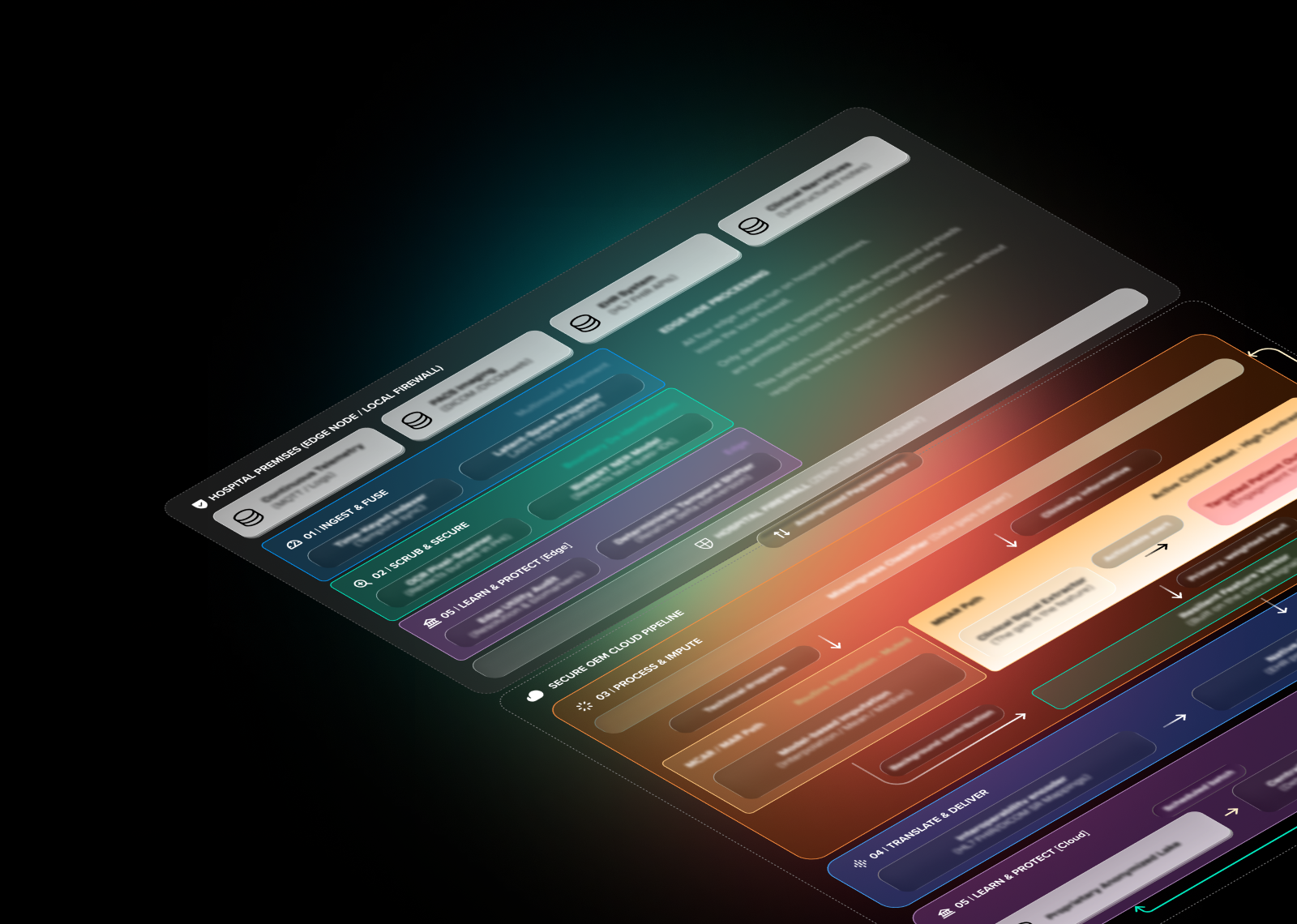
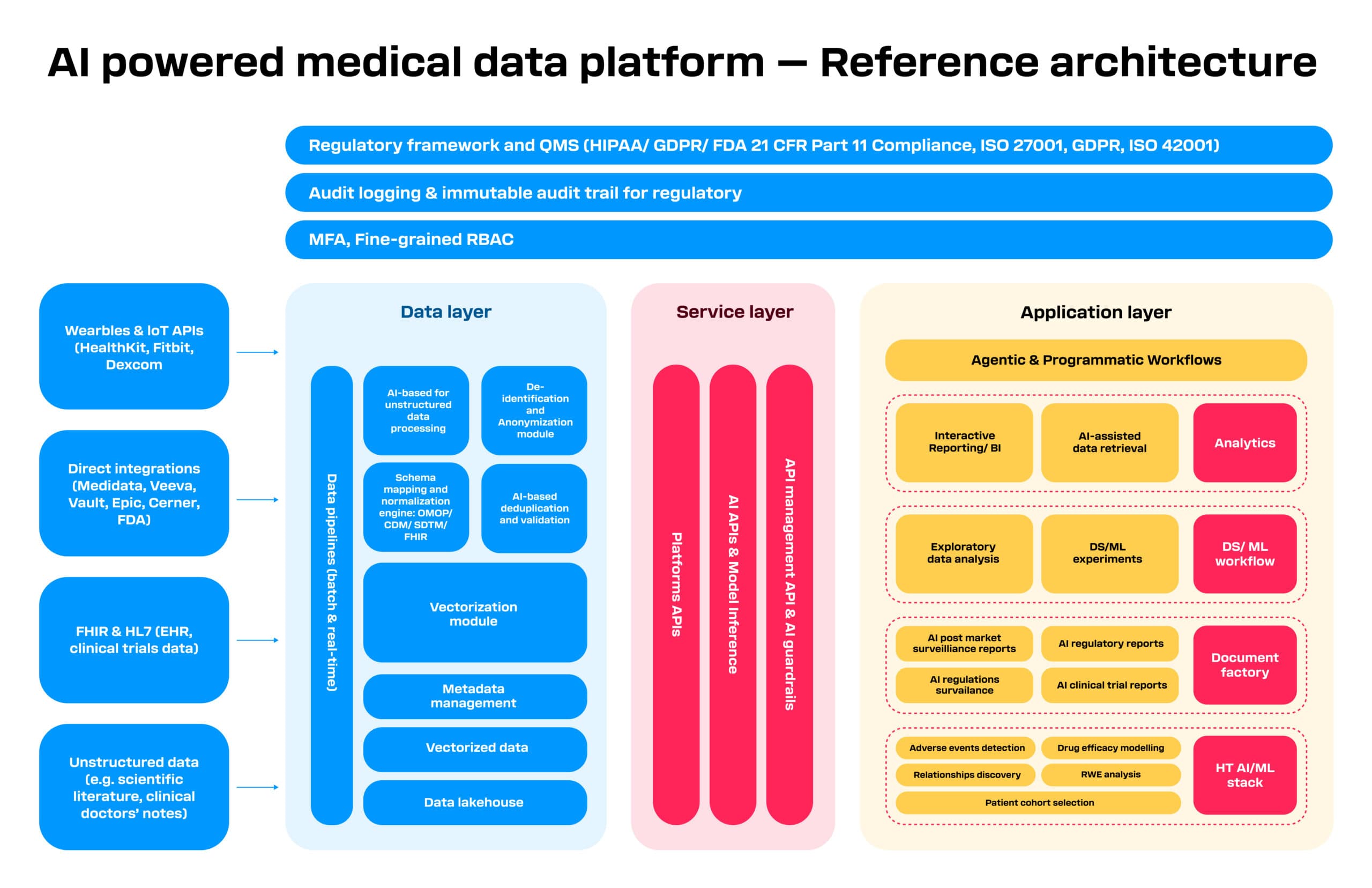
The following reference architecture shows how pharma and life sciences organizations can modernize data management step by step. It can be implemented as a lakehouse, federated data ecosystem, clinical data hub, RWE environment, domain-specific data product layer or hybrid model. What matters is not the architectural label, but whether the data foundation can support trusted analytics, compliant AI workflows and faster decision-making without disrupting validated systems.
1. Ingesting data from every source
The ingestion layer is where most platform projects fail first. Pharma data environments are heterogeneous by nature and a platform designed to serve both pre-market clinical trials and post-market surveillance needs to connect to all of them.
The data sources that need to be in scope include:
- Wearables and IoT devices via consumer health APIs such as Apple HealthKit, Fitbit, and Dexcom, capturing biometric and activity data continuously
- EHR and EMR systems including Epic, Oracle Cerner, and Veradigm, providing the longitudinal clinical record
- Clinical trial platforms such as Medidata and Veeva Vault where trial-specific protocol and outcomes data reside
- Direct regulatory sources such as FDA databases
- Unstructured data streams including scientific literature, clinical trial reports, adverse event submissions, and physicians' notes
This last category is often the most neglected and most valuable. A large proportion of clinically meaningful information lives in unstructured form, for example from a doctor's note or a case report. An effective ingestion layer must be capable of processing this content, not just structured fields.
The pipeline itself must support both batch processing and real-time data streams. Batch ingestion handles historical data loads and periodic updates from EHR systems; real-time processing handles continuous feeds from wearables, remote monitoring devices, and live adverse event reporting.
2. Transforming data into a common model
Ingesting data is only the beginning. Raw clinical data arriving from multiple sources is inconsistent, variously formatted, and frequently duplicated. The transformation layer is what converts this heterogeneous input into a coherent analytical asset.
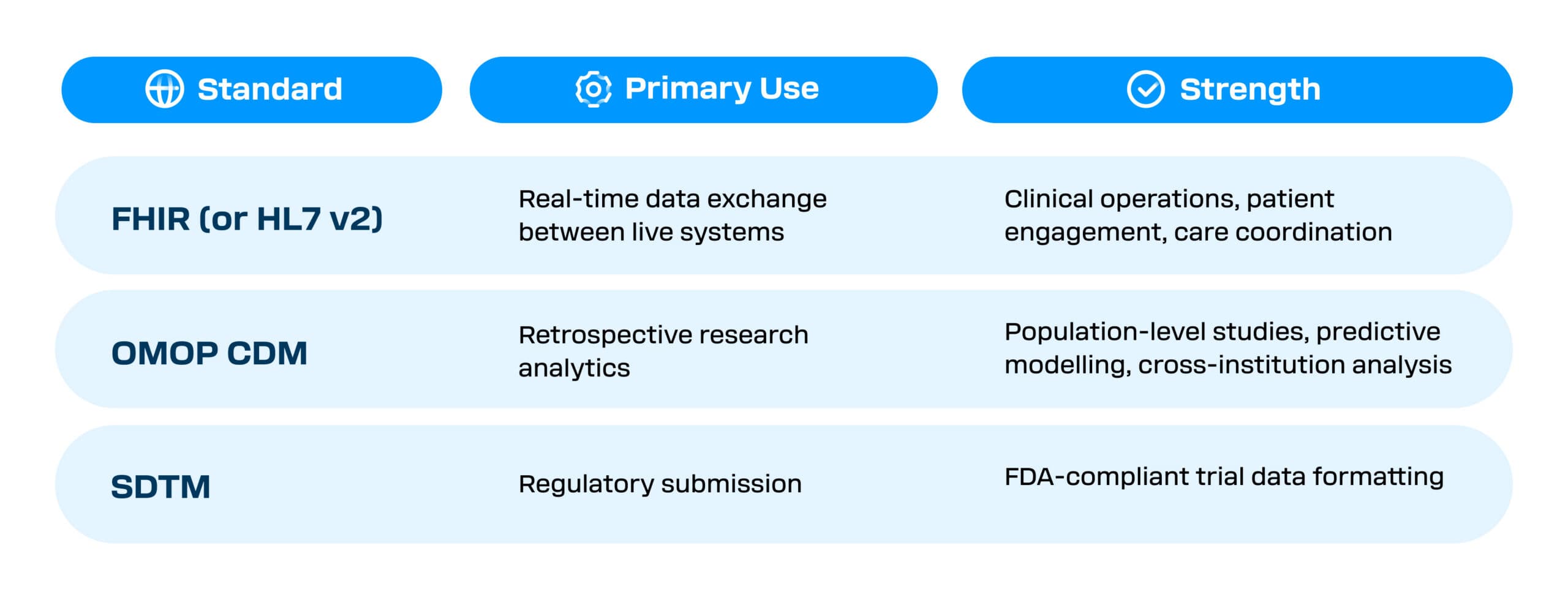
The critical work here is schema mapping and normalization. Data from different sources needs to be mapped to a common data model, most commonly OMOP CDM (Observational Medical Outcomes Partnership Common Data Model), SDTM (Study Data Tabulation Model), or FHIR (Fast Healthcare Interoperability Resources). Research using FHIR for OMOP data standardisation has shown it can achieve nearly 100% success in converting existing data to OMOP CDM, enabling researchers to analyse data and run machine learning algorithms seamlessly.
The distinction between these standards matters:
Effective transformation also requires AI-based deduplication and validation to catch inconsistencies that arise when the same patient appears across multiple source systems with slightly different identifiers. Patient identity matching is a deceptively difficult problem that requires probabilistic matching algorithms, not simple key lookups.
Anonymization is part of this layer too. Clinical data moving through a processing pipeline must be de-identified and anonymized before it reaches downstream analytical workloads, in accordance with HIPAA Safe Harbour or Expert Determination standards.
3. Achieving semantic interoperability
Beyond structural interoperability, the real value lies in semantic interoperability, where systems can interpret what data means consistently. This is the critical layer that most platforms underinvest in, and it is where the gap between "connected" and "useful" lies.
Semantic interoperability establishes connections between diverse data sources using shared terminologies, ontologies, and metadata standards. It ensures that "myocardial infarction" in one system's EHR means the same thing as "MI" in a trial database and "heart attack" in a patient-reported outcome. Without it, even a fully connected pipeline produces analysis that cannot be trusted.
Achieving this in a pharmaceutical context requires implementation of clinical terminologies including SNOMED CT, LOINC, RxNorm, and MedDRA and more importantly, it requires governance processes to maintain mapping consistency as those terminologies evolve. This is the infrastructure that makes cross-trial, cross-indication, and cross-institution analysis genuinely possible.
4. Scalable data storage with lakehouse architecture
A modern patient data platform needs storage architecture capable of handling structured and unstructured data simultaneously, at scale, with the access patterns of both operational and analytical workloads.The architecture that best serves this requirement is a data lakehouse: a hybrid approach that combines the low-cost, schema-flexible storage of a data lake with the governance and query performance of a data warehouse. The lakehouse stores:
- Structured clinical data (trial outcomes, lab results, vitals)
- Semi-structured event data (device telemetry, API payloads)
- Unstructured content (clinical notes, literature, imaging metadata)
- Vectorized representations of documents enabling semantic search and LLM-based retrieval
Critically, the lakehouse is the substrate on which downstream analytical workloads run. Data should be validated before landing in the primary store, with rejected or quarantined records tracked for remediation rather than silently dropped.
Security at this layer must be fine-grained. Role-based access control (RBAC) and multi-factor authentication (MFA) ensure that a clinical data analyst can access de-identified trial summaries without touching raw identifiable records that require additional governance approval.
5. AI-powered advanced analysis and insights
Once data is ingested, normalized, and stored at scale, the platform creates the foundation for a category of AI applications that would be impossible in a fragmented environment.
- AI-driven data gap analysis is an immediate high-value application. Machine learning models continuously monitor dataset completeness across the platform, distinguishing between data that is genuinely absent and data that exists in a source system but has not yet been integrated. The system can automatically flag anomalies, trigger corrective workflows, and surface gaps before they compromise a regulatory submission.
- Post-market surveillance automation is one of the highest-impact applications for established pharma organisations. AI agents can monitor patient safety signals across multiple data streams simultaneously, extracting structured insights and drafting initial regulatory responses for human review. This transforms pharmacovigilance from a reactive, manual process into a proactive, continuous one.
- Drug efficacy and cohort analysis becomes dramatically more powerful when trial data and real-world data are unified on the same platform. AI can identify which patient subgroups respond best to a given therapy, compare outcomes between clinical trial populations and real-world populations (where the demographics are often significantly different), and support health technology assessment submissions with evidence that goes beyond what Phase III trials can demonstrate.
- Predictive adherence modeling uses longitudinal PGHD (device data, prescription fill records, patient-reported outcomes) to predict which patients are at risk of discontinuing treatment, enabling clinical teams to intervene at the earliest meaningful signal rather than after a missed appointment or a hospitalisation.
The application layer of a well-designed platform includes agentic and programmatic workflows that automate the most repetitive analytical tasks: generating AI post-market surveillance reports, producing AI clinical trial summaries, running adverse event detection algorithms, and supporting DS/ML experiment management, all within a governed, auditable environment.
6. Visualisation and decision-making support
Data that cannot be interpreted by the people who need to act on it is data that creates no value. A patient data platform's visualisation layer must serve multiple distinct audiences simultaneously:
- Clinical trial teams need dashboards showing enrolment rates, protocol deviations, and data completeness in real time
- Medical affairs teams need comparative effectiveness summaries and patient journey analytics
- Pharmacovigilance teams need signal detection views with drill-down to individual case reports
- Regulatory affairs teams need audit-ready data lineage and compliance reporting
- Executive leadership needs strategic summaries of drug performance across indications and markets
The most effective visualisation layers combine self-service BI tools (such as Tableau, Looker Studio, or Amazon QuickSight) with pre-built, role-specific dashboards for the highest-frequency use cases, and AI-assisted data retrieval for ad-hoc queries, allowing users to ask natural language questions of the data and receive grounded, traceable answers.
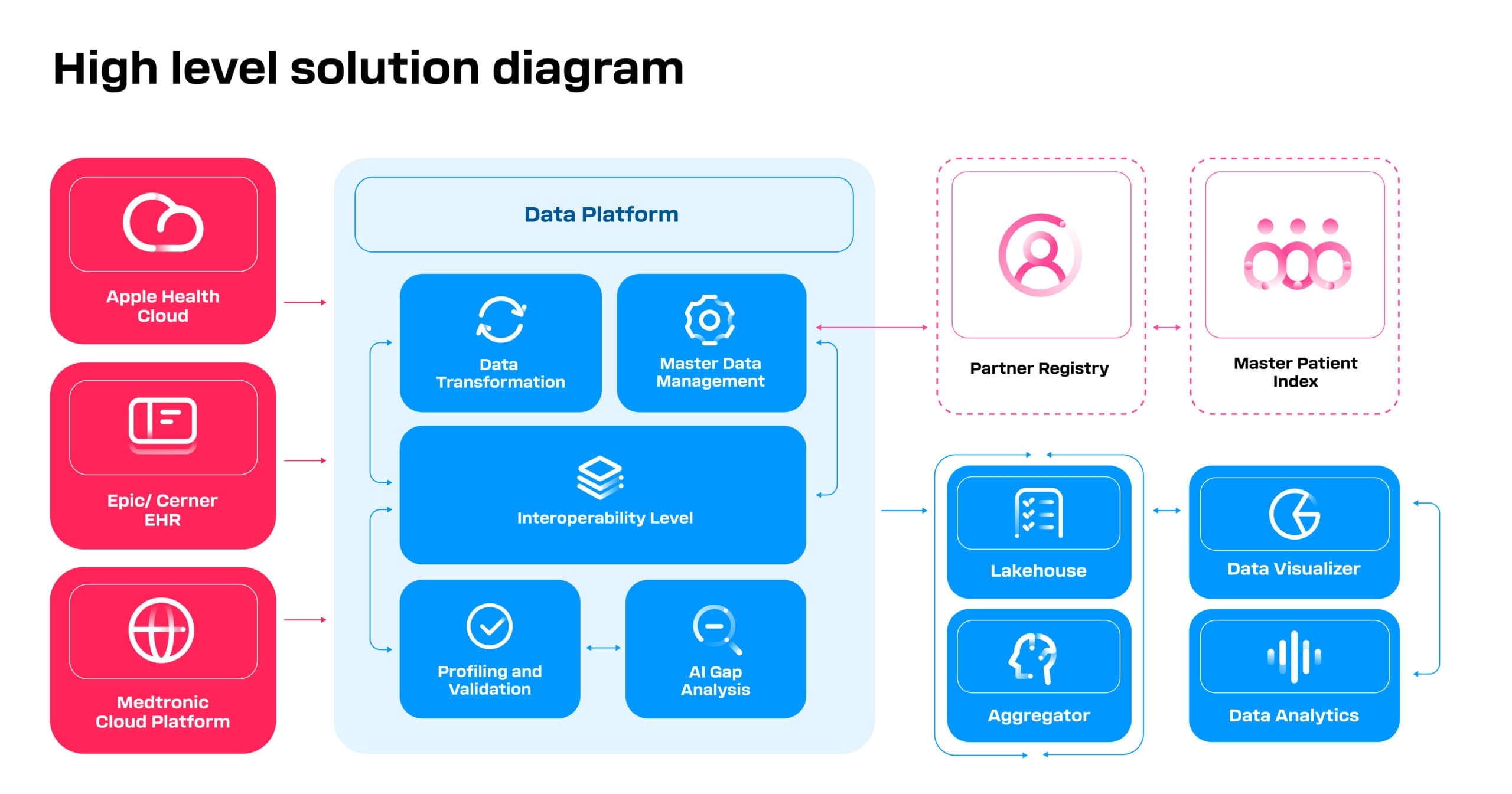
7. Compliance by design platform architecture
None of the capabilities described above are achievable without a compliance architecture that satisfies the regulatory requirements of every market in which the platform operates. For most pharma and biopharma organisations, this means simultaneously meeting US and EU requirements, which are substantively different in several respects.
The regulatory frameworks a patient data platform must address are:
- HIPAA: US health data privacy, requiring de-identification, access controls, and breach notification procedures
- GDPR: EU personal data protection, with stricter consent requirements and data subject rights
- FDA 21 CFR Part 11: electronic records and electronic signatures in clinical investigations, requiring audit trails, access controls, and system validation
- ONC Interoperability Standards:US federal requirements for FHIR-based data exchange and information blocking prohibitions
- ISO 27001: information security management, providing the governance framework for data access and risk management
- ISO 42001: AI management systems, increasingly required for AI-driven clinical decision support and pharmacovigilance tools
- ISO 13485 / IEC 62304: medical device software quality management and software development lifecycle requirements, relevant when platform outputs feed into device labelling or clinical decision support
- ICH Good Clinical Practices: international guidelines for the conduct of clinical trials applicable to regulatory submissions globally
The architecture-level controls that implement this compliance posture include: immutable audit logging with timestamps and actor attribution; MFA and fine-grained RBAC for all data access; automated anonymisation at ingestion; data residency controls for EU-origin data; and end-to-end lineage tracking that allows any analytical output to be traced back to its source records.
From data to impact: a new business imperative
The organizations investing in unified patient data platforms today are building a capability that compounds. Each trial run on shared infrastructure contributes to a richer longitudinal dataset. Each real-world evidence submission strengthens the picture of drug performance across populations. Each AI model trained on clean, standardized, historically complete data generates more reliable predictions and reduces the probability of the late-stage failures that consume those billion-dollar R&D budgets. It is estimated that generative AI alone could deliver $60 billion to $110 billion USD in annual value across pharma and medtech, but that value is only accessible to organizations with the data infrastructure to support it.
The shift to centralized patient data platforms is already underway.
If you're thinking about what that looks like for your organization, it’s worth a conversation.