Family-centric car design is the new competitive battleground. Young families with children aged 0-12 represent one of the fastest-growing and most valuable buyer segments in automotive. These families aren’t comparing spec sheets; they’re choosing a system they’ll depend on every day, for the next decade of their family life.
Yet, most OEMs still approach family-friendly vehicle tech as a packaging problem: more seats, more storage, more safety checklists. While these are important, the best car features for parents feel underserved by in-car digital systems, UX design, and service experiences. Family-friendly vehicle technology is often layered into platforms late, rather than engineered into product, software, and service from the start. As a result, premium brands risk losing relevance right when customers enter the parenting stage and are making long-term branding decisions.
In 2026, winning over the family buyer will come down to reducing daily friction and designing for real routines. This article reframes what makes truly great family car features (with examples), translating real parenting needs into tangible features, digital services, and an automotive parent experience design that OEMs can act on.
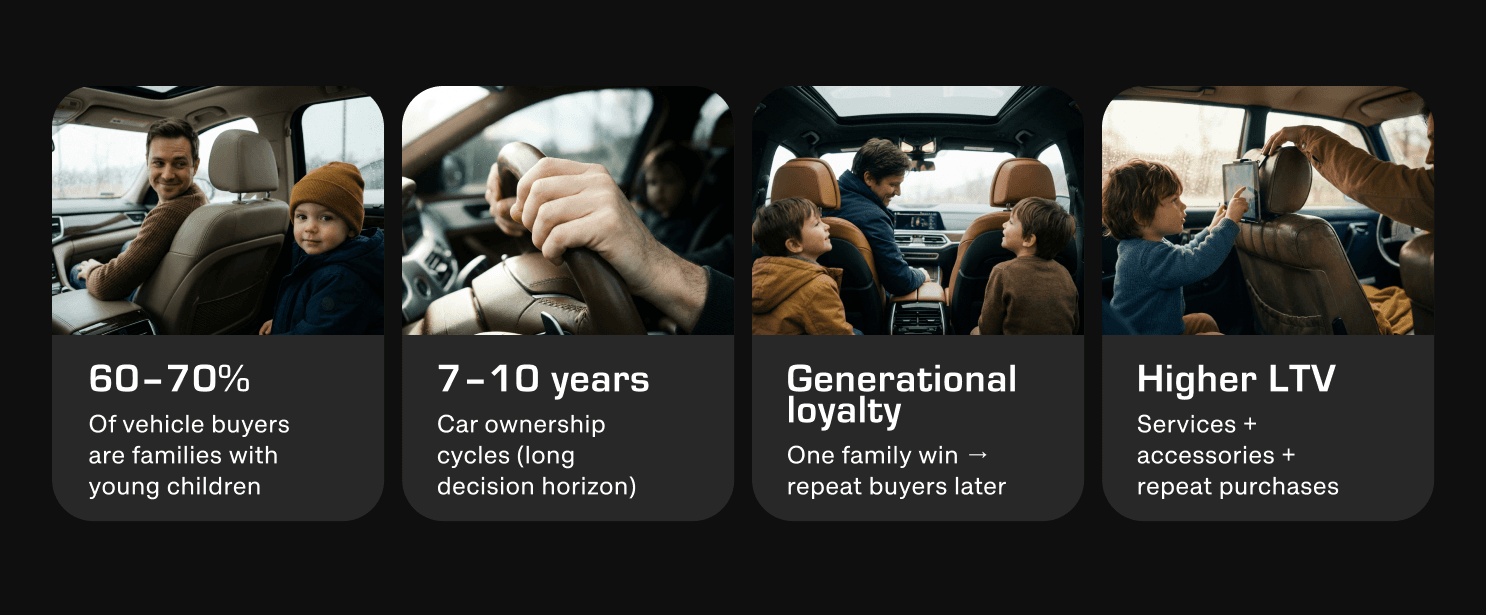
The business case for prioritizing parents
Parent pain point: Digital features feel disconnected from real family life
OEM trade-off: Integrating child-focused features without compromising adult experience
Parent pain point: Advanced child safety features exist, but don’t feel reassuring or easy to trust day-to-day
OEM trade-off: Balance premium positioning with clear, emotionally resonant family safety messaging and practicality
Parent pain point: After purchase, support feels one-size-fits-all, with little understanding of what family-specific services parents would pay for
OEM trade-off: Avoid missed service revenue by building for diverse family structures (different life-stages, single parents, multigenerational, etc.)
Parent pain point: EV-native brands (like Tesla, NIO, BYD) feel simpler, smarter, and more seamless for family routines
OEM trade-off: Invest in UX and ecosystem improvements to compete, while protecting margin and avoiding “feature bloat” that dilutes the premium experience
What are the main challenges families face during car rides?
For parents, driving rarely happens in ideal conditions. It happens when you’re running late, mentally juggling a dozen things, and trying to keep everyone safe, calm, and moving. Family-friendly innovation is less about adding more features, and more about designing vehicles that reduce mental load, and support parents in everyday, high-distraction moments.
From our research, family needs typically fall into four spheres: education and entertainment, safety and security, parental control and privacy, and the overall family experience. Each sphere presents an opportunity for OEMs to differentiate themselves with family-first design, software, and services, and to build genuinely useful digital features for family mobility.
1. Education and entertainment

Parents often face the challenge of keeping children entertained during everyday commutes and longer car journeys. But it’s not only about avoiding boredom. Many parents also look for opportunities to supplement learning outside of school hours, in small, consistent ways that don’t require extra planning.
Opportunity areas for OEMs:
- Age-based family profiles that auto-load content and settings per child
- Learning-first modes like audio stories, language prompts, or quiz games designed for short commutes and long trips
- Offline-friendly modes for long drives and patchy signal routes
OEM insight: Help parents create calm, independent engagement in the back, removing the need for constant negotiation from the front seat – one of the best features for parents in cars.
Parent-focused examples:
The BMW x AirConsole integration turns waiting time (school pickups, traffic jams) into playtime. Using their phones as controllers, kids can be entertained with games like UNO® Car Party!, and Who Wants to Be a Millionaire.
2. Safety and security
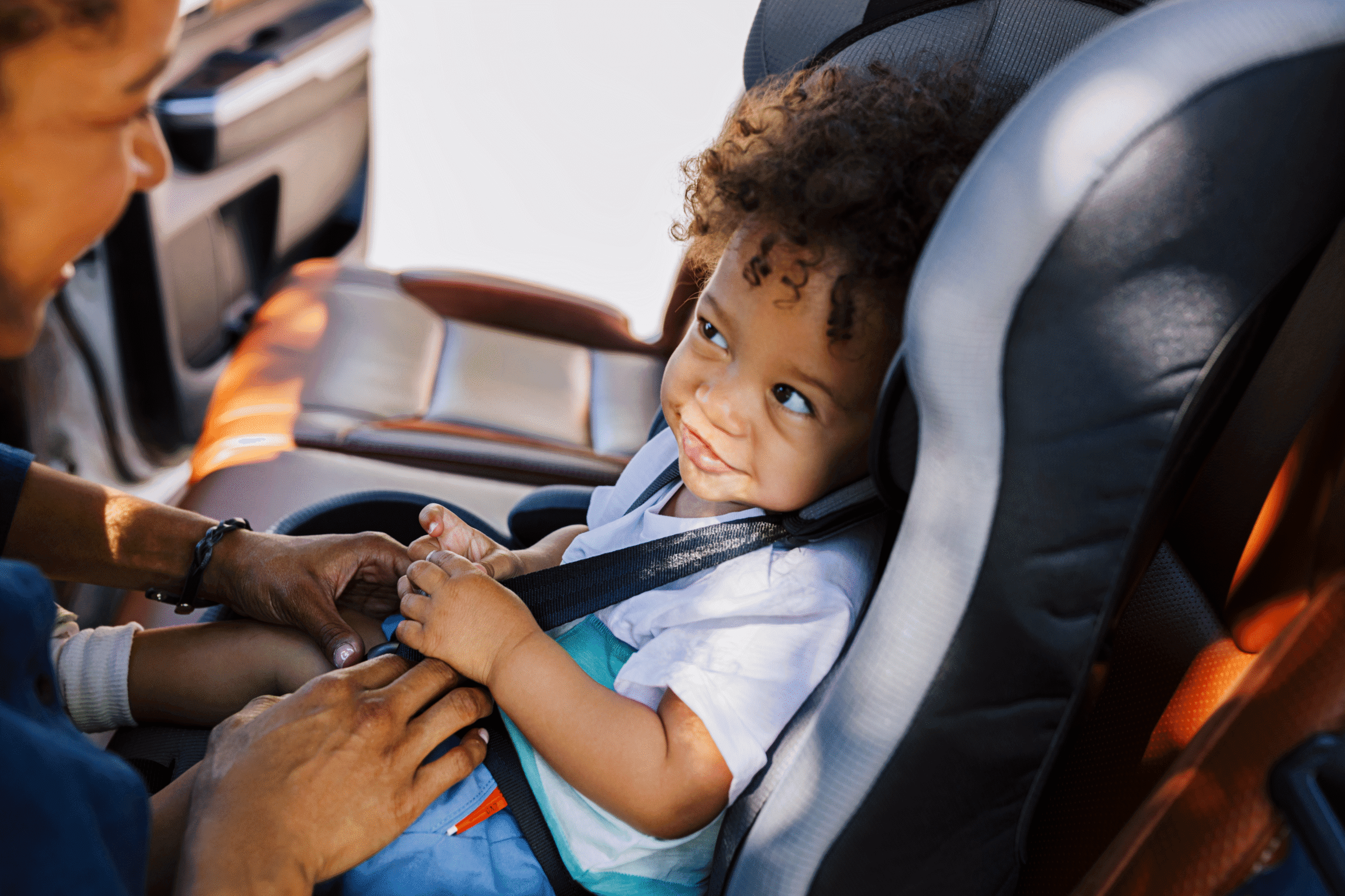
As you’d imagine, safety is the number one priority for parents when travelling with children. They want to feel confident that their family is protected on every trip. That means reliable seatbelt detection, help preventing incidents while they’re on the move, and support if something goes wrong – whether that’s motion sickness and discomfort, an accident, a flat tyre, a breakdown, or being stuck somewhere with children in the car.
Opportunity areas for OEMs:
- Reliable rear seatbelt detection and clear belt status visibility for parents
- Low-speed safety support designed for school runs, driveways, and car parks
- Motion sickness mitigation through smoother driving modes and comfort features that reduce triggers
- Emergency and roadside assistance that’s automatic and fast to activate, with clear next-step guidance and location sharing
OEM insight: Families trust cars that make stressful moments easier to handle in real life, not just cars that keep them safe in theory.
Parent-focused examples:
Hyundai’s Rear Occupant Alert (ROA) is innovative because of its multi-layered approach to driver awareness. Ultrasonic interior sensors detect motion in the rear seats, alerting visually on the dashboard, and audibly chiming when the ignition is turned off. If motion is detected after the car is locked, the horn activates, and an alert is sent to your smartphone via Blue Link®.
3. Parental control and privacy
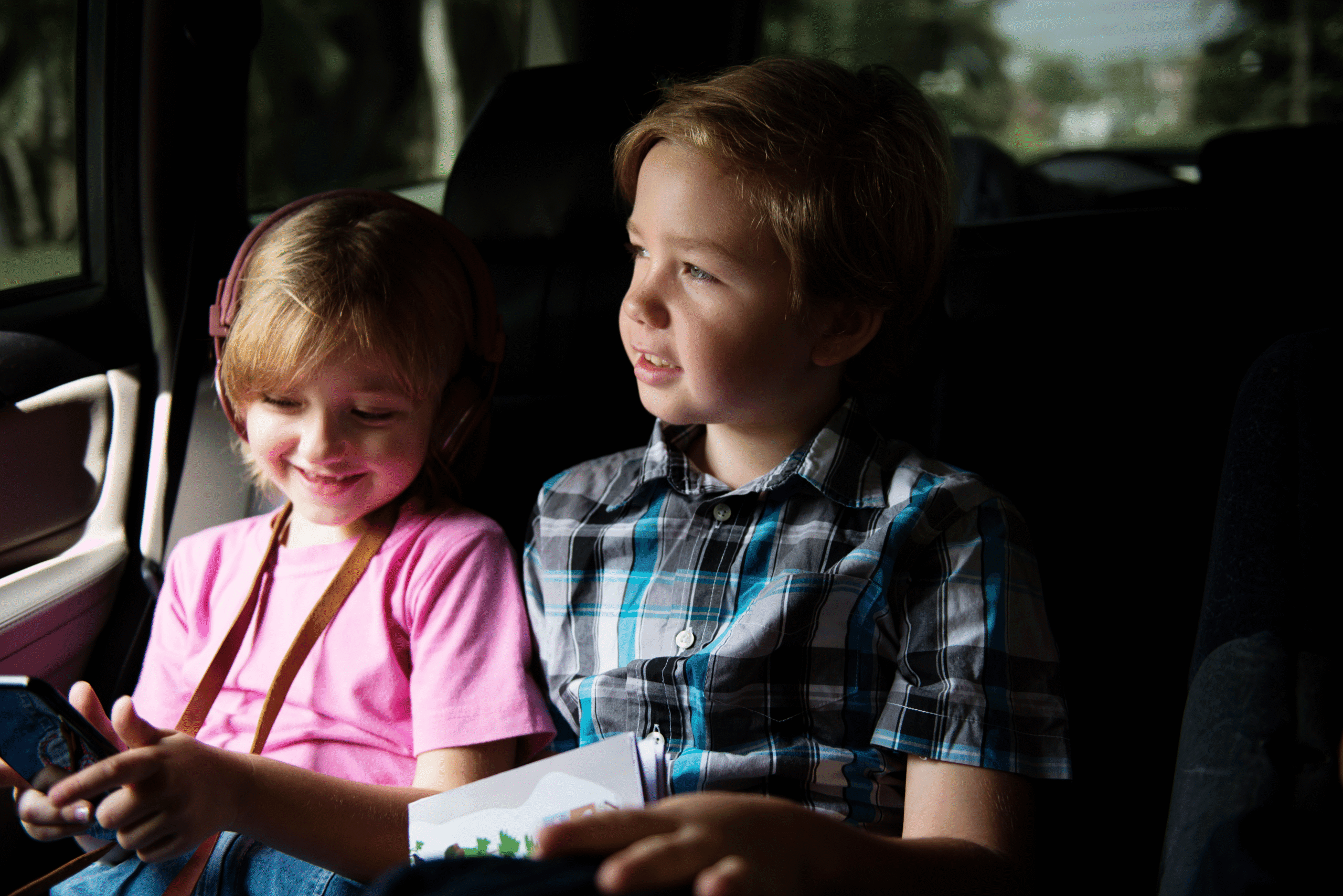
Parents need to regulate age-appropriate content, manage screen time, customize settings based on individual preferences, and promote a balanced focus on both entertainment and education without turning every journey into a negotiation. At the same time, they want clarity on privacy: what data is being collected, who it’s shared with, and how family profiles and in-cabin systems are handled.
Opportunity areas for OEMs:
- Child profiles with age-based content controls and simple parental approvals
- Screen time limits and “quiet modes” that are easy to set and adjust on the go
- Per-child preferences for audio, lighting, and content that load automatically
- Clear privacy settings for family profiles and location sharing
OEM insight: Make boundaries feel built in, easy to understand, and that give parents a sense of control.
Parent-focused examples:
Tesla’s Parental Controls lets parents set guardrails for teen drivers. Protected by a 4-digit PIN, parents can cap maximum speed and make sure key safety features like speed limit warnings can’t be turned off. Parents can even set up an alert if the car is driven during set late-night hours. Similarly, Chevrolet’s Teen Driver feature designates a vehicle key fob to the teen driver, enabling parent-configured settings. Parents can even access a report card on the infotainment system.
4. The family experience

Families don’t travel as one user group. They’re a mix of needs, moods, and ages. What keeps an infant calm won’t work for a teen. What entertains a toddler might drive everyone else mad. A great family experience is a system that can engage across the age range with appropriate content, while still feeling like one, shared, inclusive experience for the whole car.
Opportunity areas for OEMs:
- Age-based modes that adapt the experience to each stage (infant calm, toddler distraction, school-age curiosity, teen autonomy)
- Inclusive “family moments” that everyone can join in when appropriate (shared audio stories, family playlists, simple games, trip challenges)
- Smart switching between shared and individual experiences, so parents can reduce noise and conflict without micromanaging
- Per-seat controls that are simple enough to use quickly, plus parent overrides when needed
- Content that supports routines as well as fun (nap-friendly settings, calming modes, predictable transitions)
OEM insight: It’s not about keeping the kids busy. It’s about turning the car ride into a shared family experience.
Parent-focused examples:
Mercedes’ MBUX tablet and rear entertainment system allows parents to control content from the front and also offer autonomy with per-child profiles. Mercedes provides wireless headphones, and, along with the various ambient lighting settings, parents can keep all age groups calm and comfortable.
Future features: What’s next for family-centric vehicles?

In-car entertainment experience
Trends: Native app-based streaming | Built-in casual gaming | Rear seat immersion
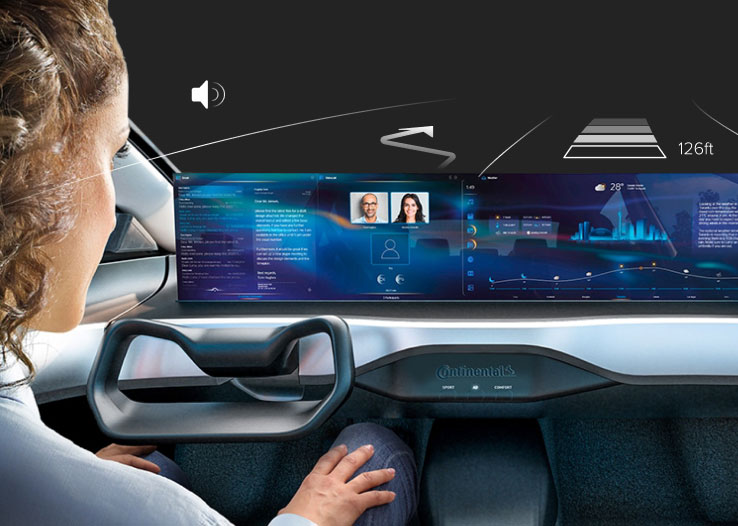
In-car entertainment is shifting from rear screens to a full cabin media experience. OEMs are already making streaming feel native and building in entertainment that works for mixed ages. Mercedes-Benz is a strong signal here with in-vehicle entertainment partnerships (including RIDEVU and Disney+ support in select vehicles), while BMW (AirConsole) and Tesla (Arcade) show how gaming is becoming part of the core infotainment proposition. This trend points toward cabins that keep kids engaged without adding stress for parents.
Beyond the automotive experience
Trends: LLM-powered assistants shift from ‘commands’ to ‘co-pilot’ | Car-to-home routines reduce friction | Digital extras and app ecosystems mature
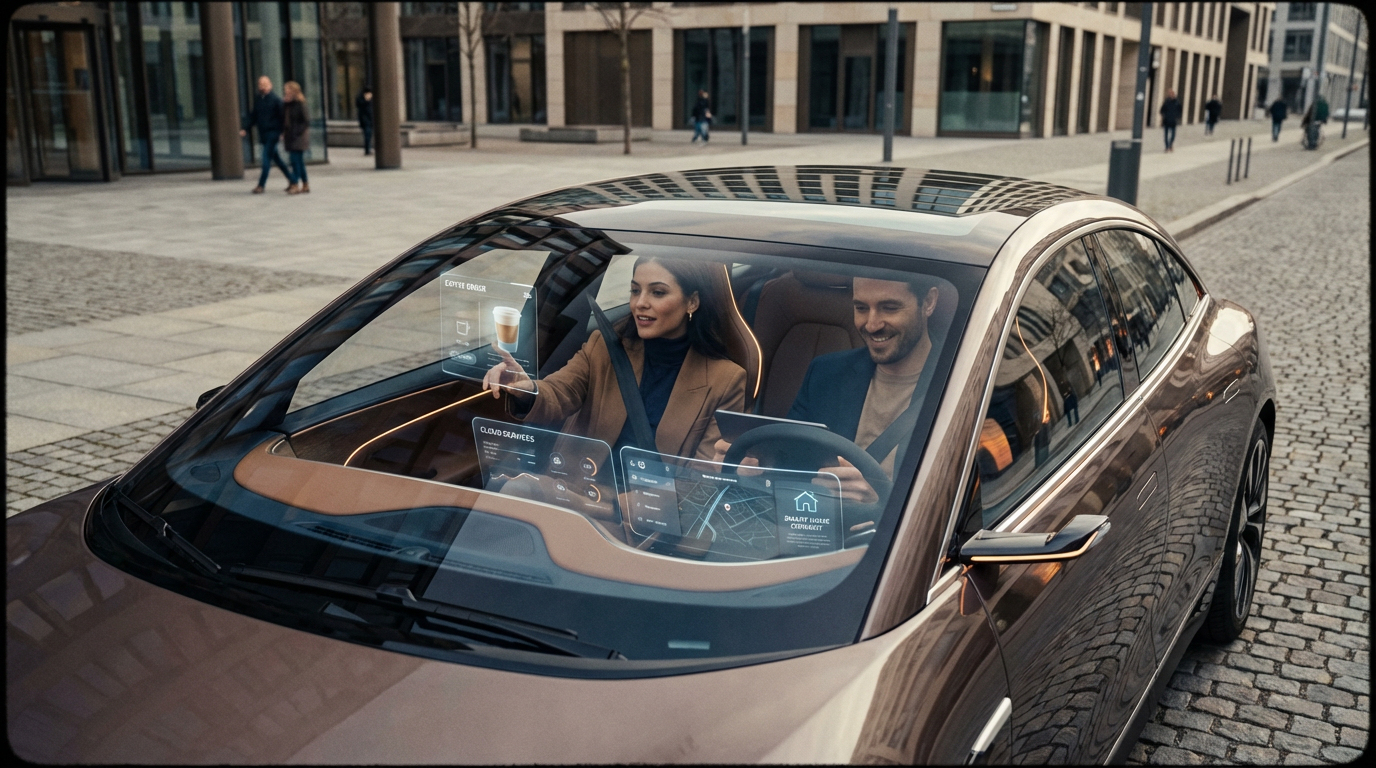
“Beyond automotive” is increasingly about reducing everyday friction through connected ecosystems, where the car becomes part of a family’s routine. The biggest near-term shift is more capable, LLM-powered assistants that move voice from rigid commands to natural interaction, with a clear path toward more agentic “do-it-for-me” support. Volkswagen (ChatGPT in IDA) and Mercedes-Benz (ChatGPT integration) are early signals of this direction. In parallel, OEMs are deepening home integrations so parents can trigger key actions like locking, warming, and cooling through already-familiar platforms like Alexa, seen in systems such as Hyundai Bluelink, helping families manage the car as part of the wider household experience.
Health and wellness
Trends: Cabin air quality | Wellness modes | Rest and sleep presets
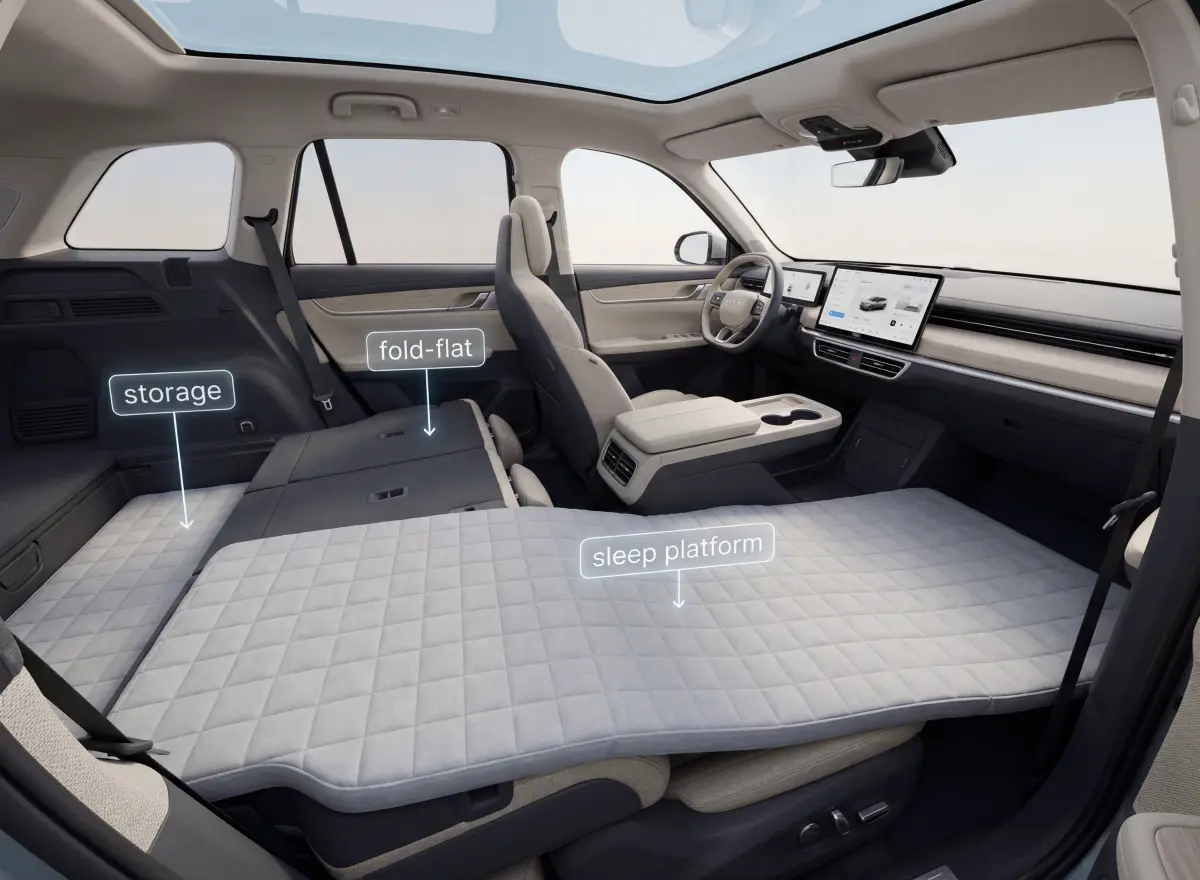
Health and wellness are becoming a credible reason to choose a vehicle, as families spend more time in cars. This is showing up in two ways: first, air quality and hygiene features that address irritants and odours; and second, wellness modes that combine lighting, sound, climate, and seating to calm the cabin and help passengers reset. Volvo and Jaguar Land Rover signal the direction with narratives about air quality and purification, while Mercedes-Benz (ENERGIZING Comfort) shows how premium OEMs are packaging wellness as an integrated, repeatable experience. Add in “rest modes” and relaxing seat configurations (seen in examples like the Hyundai IONIQ 5 and Tesla’s parked cabin modes), and the car starts to look more like a mobile sanctuary families can rely on.
Advanced parental monitoring and safety
Trends: Child presence detection goes beyond reminders | Teen driver guardrails | Safety systems assume distraction happens
Advanced parental safety involves upgrading from simple reminders to sensing, guardrails, and coaching systems that actively reduce risk and acknowledge the unpredictability of family driving. The clearest trend is child presence detection, where vehicles move beyond rear-seat reminders to detect living occupants and escalate alerts if someone is left behind. At the same time, OEMs are productizing parental controls for new driver scenarios, including teen-driving limits and reporting features that help parents build safer habits without constant policing, as seen in features like GM Teen Driver and Ford MyKey. The overall direction is to treat safety as proactive, supportive, and family-aware.
Winning over parents isn’t about adding features. It’s about removing friction. The right features make family life smoother, safer, and more enjoyable. Build the car, the software, and the services as one family mobility ecosystem, and the payoff is trust today, purchase tomorrow, and brand loyalty that lasts beyond the first ownership cycle.
How Star helps OEMs in designing, prototyping, and validating digital user-centric services
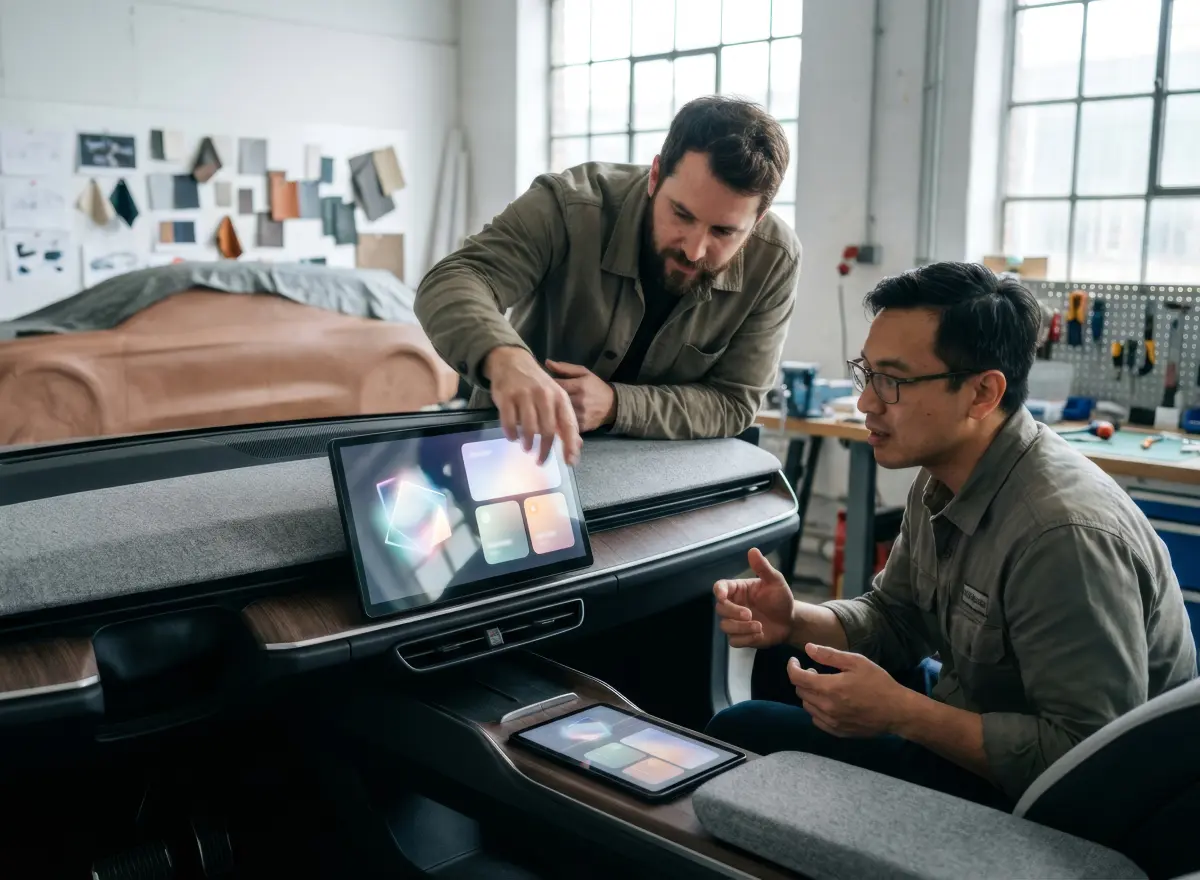
Great family-first features don’t happen by chance. They come from grounding concepts in real parent needs and validating them early, before they become expensive, hard-to-change programs. Star partners with OEMs to define, design, prototype, and validate digital services that create connected experiences user actually want, while supporting broader user-centric digital experiences across the vehicle, app, and service ecosystem.
We do that by combining market insights with practical execution, bridging business strategy and technology delivery so teams can move from “interesting ideas” to a roadmap that’s ready to build. This is the Star way: we think and build, using human-centered research and robust engineering to reduce risk, improve time-to-market, and ensure every step ladders up to measurable impact.
As your partner for decision-making innovation, we:
- Explore new opportunities, concepts, and service ideas that can be rapidly prototyped and tested with your target users.
- Conduct research across five areas (brand, business, users, technology, and regulatory) and assign cross-functional teams across strategy, design, and engineering to guide confident decisions through complex challenges.
Ready to build family-centric experiences that drive loyalty and revenue?
Explore how we turn mobility into experiences users truly love
FAQs
Families with children aged 0-12 represent 60-70% of vehicle buyers and make purchase decisions spanning 7–10-year ownership cycles. Parents influence brand loyalty across generations and offer higher lifetime value through services, accessories, and repeat purchases.