
TL;DR
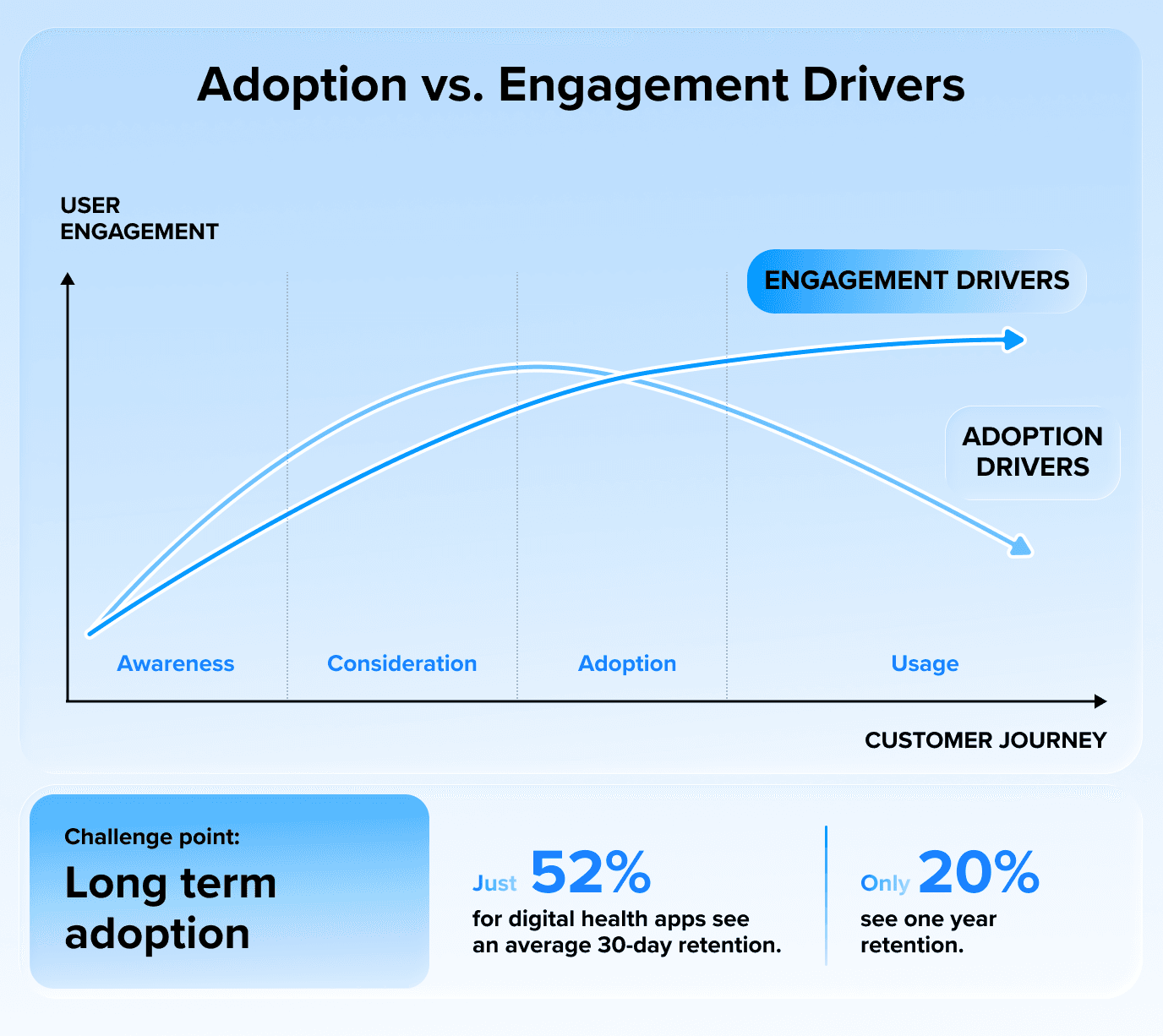
Keeping patients engaged is harder than launching the app. About half of digital health app users are still active after 30 days, while only about one in five remain active after a year.
1. Patients disengage when the effort outweighs the benefit. Repetitive reminders, manual data entry, limited feedback, and an underdeveloped first release can give patients little reason to keep using a digital health product.
2. When engagement drops, the impact extends beyond the app. Patients may miss treatment-related actions, clinicians can lose visibility between appointments, and valuable patient-generated data may never contribute to real-world evidence.
3. Engagement needs to be designed in from the start. Effective patient engagement strategies should shape patient companion app development from the beginning, accounting for changing patient needs, everyday routines, clinical workflows, caregiver involvement, and evidence requirements.
The cost of losing patient engagement
Launching a digital health product is only the beginning. The greater challenge is giving patients a reason to keep using it as the novelty of a new app wears off and treatment becomes part of everyday life.
Industry benchmarks suggest that roughly half of digital health app users remain active after 30 days, falling to around one in five after a year. This means early adoption alone says little about whether a product will support patients over the long term.
This is where patient companion app development becomes more than a technology exercise. A connected device or companion app can help patients, caregivers, and clinicians share information and stay connected between appointments, but that value depends on continued use. When the effort of tracking, entering information, or responding to reminders begins to outweigh the benefit, patients can disengage.
The consequences extend beyond app usage. Lower engagement can mean missed treatment-related actions, less visibility for clinicians into symptoms or device use, and less patient-generated information that could otherwise contribute to improving care or generating real-world evidence. At the same time, a product that does not fit clinical workflows may be harder for clinicians to recommend or reinforce.
That makes long-term engagement a design challenge, not simply a retention metric. Effective patient engagement strategies need to account for changing motivation, everyday routines, caregiver involvement, clinical workflows, and the need for clear evidence. The goal is to create digital experiences that continue to give patients a meaningful reason to stay connected as their needs and treatment journeys evolve.
Why patients stop using digital health products
Patients are less likely to keep tracking their health when the information they enter produces little useful feedback. If they cannot see their progress or understand when to seek support, tracking loses its value for them.
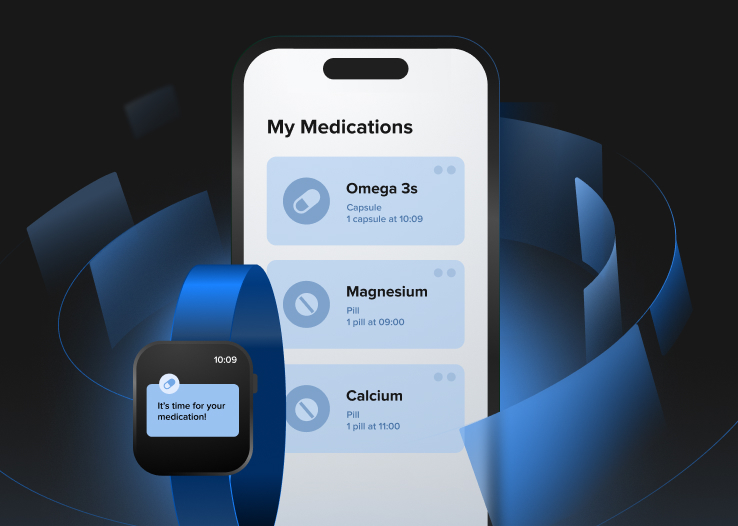
Features that encourage initial uptake can lose their appeal when reminders become repetitive and manual data entry starts to feel like another daily obligation. Improving medication adherence becomes easier when connected devices and companion apps fit naturally into patients’ daily routines.
Clinicians also need relevant information they can easily interpret and act on without increasing their workload. Clinicians are unlikely to recommend a product that adds to their workload or presents information they cannot easily interpret. Without that endorsement, patients may see the app as disconnected from their care and stop using it.
Even a focused first release needs to address the capabilities patients and clinicians consider essential. If important elements of the care experience are missing, users may disengage before future updates can address their needs.
Six principles for lasting patient engagement
Through our experience designing regulated and non-regulated patient-facing applications, we have learned that lasting engagement cannot be added at the end. It must be designed around a deep understanding of what motivates people to change and sustain their behavior.
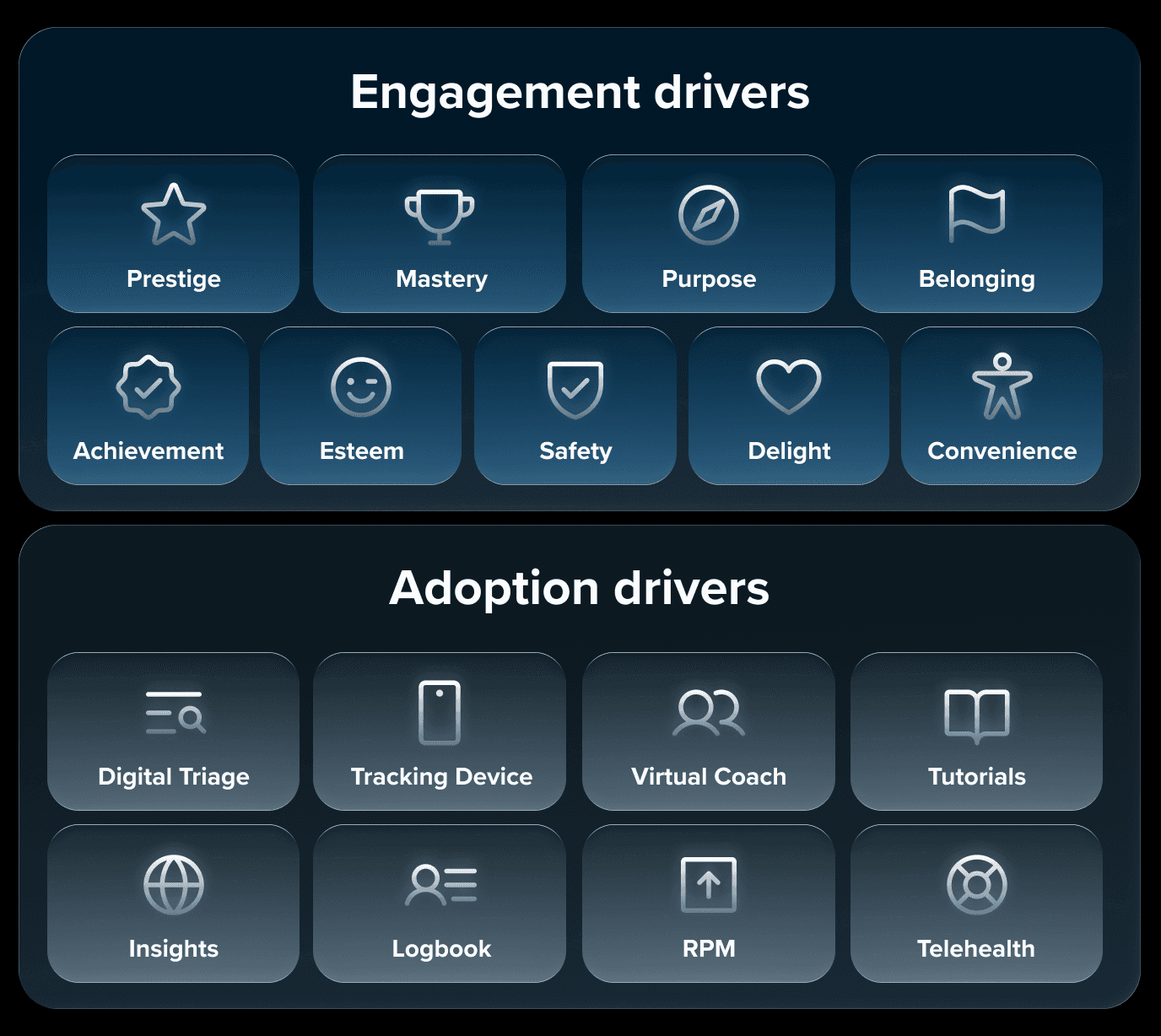
The following six principles guide how we create patient engagement solutions that support long-term engagement and adherence to treatment.
1. Give patients a sense of control
Long-term treatment can leave patients feeling that decisions are being made around them. Digital products can restore a sense of agency by helping people understand their condition, choose how they receive support, and manage who can access their information. Having more control gives patients a more active role in their care between appointments.
2. Make progress visible
Gradual health improvements can be hard for patients to notice. By presenting clear measures and trends, digital products help patients see the cumulative impact of their actions. Seeing that progress helps patients understand why continued tracking is worthwhile.
3. Make achievements tangible
Progress over time is valuable, but patients also need to understand what their efforts have achieved. Highlighting specific improvements, such as fewer missed doses or more manageable symptoms, makes the benefits of treatment easier to recognize. These tangible achievements give patients a clearer reason to continue engaging.
4. Build in belonging
Managing a long-term condition often feels isolating. Privacy-respecting benchmarking allows patients to see how peers with similar conditions are managing, while thoughtfully designed communities offer additional support. Knowing others face similar challenges can help patients feel less alone and encourage them to remain engaged.
5. Earn trust at the UX level
Trust is crucial for adoption by both patients and clinicians. Transparent communication about data use builds confidence in sharing personal information. Simple onboarding and clinically sound guidance further strengthen trust and support ongoing use.
6. Make interactions effortless and enjoyable
When digital health products require repetitive manual input, they risk becoming a burden. Interactions should integrate smoothly into patients’ routines, with guidance delivered in concise, actionable steps. An intuitive and supportive experience increases the likelihood of continued engagement.
Where the hub goes next: Extending the digital health ecosystem
The six principles above help patients keep returning to a focused digital experience. But even an engaging product can plateau if it remains static while patients’ needs and treatment journeys continue to evolve. A digital health hub provides a structure for expanding that value over time. It brings together the tools, information, and support patients need in one connected experience, creating continuity across different stages of treatment.
The hub should begin with a focused core that addresses a clear, high-impact need, such as helping patients start treatment, manage medication, or share symptoms between appointments. This gives people an immediate reason to use the service and allows it to earn a place in their routines.
Once that core experience is useful and trusted, the hub can expand deliberately into related areas that reflect how patients already live and where the therapy is heading. Rather than adding features ad hoc, each new capability should strengthen the patient relationship and provide another meaningful reason to stay engaged.
A practical approach to expanding the digital health hub
- Map the current experience. Identify what the hub already supports and where gaps remain in the patient journey.
- Identify affinity areas. Look for related needs that connect naturally with patients’ routines, existing digital tools, and treatment.
- Apply an evaluation matrix. Assess each opportunity against patient value, feasibility, regulatory requirements, and business fit.
- Develop user stories. Turn the strongest opportunities into practical user stories that inform priorities and future development.
This gives product teams a clear basis for deciding where expansion will make a meaningful difference.
Six ways a digital health hub can deliver more value
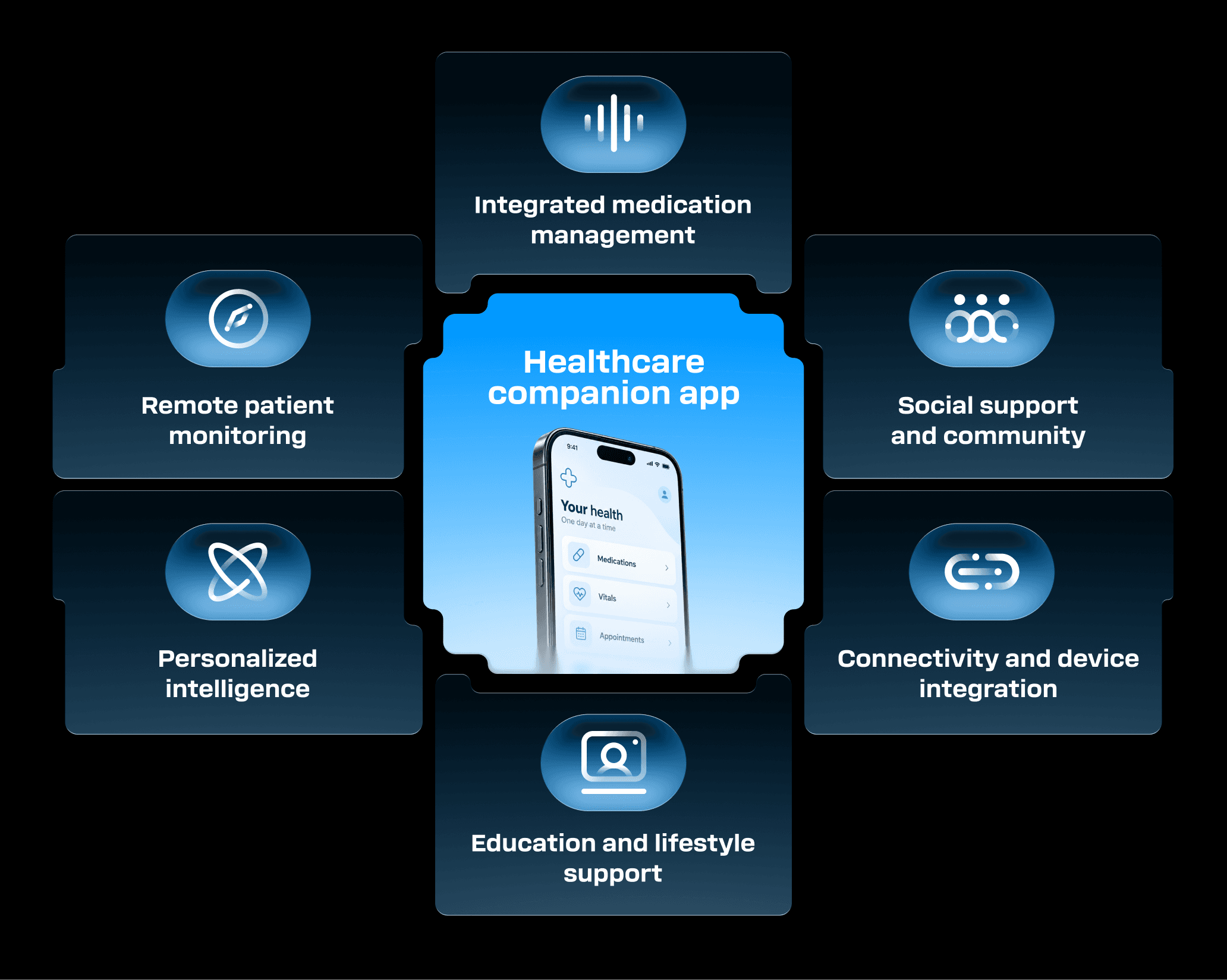
- Integrated medication management: Connect prescribing, medication ordering, and treatment support, helping patients manage more of their therapy through one experience.
- Remote patient monitoring: Collect relevant health information between appointments, extending support beyond the clinic, and improving visibility into patients’ progress.
- Social support and community: Connect patients with caregivers, peers, and patient organizations, creating a wider support network throughout treatment.
- Personalized intelligence: Use relevant patient information to provide timely guidance as symptoms, circumstances, or treatment needs change.
- Connectivity and device integration: Connect wearables, medical devices, and clinical systems, reducing manual input and making patient-generated information more useful.
- Education and lifestyle support: Provide practical information and coaching that remains relevant between doses or appointments, giving patients more reasons to return.
The right priorities will depend on the patient population, the treatment, and how the product fits into clinical care.
How agentic AI could support long-term engagement
Agentic AI can support digital patient engagement by helping health products respond to changing patient needs. AI coaches or assistants could offer support when needed, personalize guidance, and adapt their interactions across voice, visual, or haptic interfaces. For clinicians, these systems could summarise relevant changes, support routine tasks and direct concerns to the appropriate person. For patients, they could explain treatment information in plain language, adapt guidance to individual needs, or indicate when to contact their care team.
Their usefulness depends on how well they fit established care pathways. Teams need to understand the underlying workflows before deciding what an AI agent should do, where its responsibilities end, and when a person needs to intervene. Safety, auditability, and human oversight should shape the experience from the beginning. Patients and clinicians also need to know when AI is involved and how decisions can be questioned or overridden.
Star’s Human Agentic Interaction (HAI) model provides a framework for exploring these possibilities responsibly, helping static apps become living apps that adjust to each patient’s changing needs, context and abilities. Testing early concepts in real clinical settings can help teams understand what works and prepare for changing patient expectations and future procurement requirements.
Turning connected care into evidence and action
A connected digital health ecosystem brings patients, caregivers, and clinicians into the same care journey. Patients receive relevant support, caregivers can contribute where appropriate, and clinicians gain a clearer view of what happens between appointments.
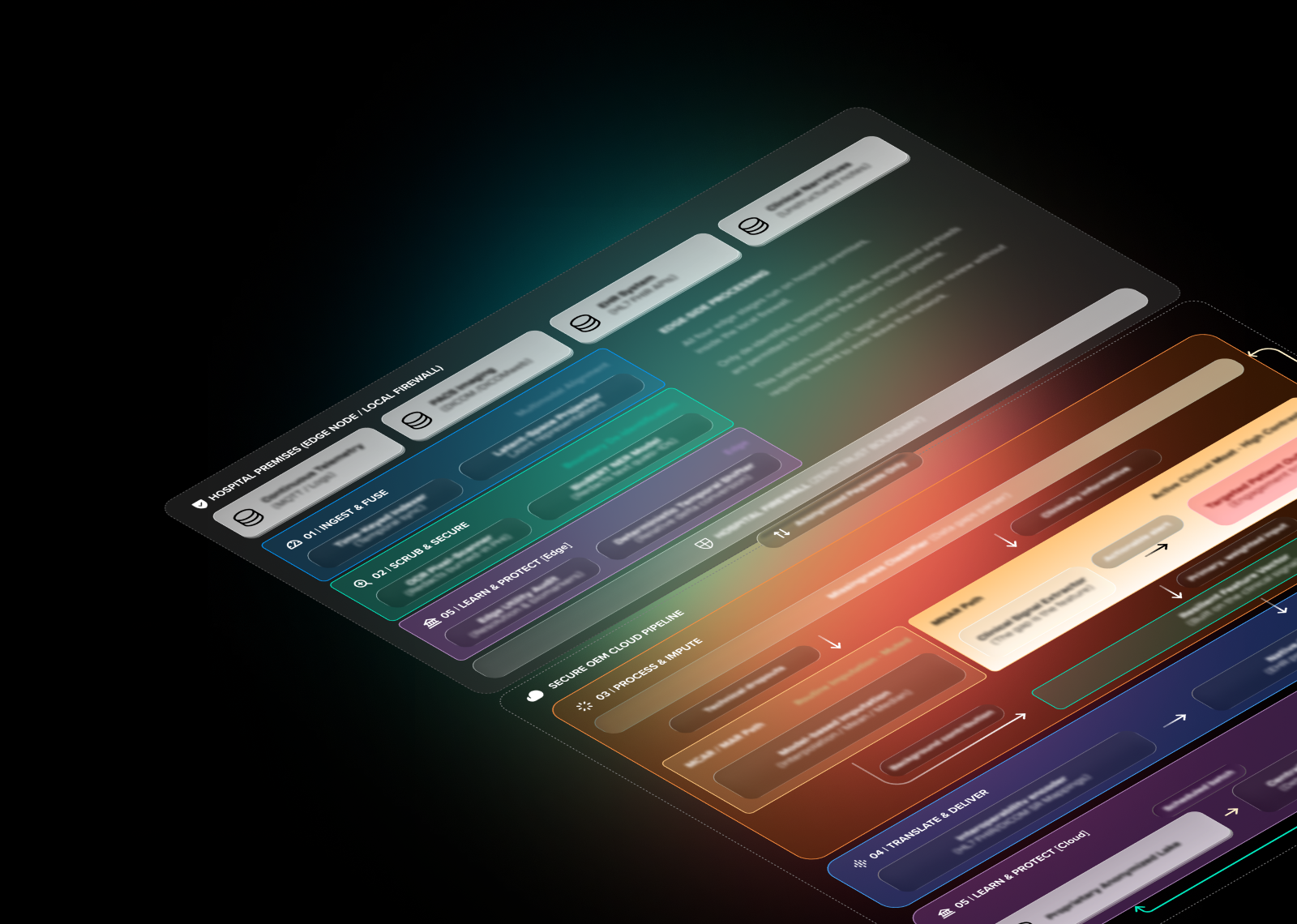
Making those connections useful depends on a clear data strategy and interoperability with intent. Standards such as HL7 FHIR help information move between digital health products and electronic health records, with appropriate consent, security, and clinical context.
Patient-generated data can contribute to real-world evidence in healthcare when products capture meaningful information from everyday use. Teams can use those insights to improve treatment support, demonstrate clinical value, and inform discussions about procurement or contract renewals.
For Pharma organizations, these foundations also support AI-ready healthcare data and analytics, helping patient-generated information contribute to wider evidence and safety programs. The resulting cycle is straightforward: continued engagement generates better evidence, which informs improvements that give patients more reasons to stay engaged.
Patient companion app development: From idea to delivery
Building a patient companion app that patients continue to use requires more than good UX or solid engineering. It requires a clear understanding of patient behavior, clinical workflows, technology, and the requirements of regulated healthcare products.
We bring these perspectives together through cross-functional teams built from our in-house HealthTech specialists. Design, engineering, compliance, and interoperability work together in one delivery motion, helping teams develop and scale digital products that address both business and patient needs.
Our approach is grounded in:
- Deep engagement research: More than 100 hours of interviews with patients, caregivers, and healthcare professionals across disease areas inform how we design for real needs and behaviors.
- Habit-building by design: We understand the principles behind habit formation and use them to create digital experiences that give patients meaningful reasons to return.
- Cross-functional delivery: Design, engineering, and compliance work together from the start rather than being treated as separate stages of development.
- Connected healthcare ecosystems: FHIR-native interoperability across HL7, FHIR, and DICOM helps connect patient-generated information with clinical systems and supports the transition from engagement to real-world evidence.
The result is a well-rounded digital product that fits into patients’ lives, supports clinicians, and can evolve with the wider care journey.
Keeping patients engaged in the long run
Let’s explore how to keep patients engaged with your digital product beyond the first few weeks. Bring us your adherence challenge, and we’ll share relevant research findings and engagement concepts in a working session.
FAQs
Patients may disengage when the effort required to use an app begins to outweigh its value. Repetitive reminders, manual data entry, and a lack of meaningful feedback can make the product feel like another task. Apps are more likely to retain users when they fit naturally into daily routines and show how continued use supports treatment.