For decades, automotive differentiation was mostly physical: performance, design, and build quality. Today, that’s no longer enough. EV ownership, software-defined vehicles, and always-changing buyer expectations are pushing OEMs toward customer experience-driven strategies and ecosystems – where the winning brands design, test, and scale digital services customers genuinely want.
And the bar is rising fast. Capgemini’s 2024 research suggests the automotive industry is still under-delivering and needs to improve the automotive customer experience (CX): consumer NPS is low, and dissatisfaction poses a real risk of brand switching. So the real question becomes: How do OEMs decide which services to build into their customer experience strategies – and how do they move fast without risking everything?
This article breaks down five strategies that show how OEMs can improve automotive customer experience, while staying grounded in what’s desirable for customers, viable for the business, and feasible to deliver.
What makes automotive CX so hard to get right?
Automotive CX strategies are uniquely complex because OEMs are designing long journeys, not single interactions: pre-purchase research, buying, onboarding, ownership, maintenance, and renewal. All across digital and physical touchpoints.
Three challenges keep showing up:
- Uncertainty: which services (charging, wellness, tourism, safety, personalization) will resonate, and for whom?
- Complexity: balancing desirability, viability, and feasibility across brands, regions, platforms, and partners.
- Speed: Traditional OEM cycles struggle to match digital-native competitors and fast-moving Chinese OEMs.
If you want to stay competitive, customer experience cannot be treated as a “nice-to-have”. It has to be built into your product portfolio. In short, CX is now a lever for revenue, loyalty, and competitive advantage, not just a brand metric.
Why should OEM leaders prioritize improvement of the automotive customer experience now?
Expectations are shifting from “a good car” to a car that makes daily life easier and more enjoyable.
- Consumers want digital-first, hassle-free, personalized automotive experiences, but many feel the industry hasn’t caught up.
- Subscription and mobility services are becoming more attractive than many OEMs assume – nearly half of consumers are likely to subscribe to a vehicle or mobility service.
- Digital experience is increasingly tied to retention. In auto finance digital journeys, J.D. Power found that higher satisfaction correlates strongly with intent to reuse digital channels – while poor experiences nearly halve reuse intent.
In short, CX is now a lever for revenue, loyalty, and competitive advantage, not just a brand metric.
What strategies can OEMs implement to improve automotive customer experiences?
Below are five CX strategies OEM leaders can use to build personalized automotive experiences that are coherent, differentiated, and commercially viable.
1. How can OEMs shift from “selling vehicles” to “orchestrating experiences”?
The most future-proof OEMs stop thinking in terms of features and start thinking in terms of end-to-end experiences, from the first interaction through to long-term vehicle ownership.
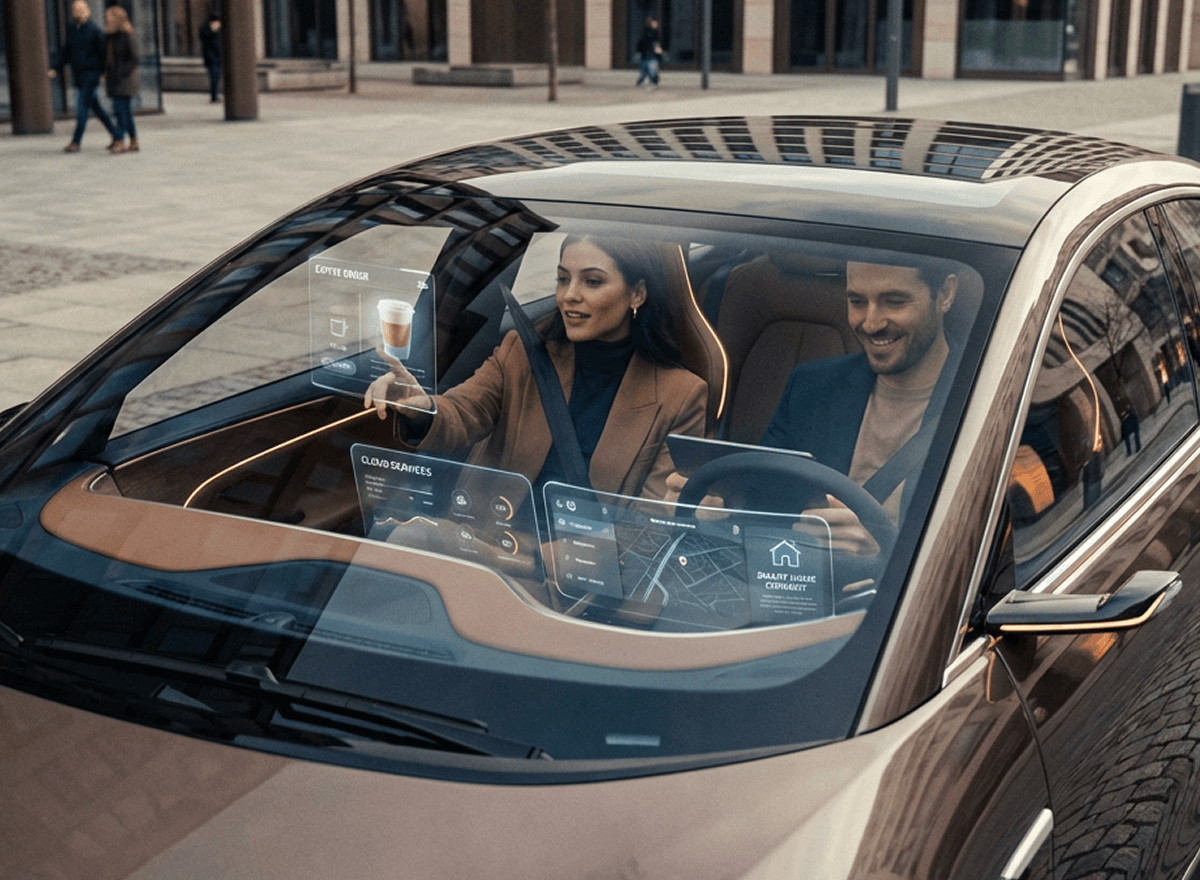
That means designing connected services as an ecosystem:
- vehicle + app + cloud services
- partner services (charging, maintenance, insurance, travel)
- lifecycle journeys (onboarding, updates, renewals)
McKinsey & Company projects that 90%+ of vehicles sold in 2030 will be connected, making the “experience layer” unavoidable.
What this looks like in practice
- Define the “north star” journey for a key persona (e.g., first-time EV owner).
- Identify the moments that actually create trust: onboarding, charging stress, service transparency, safety confidence.
- Prioritize services that reduce friction and create emotional connection.
2. Which customer personas should OEMs design for first?
Not every customer values the same experiences, they want something personalized. OEMs win faster when they focus on a few high-impact personas, such as:
- Gen Z and Millennials (digital-native expectations, high sensitivity to convenience and personalization)
- Eco-conscious EV adopters (charging confidence, range anxiety, sustainability proof)
- Safety-driven families (trust, assistance, reduced cognitive load)
Start with the personas most likely to drive ecosystem adoption, because they’ll become your benchmark for the future of automotive customer experiences.
3. How can OEMs identify which digital services customers actually want?
This is where many automotive customer experience strategies for OEMs fail: OEMs build “logical” services that don’t earn real usage. A better approach is to pressure-test every idea through three lenses:
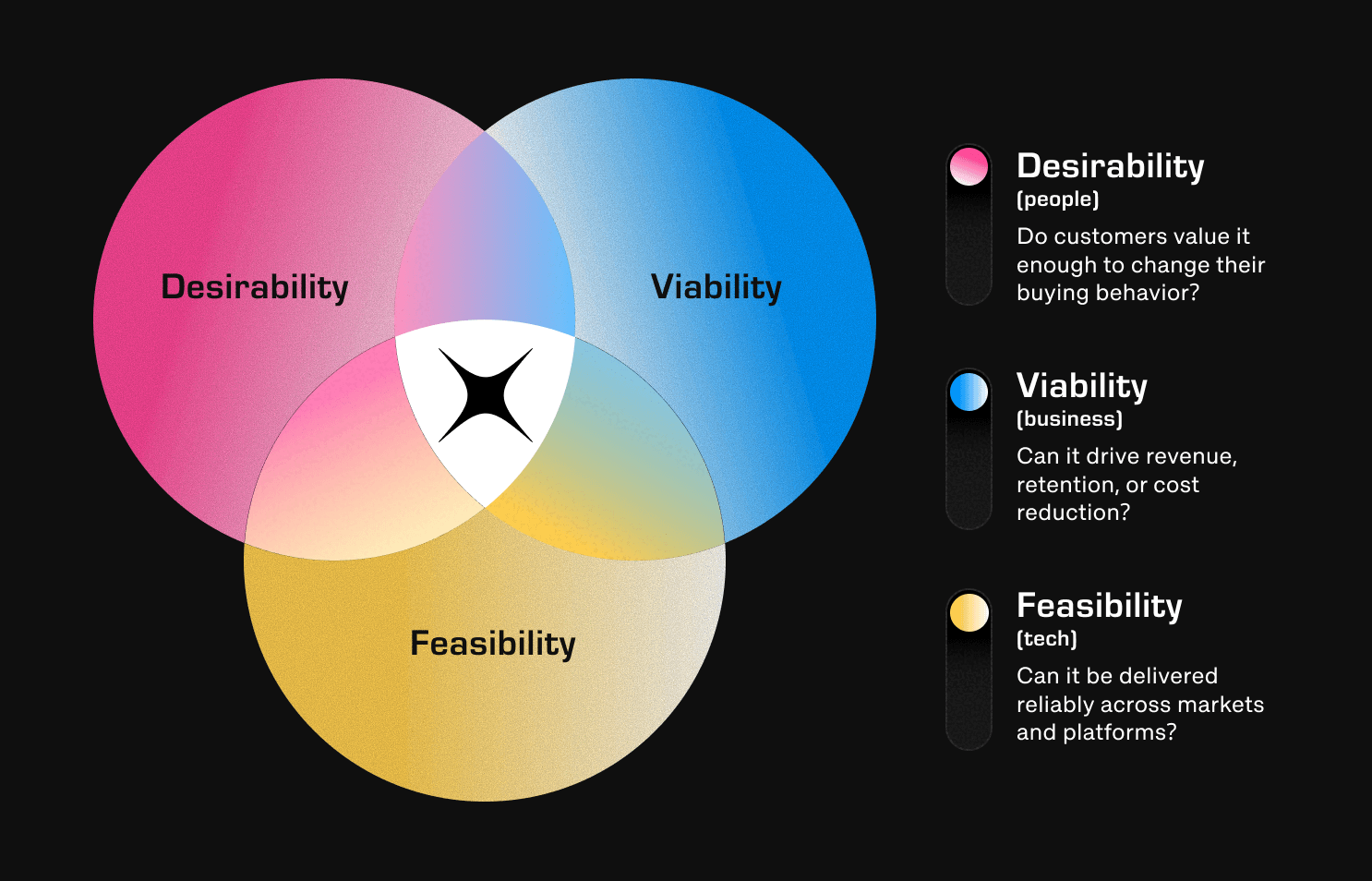
Research highlights a recurring industry gap: organizations often underestimate what customers value, and overestimate how well they’re currently delivering.
4. Where can OEMs innovate and monetize new experience-led services?
What charging experiences reduce EV ownership anxiety?
Research shows very low satisfaction with EV charging availability, reliability, and ease of use in key areas. Service opportunities include:
- proactive route and charging planning
- charger reliability signals and fallbacks
- transparent cost, time, and “confidence” indicators
What wellness and travel experiences turn driving time into valuable time?
As vehicles increasingly serve as connected living spaces, wellness and tourism present rich areas for digital innovation in the automotive customer experience. Imagine in-car meditation modes that synchronize seat vibrations with breathing exercises, curated routes, destination partnerships, and premium travel experiences.
What safety and maintenance experiences build trust at scale?
Safety isn’t only Advanced Driver-Assistance Systems (ADAS) like adaptive cruise control and automatic emergency braking, it’s also the feeling that the car is looking out for the driver and their passengers:
- predictive maintenance and clear explanations
- fewer “mystery alerts” and more plain-language guidance
- frictionless service booking and status tracking
What personalization of automotive digital service features can make the car feel more personalized?
Consumers expect their vehicles to adapt to their preferences in real time, whether it’s music and lighting or climate and seating positions. But, connected experiences only matter if they feel coherent across channels – customers increasingly expect seamless transitions between apps, websites, and offline interactions.
5. What is prototyping, and how does it help OEMs?
OEMs don’t lose because they lack ideas. They lose when ideas get stuck in long stakeholder cycles, unclear ownership, and “build first, learn later” delivery. Automotive prototyping provides a practical approach to quickly and effectively bring concepts to life. This is the process of creating models (both physical and digital) of new vehicles and components to refine designs before production begins. Doing so allows manufacturers to test safety, functionality, design, and aesthetics before committing to mass production, saving time and money in the meantime.
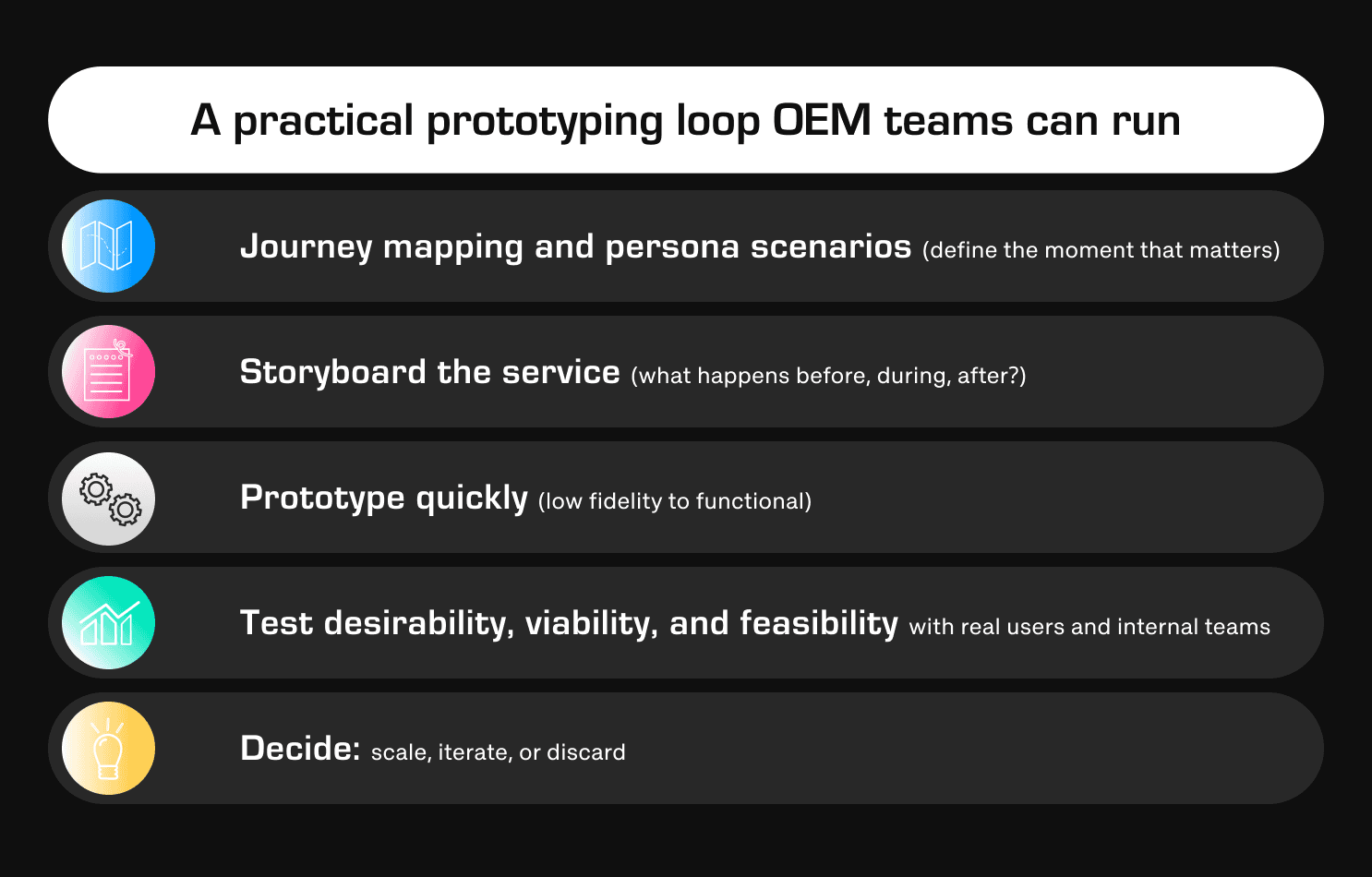
When OEMs are racing to define the next generation of digital services, strategy alone won’t de-risk the bet. Endgame Thinking is Star’s future-back approach: Set a clear future destination, then work backwards into pragmatic steps and prototypes that guide what you build next. Learn more about Star’s Endgame Thinking approach.
Automotive CX strategies done well: Real-life examples
At Star, years of experience bringing the strategies of innovative OEMs to life has validated what we know works across different markets. Our experts have helped disruptors and established OEMs alike. Working with automotive giants from foresight and concept validation through design, engineering, and implementation of UX tech solutions. Always aligned to brand, safety, and regulatory realities.
These are our recent client stories:

Human-centric design and validating concepts early
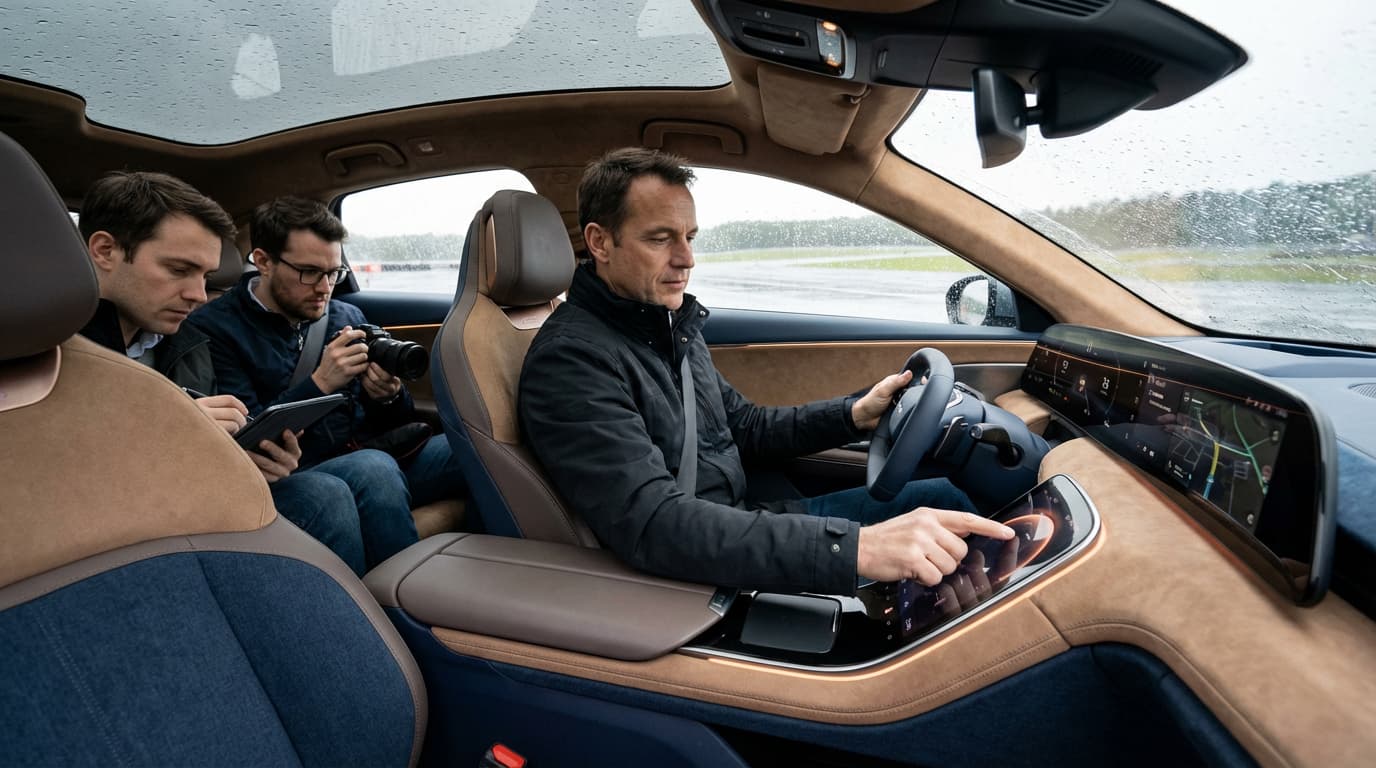
Hyundai Motor Europe partnered with Star to explore next-generation cockpit/HMI concepts designed to reduce friction and support safer driving behaviours.
What Star did to enable it
- Ran a research and validation program (desk research, expert interviews, contextual driver interviews).
- Translated insights into high-tech cockpit concepts aligned to Hyundai’s safety-first philosophy.
Customer experience orchestration
Lufthansa worked with Star to improve passenger experience across digital and physical touchpoints, moving from disconnected interactions to an experience-led ecosystem.
What Star did to enable it
- Co-creation workshops, service design, prototyping, and user testing.
- Helped teams move from ideas to validated, personalized automotive experiences (e.g., delayed baggage service and custom booking platform).
Adapting personalization to buyers and experiences
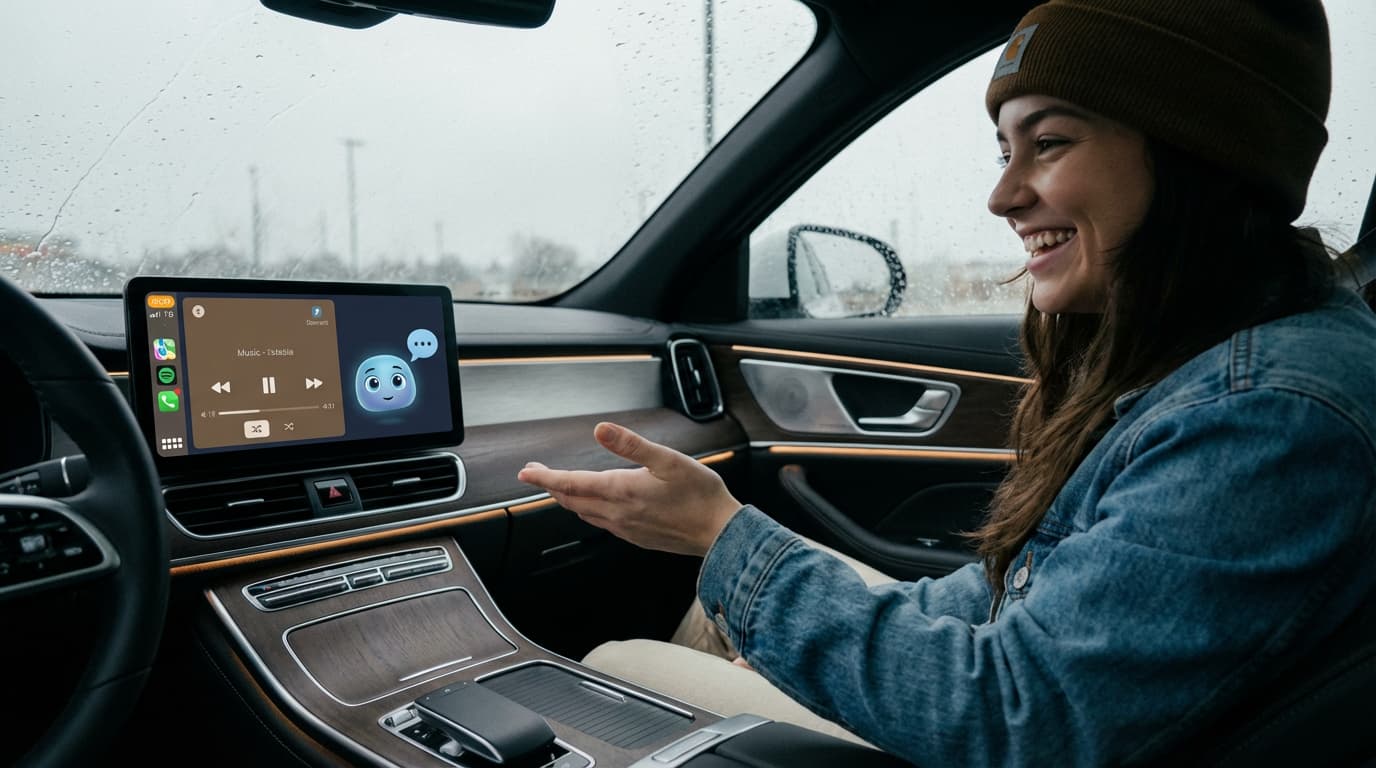
NIO and Star designed and created an in-car companion (NOMI) that’s currently going viral in China – especially with Gen Z drivers who see it as a playful, expressive co-pilot that makes every trip feel more personal.
What Star did to enable it
- Co-creation workshops, storytelling, service visioning, UX, prototyping.
- Shaped an assistant experience designed to feel expressive and human, so it earns engagement, not just novelty.
What should OEM digital services leaders do next?
The industry is facing a bright, new future when it comes to automotive customer experience. As vehicles become increasingly electrified, connected, and intelligent, now is the time for OEMs to start expanding their focus beyond hardware to holistic customer experiences.
Those who move first – actively exploring new opportunities, developing service concepts, and testing ideas with their target users – will define the next decade of automotive CX. They’ll earn loyalty earlier, learn faster than competitors, and build the foundations of entirely new service ecosystems that extend far beyond the vehicle itself.
Ready to co-create your next breakthrough customer experience?
Talk to Star about designing, prototyping, and validating digital services tailored to your brand – so you can prove desirability, viability, and feasibility before you scale.
FAQs
Automotive customer experience is the end-to-end journey a customer has with an OEM across research, purchase, onboarding, ownership, service, and digital touchpoints.