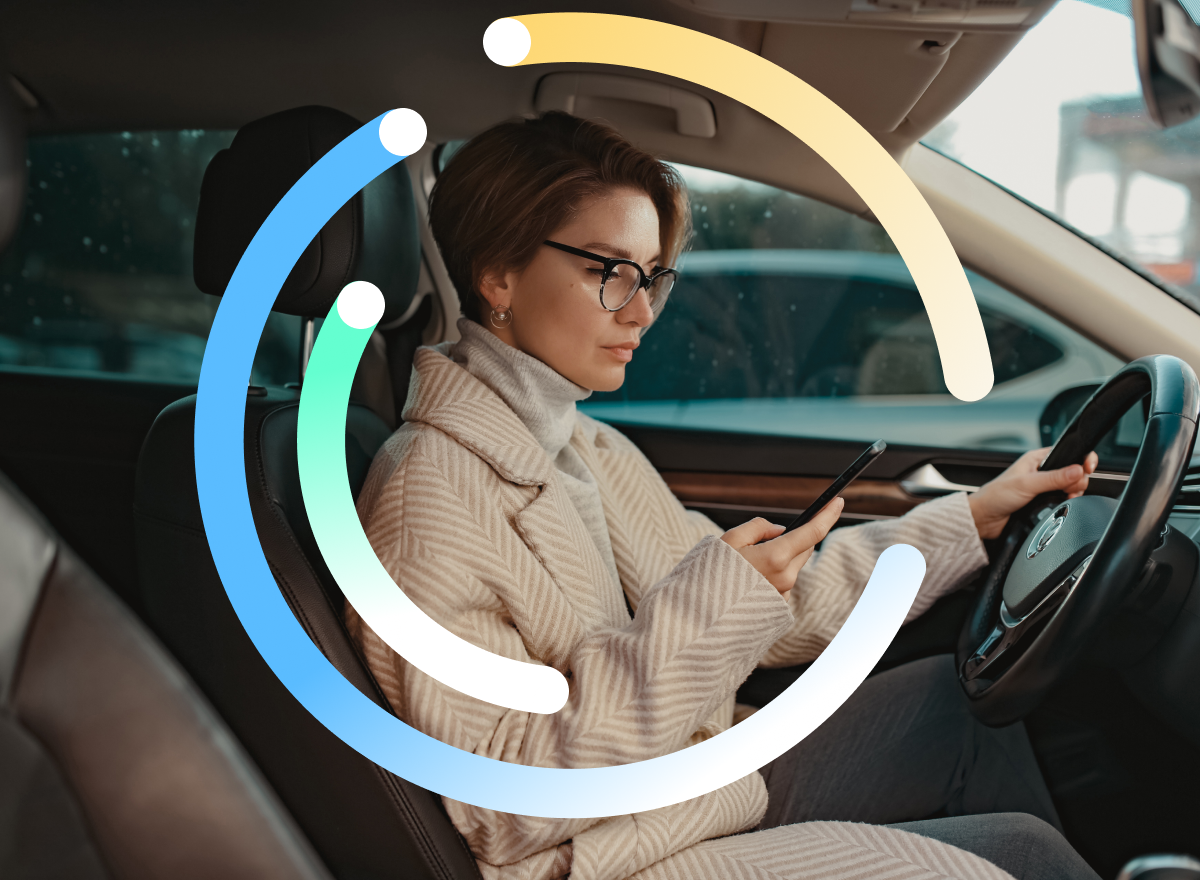


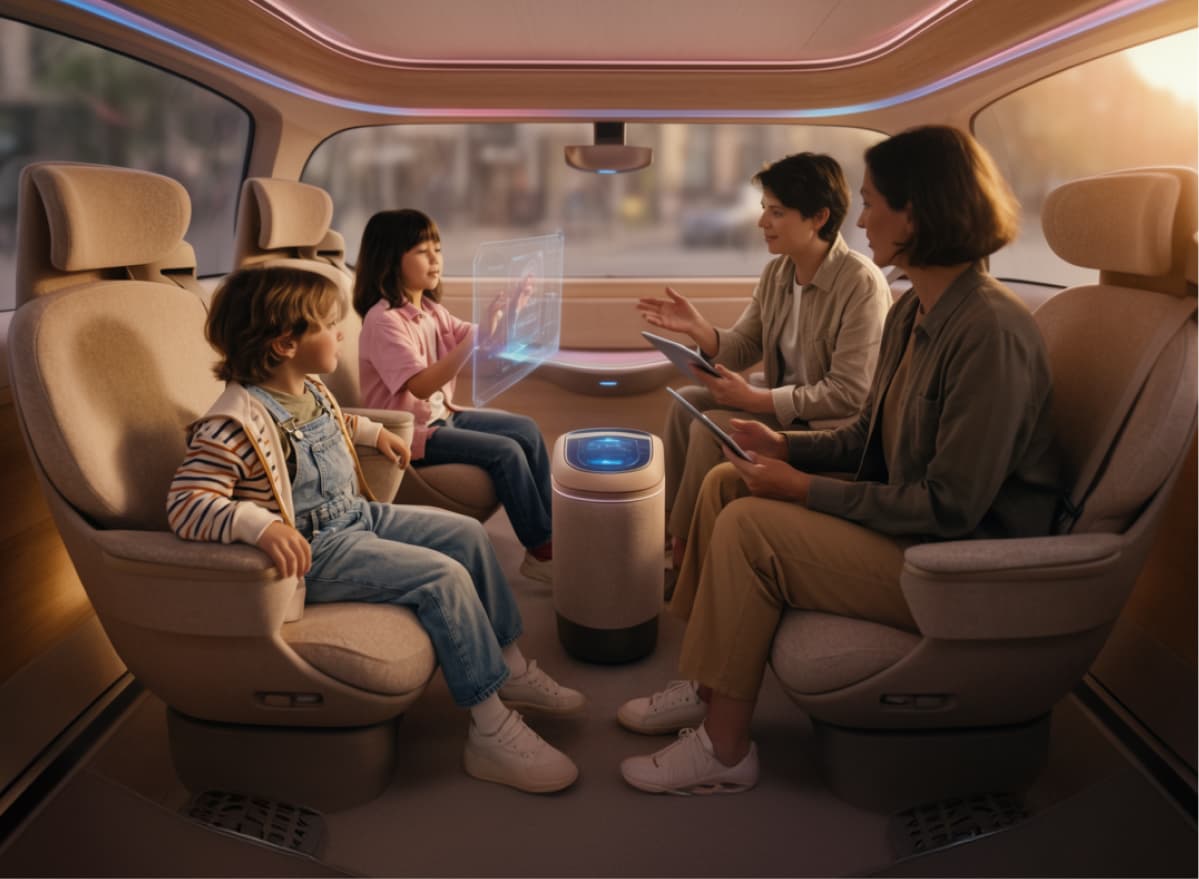
Autonomy is not simply removing the driver; it is redefining what the cabin is for. When control is no longer central, the cabin is organized around its occupants. This shift is from driver space to experience space — from cockpit to multi-purpose cabin, and increasingly, to what the industry has begun calling a "third living space": an extension of home and work that travels with you.
This article is the second in a three-part series exploring what it takes to design the next generation of autonomous vehicle experiences. The first article, Autonomous Vehicle Trust UX: The Missing Layer to Define the Next Mobility Edge, examined the interface layer — how autonomous systems communicate intent, expose confidence, and keep humans in the loop.
This piece focuses on the physical dimension: how the interior of the car changes when driving stops being its organizing principle. A third article will follow, looking at HMI design for the autonomous era.
Market signals: The value of the autonomous driving cabin experience
At L4, the cabin changes in both commercial and physical terms. When the vehicle can drive without human fallback, the person inside becomes an occupant rather than a standby driver. This allows time and space to be used for purposes beyond driving. This is significant because liberated time holds value, creating a revenue opportunity.
Consumer demand is already visible. Oliver Wyman Forum research found that nearly half of global consumers would probably or definitely use autonomous private vehicles, while 43% would pay a premium for autonomous transit. The same research projects in-vehicle digital services, including advanced infotainment, Wi-Fi packages and other paid capabilities, to grow from $14.9 billion in 2023 to $181.8 billion by 2035.
This aligns with a broader shift in automotive value creation. McKinsey projects the global automotive software and electronics market to reach $462 billion by 2030, with L3 and L4 autonomous driving capabilities expected to appear in 12% of vehicles by that point. For OEMs, the cabin becomes a platform for new services, subscriptions, and experiences that were previously impossible when constant driver attention was required. But before exploring what that future space can become, it is worth understanding why the intermediate step — Level 3 autonomy — has not yet delivered the transformation many expected.
The false start: Why L3 autonomy has not transformed cabin interior design
L3 created a paradox. It allows hands-off, eyes-off autonomy in certain conditions, but the driver must still be ready to retake control when prompted. That keeps the cabin in a transitional state: the vehicle may be driving, but the person behind the wheel is not yet a full passenger.
Mercedes-Benz Drive Pilot illustrates the limitation. It is certified and legally approved, but only under defined conditions — mapped highways, limited speeds. As long as interruptions remain likely, the cabin cannot fully shift toward rest, work, conversation or comfort.
From driver space to experience space: The future of car interior UX
Once the vehicle no longer depends on human fallback within its operating domain, the interior can begin to move from driver-centric to occupant-centric design. This transition will be gradual. Early concept and production models already show cabins adapting between human control and passenger experience, moving through three stages:
Stage 1: The hybrid moment
The first stage is the hybrid cabin, which is where we are now. This is the practical challenge of autonomous vehicle cabin design for L3 and L4 autonomy: many current and future vehicles must still support manual driving. Full autonomy is not universally available, and many users will want the option to drive. Interior design must address this transitional state.
The challenge is to design cabins that operate effectively in both driver-active and passenger modes. In driver-active mode, the vehicle must feel clear, safe, and controlled. In passenger mode, the cabin should feel open and comfortable, allowing front occupants to relax, work, or interact without feeling like they are in a cockpit.
At this stage, the steering wheel remains, and full driving capability is preserved. However, the cabin begins to move away from a strictly driver-centric layout. Controls may retract, displays can shift, and seats become more flexible, signaling that driving is no longer the sole purpose of the space.
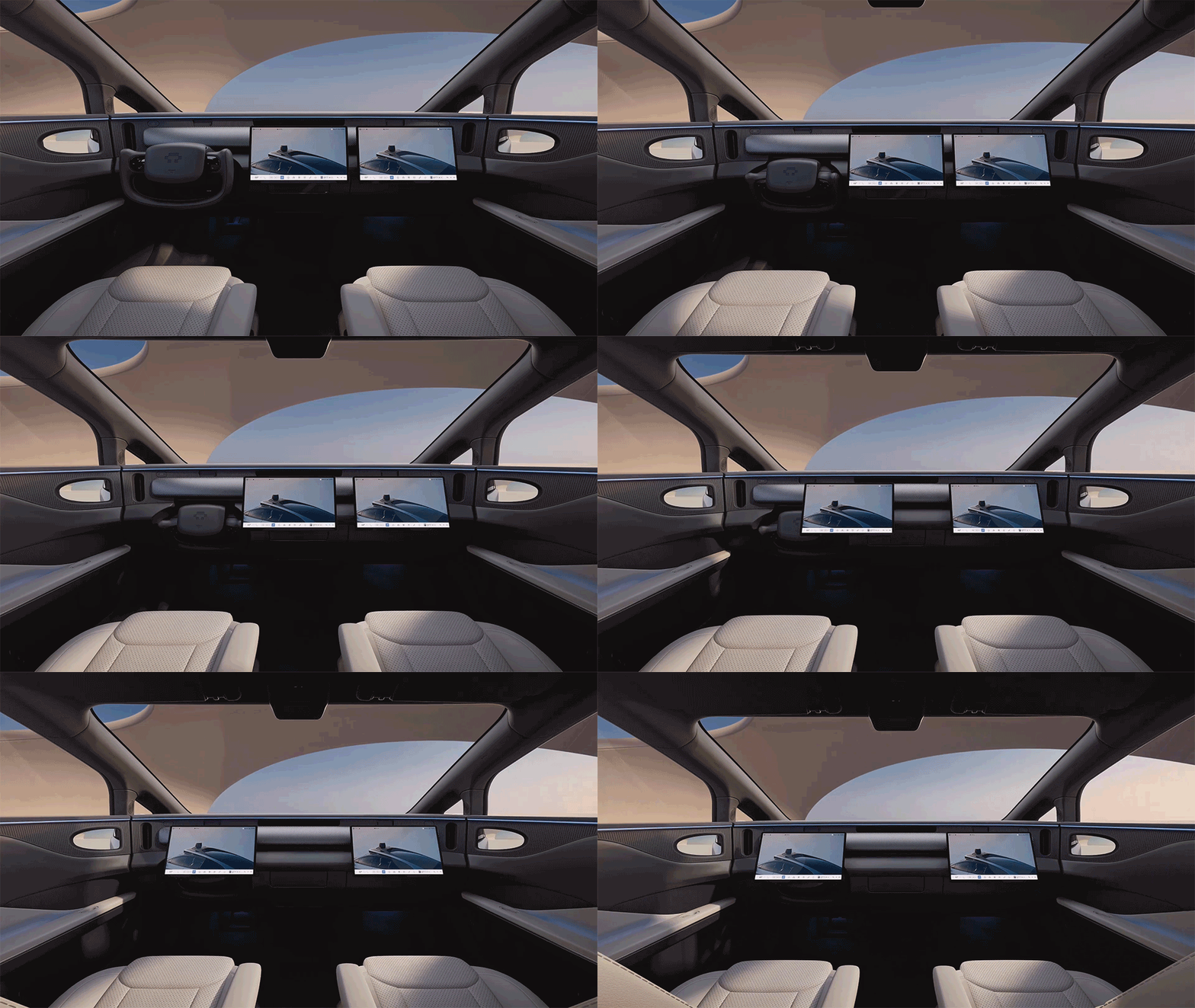
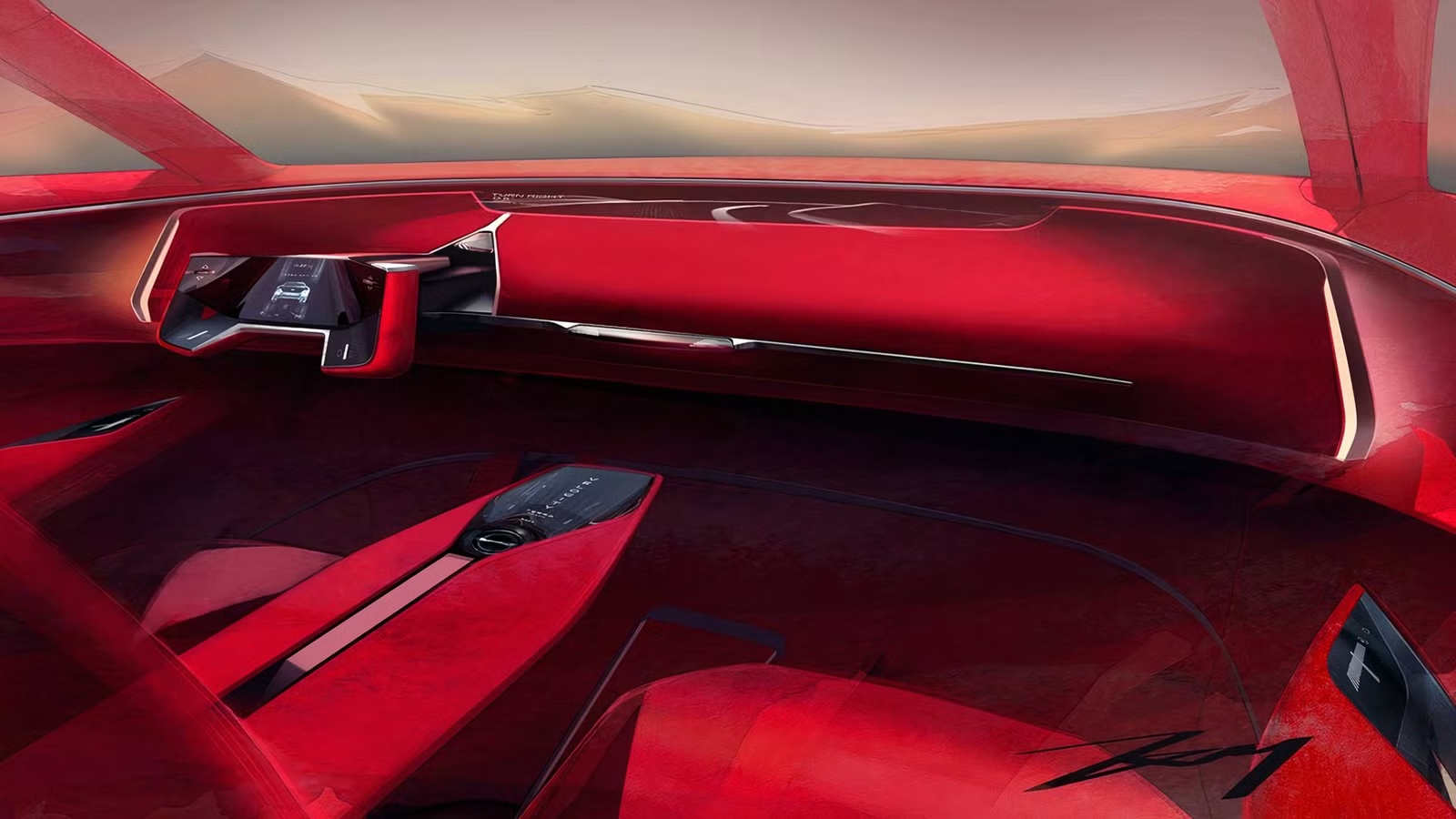
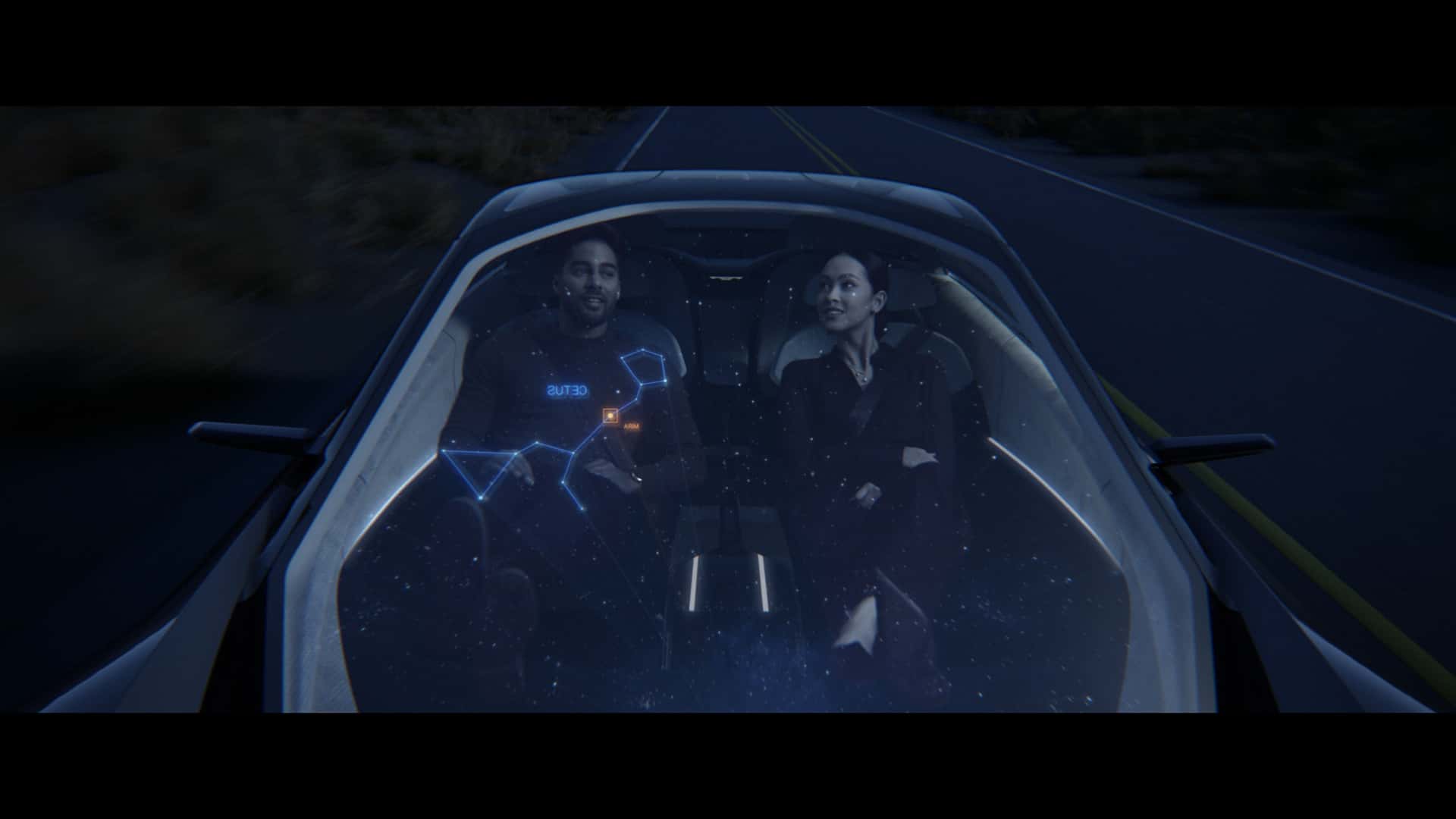
Tensor Robocar
In L4 mode, the steering wheel folds away and the display shifts toward the driver’s position. The cabin physically signals that the person in the seat has changed roles. Driving is still available, but it becomes a feature for those who want it, not the default structure of the entire interior.
Cadillac Elevated Velocity Concept
Velocity Mode is driver-focused, with augmented reality displays and a deployable steering wheel. Elevate Mode moves the vehicle into a more autonomous, wellness-led experience, with the steering retracting, ambient lighting, and biometric monitoring. The dual-mode architecture is intentionally designed as a feature.
Chrysler Halcyon (2024)
Panoramic view, full-width transparent display, AI-driven interface controlled by voice and biometrics. In autonomous mode, the steering wheel folds into the dashboard, turning the cabin into a lounge for work or relaxation.
Even as autonomy advances, some brands will keep the act of driving at the center of the experience because it remains part of their identity. The near-term challenge is that OEMs must design cabins that transition smoothly between driver and passenger modes without compromising either experience.
Stage 2: The multi-purpose cabin as a programmable living system
The next stage begins when the front row is no longer the primary focus. Once the driver's role is removed, seating, orientation, interaction, and in-vehicle activities all become open to change. The cabin transforms gradually, starting with small changes such as swiveling seats, retractable steering wheels, movable screens, and expanded floor space. Over time, these shifts move the cabin away from cockpit logic and toward room logic, and this is where the multi-purpose cabin becomes important.
It is not designed around one fixed activity. It can support work, rest, entertainment, or conversation depending on the moment. The question is no longer, “How does this layout support driving?” It becomes, “What do people actually want to do inside the vehicle?”
Research from Asahi Kasei’s Global Automotive Consumer Survey suggests that people do not only imagine autonomous vehicles as immersive entertainment spaces. Their preferred activities are familiar and everyday: listening to music or podcasts, talking with other passengers, sleeping, resting, and working.
Manufacturers are responding with concrete design choices: flat EV floors, rotatable seats, face-to-face seating, reclining seats, large screens, individual sound zones, ambient lighting, biometric sensors, and vehicle-to-load ports.
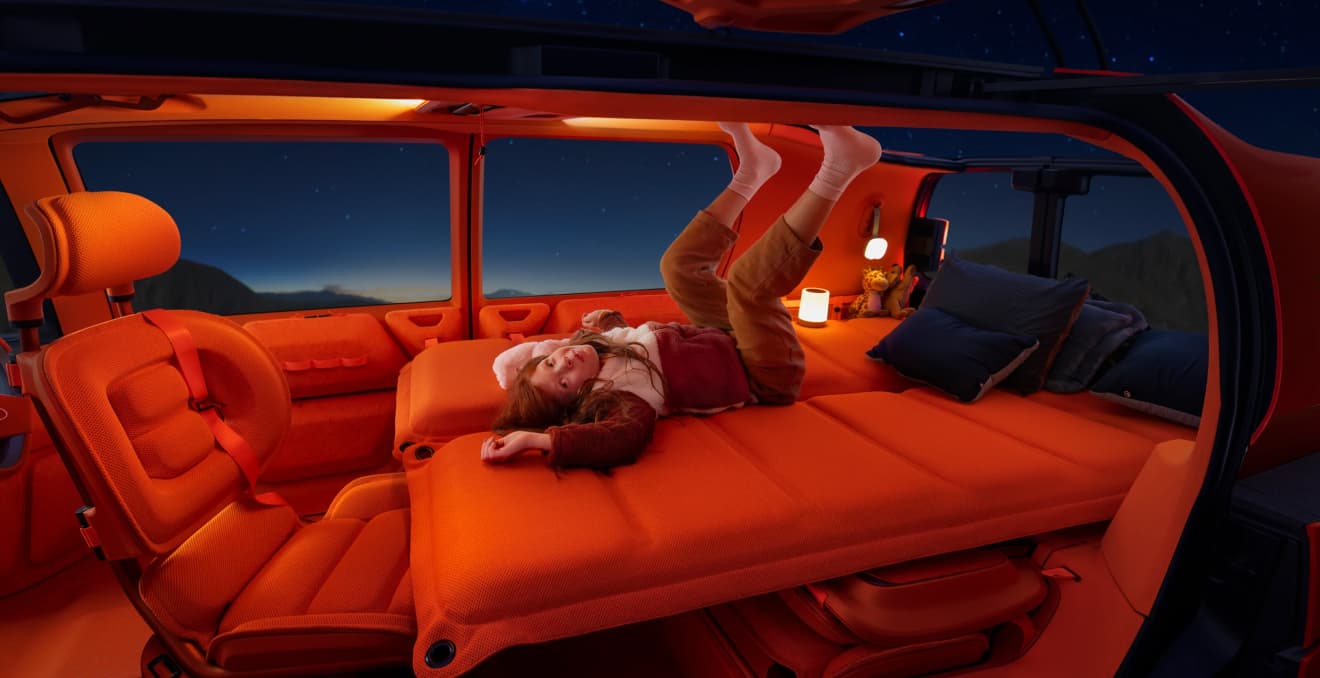
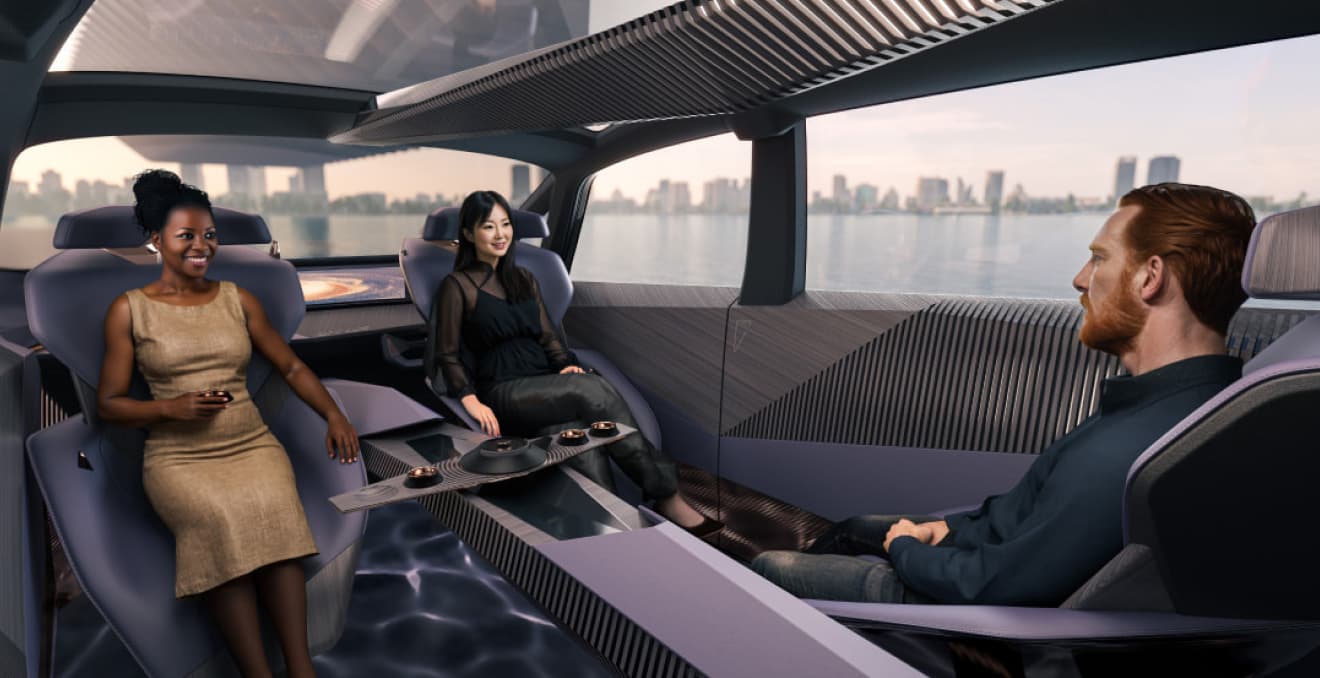
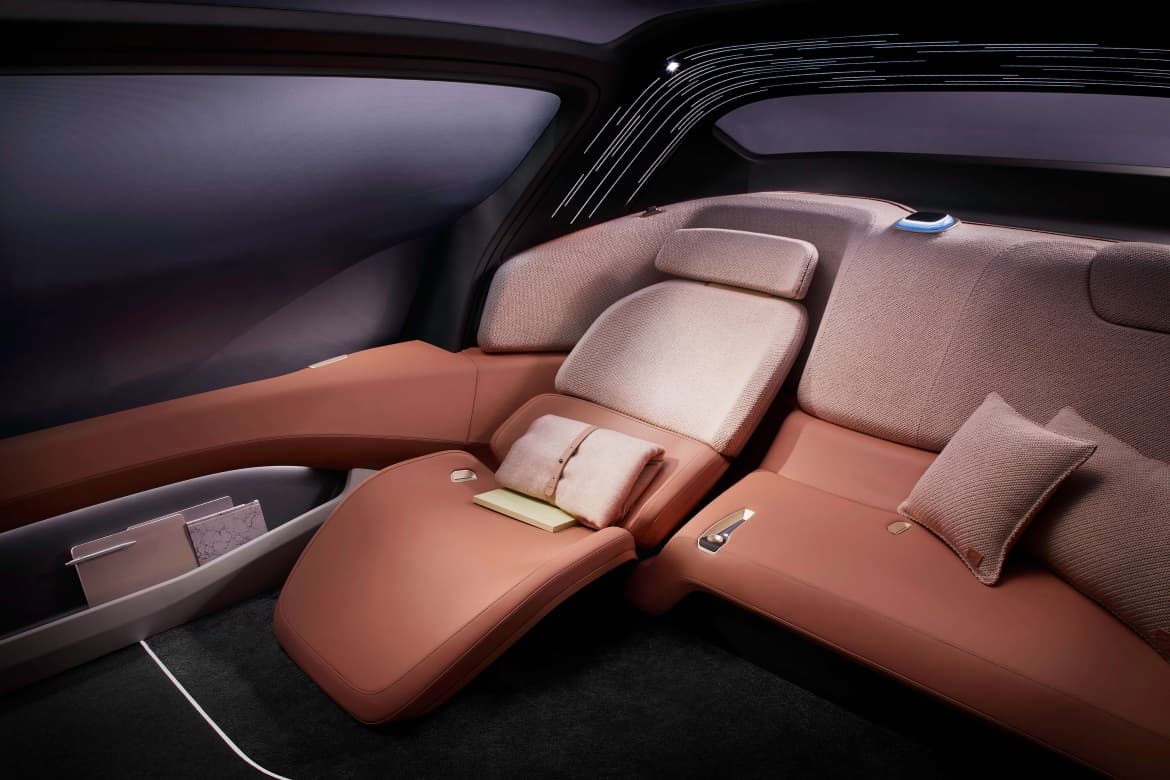
Citroën ELO is one expression of this idea. Its interior is designed around iEat, iPlay, and iWork, with seats arranged for rest, social use, or work.
Nissan Hyper Tourer takes the lounge idea further, with 360-degree swiveling front seats that allow passengers to face each other.
NIO EVE reimagines the autonomous cabin as a shared living space, with face-to-face seating, a fold-out table and a reclining rest area. Its key contribution is NOMI, a visible AI companion that makes the in-car assistant part of the cabin experience rather than just a voice interface.
This is the core shift from driver space to experience space. Once control is no longer the primary organizing principle, the cabin becomes a flexible environment for the people inside. The space is being reimagined. The next question is how people will use it.
Autonomous vehicle passenger experience: What the cabin becomes
As the cabin becomes more flexible, the design challenge changes. It is no longer just about seat or screen placement, but rather, how the space supports occupant activities. With rotating seats and decentralized control, the cabin becomes a programmable environment. OEMs must define intended behaviors before finalizing hardware decisions. Several use cases are already taking shape.
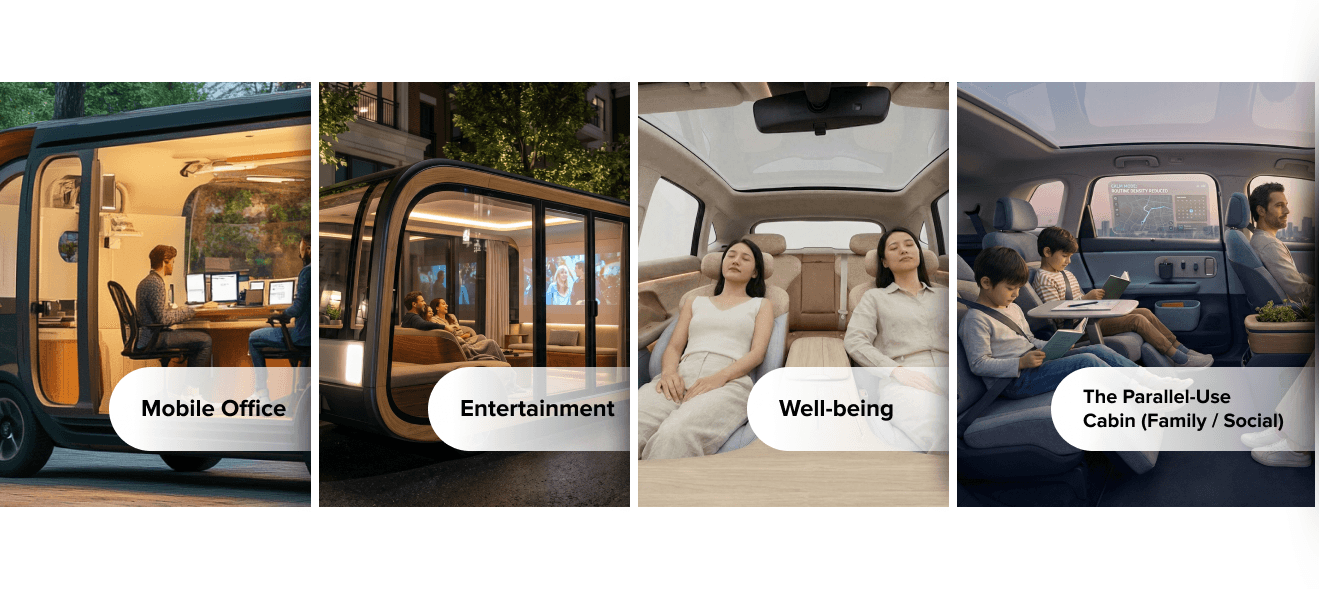
In an L4 vehicle, commuting can become protected focus time. This does not require turning the car into a full office, but rather creating a space where occupants can take calls, review documents, or prepare for meetings without having to monitor the road.
BMW’s Panoramic iDrive points toward this wider digital workspace, with information projected across the width of the windshield. For autonomous vehicles, the opportunity extends further: the cabin must support posture, privacy, lighting, sound, and device continuity. A screen alone is insufficient for productive work.
The broader point is that autonomous cabin design is about flexibility, not a single use case. The same vehicle may need to support work, entertainment, rest, and social use across various journeys, passengers, and markets.
Robo-taxis: A separate commercial dimension
In privately owned autonomous cars, cabins can be tailored to personal comfort, preferences, and long-term use. In robo-taxis, the cabin is part of a shared service and must accommodate diverse passengers across short journeys with minimal explanation.
This changes the design challenge. Robo-taxi interiors must prioritize legibility, easy entry, spatial efficiency, as well as predictable behavior over personalization and comfort-first thinking. Materials should withstand frequent use, and surfaces must be easy to clean, as visible cleanliness is essential for passenger trust. Interfaces should be simple, and the cabin must clearly indicate seating, actions, and ride procedures. Personalization may be available via account or app, but the baseline experience must be accessible to all users.
These requirements translate directly into physical layout. Across current robo-taxi concepts, several categories are emerging.
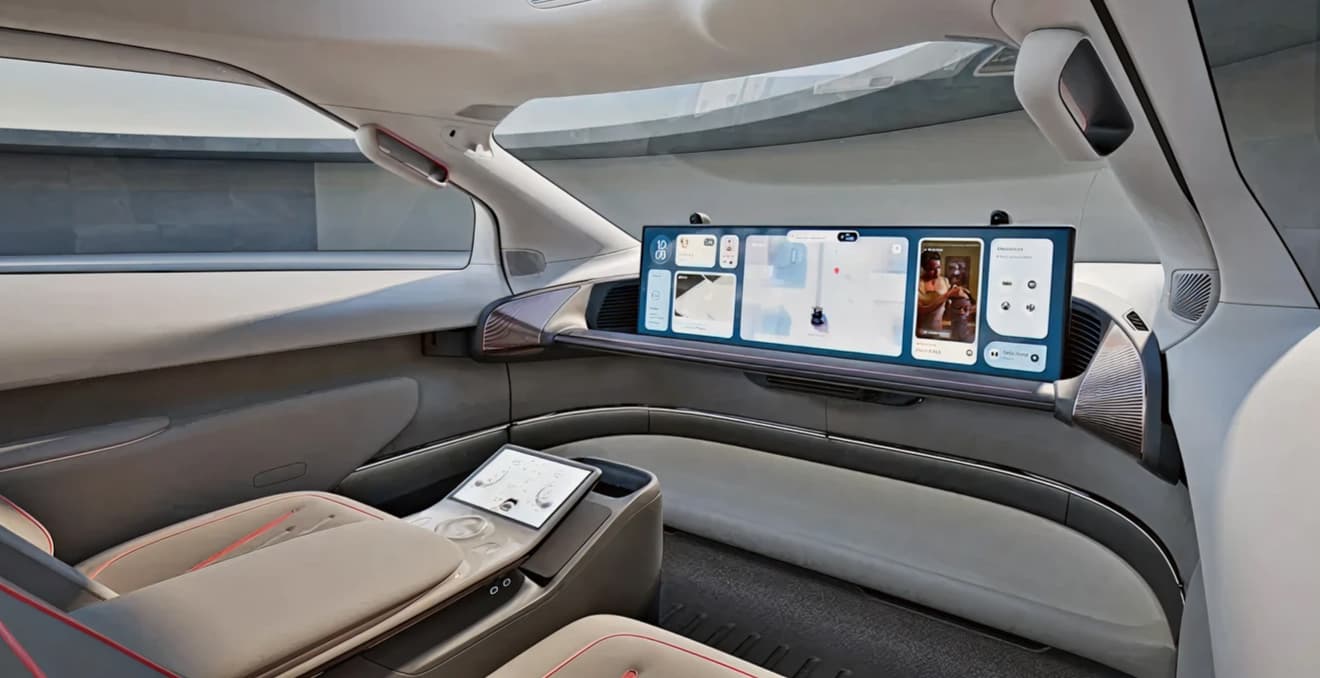
Full reset: no driver, no hierarchy
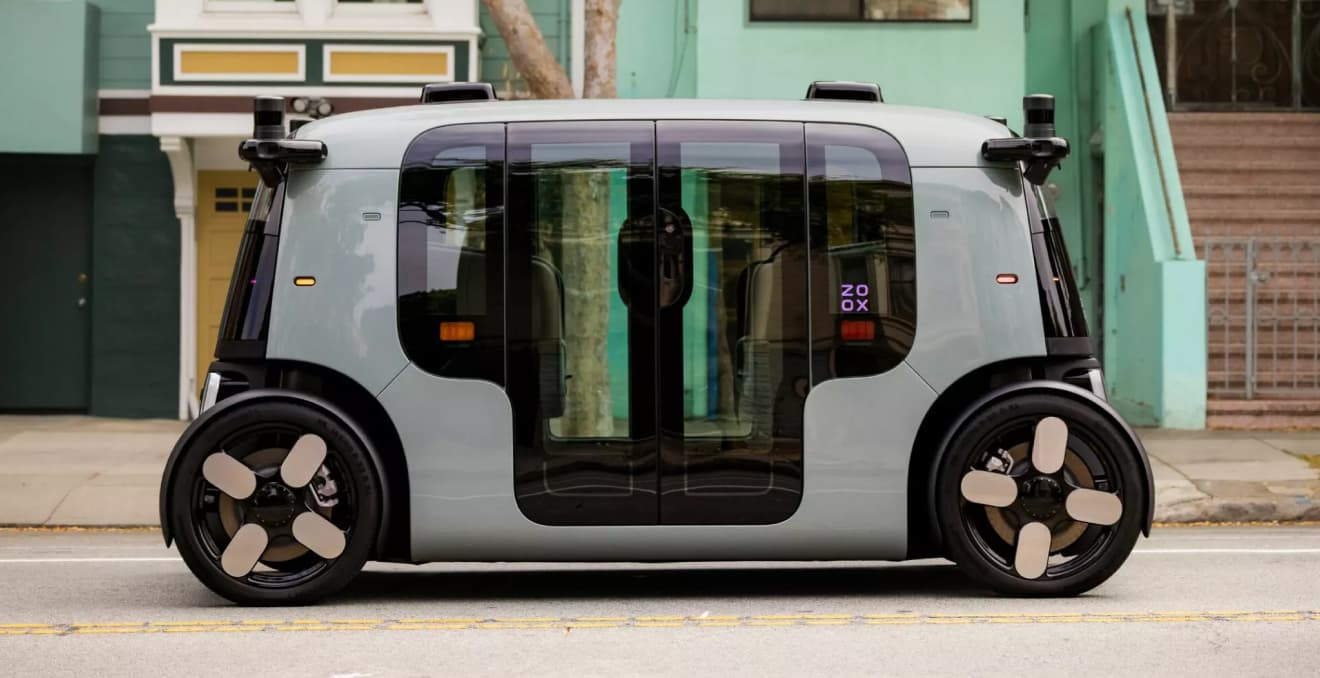
The cabin is designed as a passenger experience environment from the outset. Zoox is a clear example. It has no steering wheel, pedals, or privileged driver position. Four seats are arranged in a face-to-face configuration, and the vehicle is bidirectional.
Operational clarity: no driver, but a structured layout
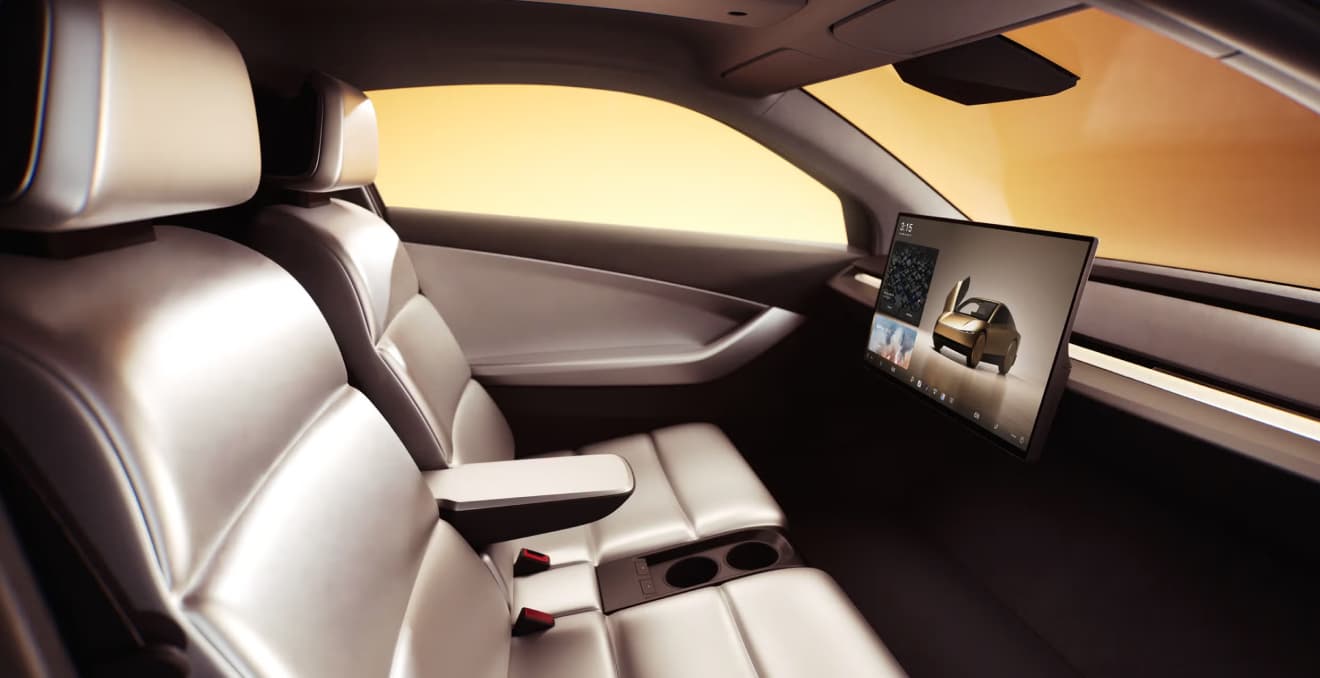
Other robo-taxi designs remove the driver but retain a familiar layout, making the vehicle easier to understand and accept. Waymo’s Zeekr prototype follows this approach, removing the steering wheel but maintaining a structured, transport-oriented layout. Tesla Cybercab is similar: a two-passenger autonomous vehicle with no steering wheel or pedals, but a forward-facing lounge layout. The focus is on clarity, confidence, and efficient service, not maximum reconfigurability.
Transitional layouts: partial removal of driver-centric logic
Some platforms occupy a middle ground between these approaches. Baidu’s Apollo RT6 is an L4 robotaxi with a detachable steering wheel, preserving a link to conventional driving when needed while opening more cabin space for passengers, additional seating, or service features.
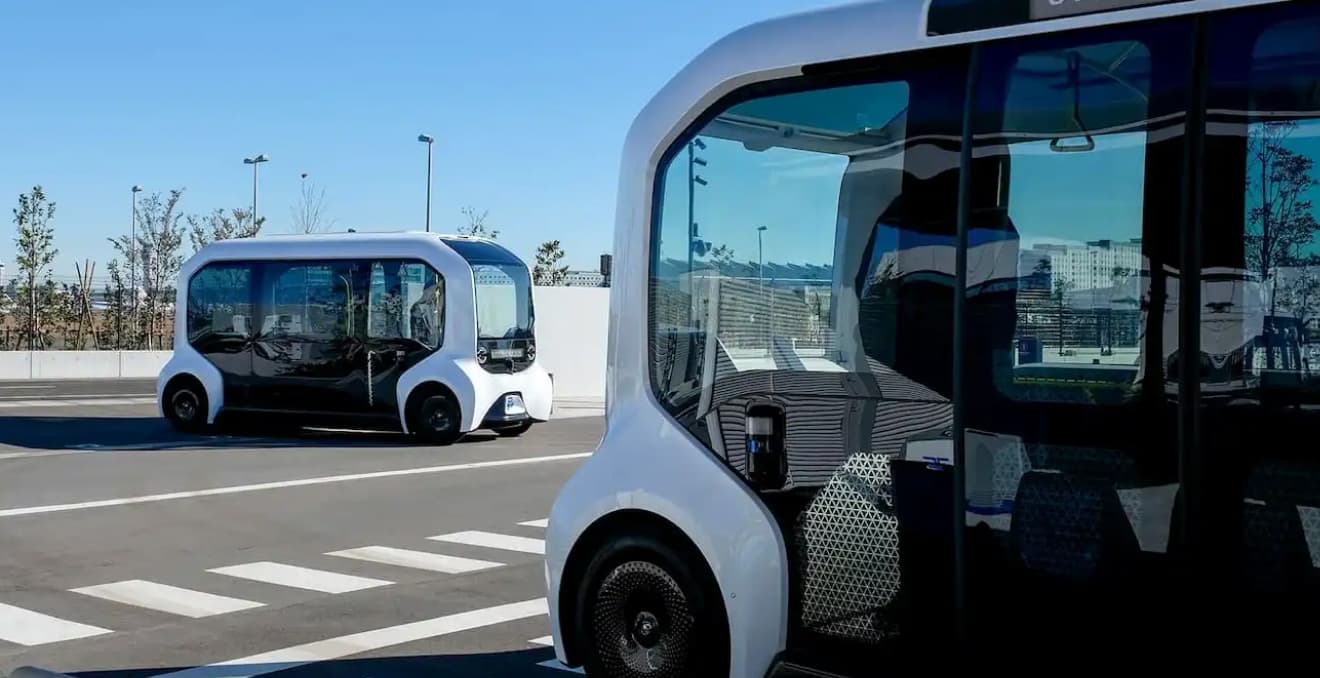
Toyota’s e-Palette extends this concept further. It serves as a configurable mobility platform for shuttle services, delivery, retail, and other mobile services, making the cabin more like commercial infrastructure than a personal interior.
Controlled flexibility within a clear baseline
Another approach is to add comfort and flexibility while maintaining a familiar cabin feel. Verne follows this approach. Its two-seat robotaxi is designed for controlled flexibility without losing orientation, with a forward-facing lounge baseline and side benches that enable optional face-to-face use.
The common thread is that robo-taxi cabins are shaped by service logic, designed for throughput, trust, and usability at scale. Personal autonomous vehicles can become multi-purpose cabins, while robo-taxis must serve as reliable public-facing environments.
Designing the future in-car experience for a world without driving
The defining question for the next decade is not what technology makes possible. It is what people actually need when driving disappears. Do you know what your customers would do with the time, if they don’t need to drive? The answer varies by market, journey type, and passenger — and it should drive every hardware and software decision that follows.
Do you know what cabin setup and HMI they would need to fulfill those use cases? These are not engineering questions. They are design and strategy questions that need answers before significant investment is made.
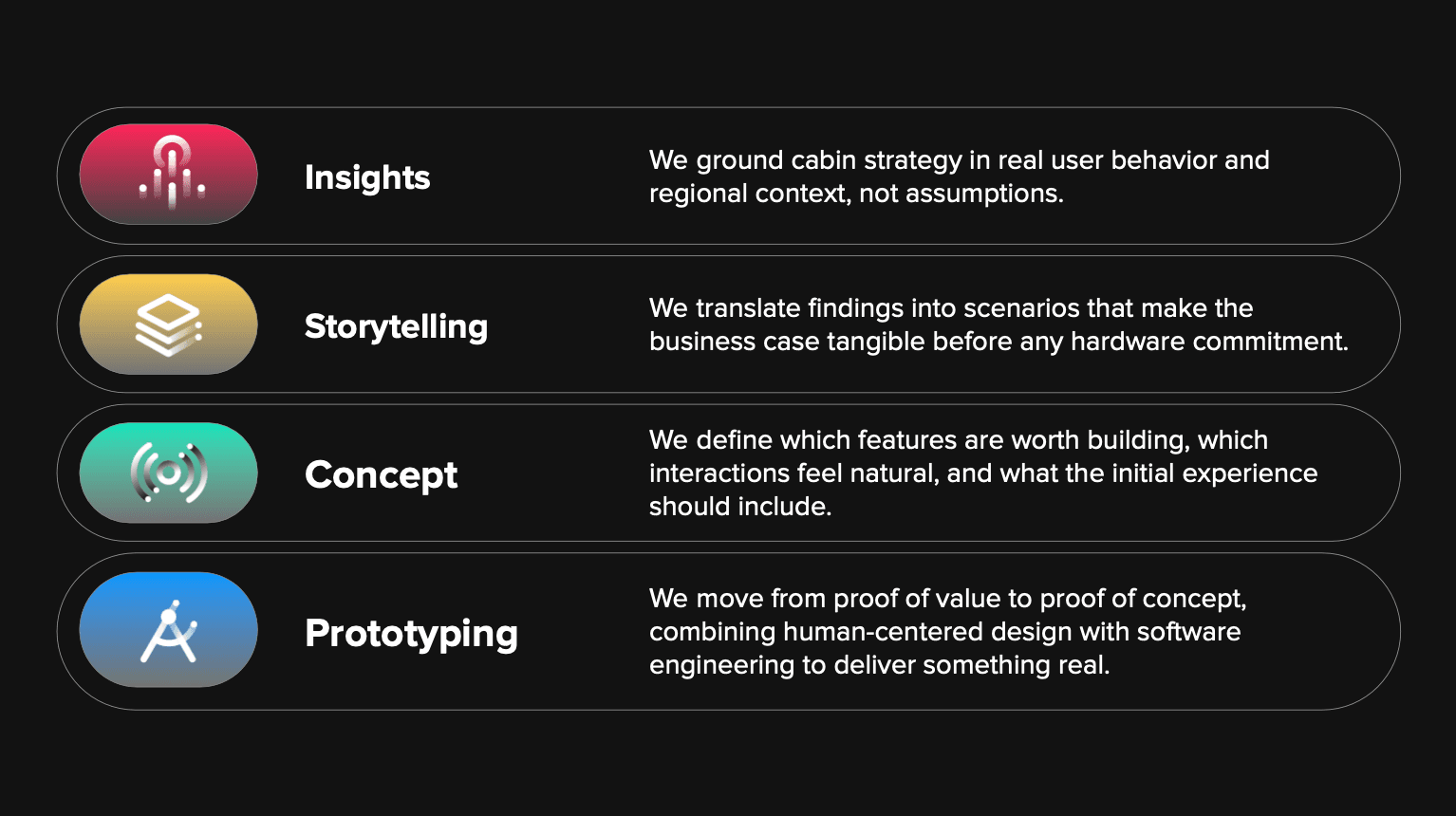
This is where design and strategy create real value. Star works with OEMs and mobility companies across the full journey — from identifying the opportunity to knowing what to build and executing it. Explore how Star helps OEMs design, test, and scale in-cabin digital experiences that customers truly value.