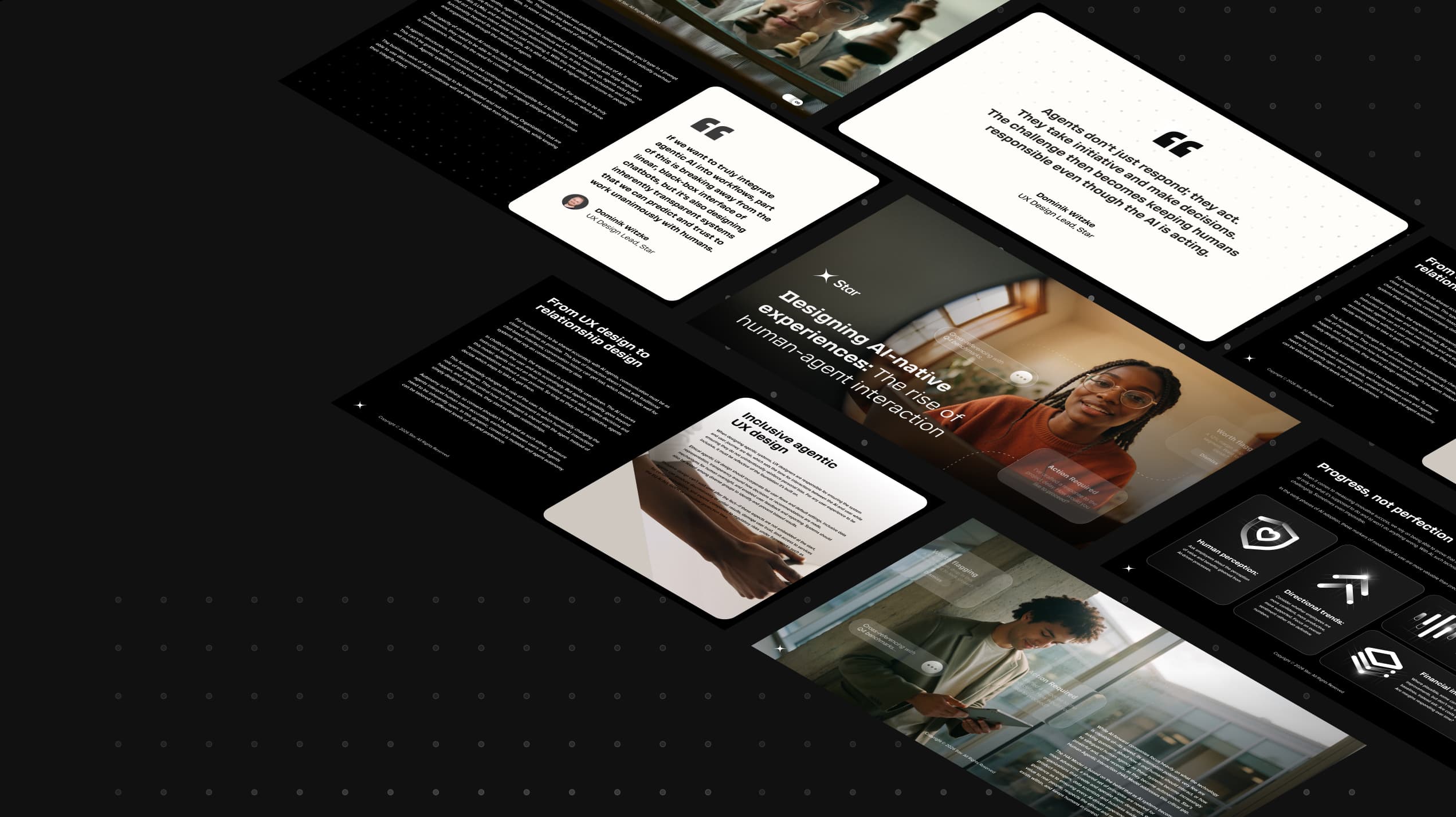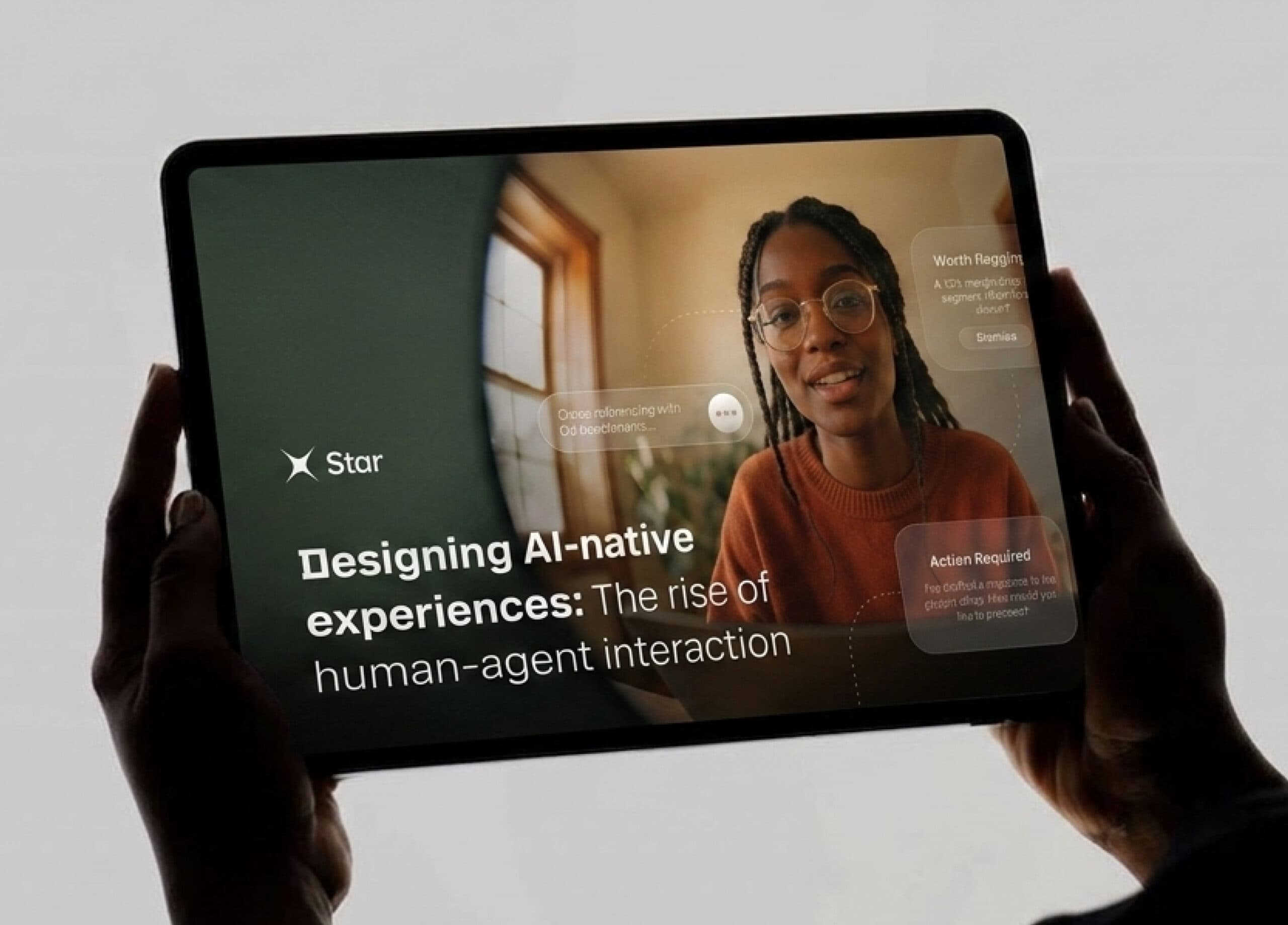
As AI systems begin to interpret intent, make decisions and act on a user’s behalf, organizations face a new challenge: how to keep humans in control as AI becomes a new layer between people and systems. In our report, Designing AI-native experiences: The rise of human-agent interaction, our experts explore why trust, transparency and control are becoming defining requirements of modern digital experience.
What leaders need to know about AI-native experiences
Most organizations still treat AI as a feature or interface layer. But agentic systems are forcing a deeper shift, from workflow-first design to objective-first design, where humans define goals and constraints, and AI helps determine the path to execution.
That raises urgent questions for business, technology and design leaders: how much autonomy is too much? How do you prevent AI from becoming a black box? And what does it take to design systems people can understand, trust and interrupt when needed?
What you’ll learn
This report unpacks some of the most important shifts shaping AI-native products and services, including:
- How to approach the shift from interface design to relationship design
- Why transparency, revocable delegation and traceability are essential for trust
- What are core principles of human agentic interactions to follow to ensure every AI-driven experience delivers real value to real people
- How will agentic systems reshape brand experience and commerce